Construction & Structural Repairs in Los Angeles
Inspections & Damage Assessments, from identifying the problem to planning and completing the repair.
Understand what is happening to your property and what it will take to put it right. Shulmen Construction LA assesses construction defects, water intrusion, structural concerns, and damaged building components, then develops a practical repair or reconstruction scope. We document findings, explain priorities, and coordinate the appropriate next steps.
The work runs from a single assessment to full structural rehabilitation: framing, beams, joists, and foundations; leaks and building-envelope failures; defects and damage from other construction; restoration after water, fire, storm, or impact; and corrections for unpermitted work or a failed inspection. Each starts from what is actually happening at the property, not from a fixed package.
Inspections & Damage Assessments
A construction assessment is a licensed general contractor's review of a building's condition: what can be seen and reached, what it suggests, and what it would take to repair. It draws on the same experience used to build and rebuild, so the findings come with a practical repair scope.
It is not a municipal inspection, a structural engineer's evaluation, or a certified home inspection, and the written findings say what was and was not examined. When conditions call for a structural engineer, a roofer's or plumber's test, an electrician, or another specialist, we say which and help coordinate it.
Structure and foundations
- Structural inspections of load-bearing walls, framing, beams, columns, foundations, and connections, for deficiencies, damage, or signs of movement
- Residential structural reviews: wood framing, slab and raised foundations, hillside supports, sagging floors, sticking doors, sloped surfaces, and cracking
- Foundation evaluations of slab, raised, post-and-pier, and hillside foundations for cracking, settlement, drainage, and movement
- Structural damage evaluations after an earthquake, vehicle impact, fire, flood, or settlement: what is compromised, what is repairable, what needs replacement
Water, leaks, and the building envelope
- Moisture intrusion and water damage inspections: where water enters, hidden moisture behind walls and under flooring, and the extent of affected materials
- Leak detection for active and intermittent leaks: plumbing, slab, roof, irrigation and pool, and exterior envelope
- Building envelope inspections of siding, stucco, windows, doors, flashing, and sealants
- Roofing inspections of structure, decking, flashing, and surface, including the framing below where damage is suspected
Construction quality
- Construction defect inspections of recent remodels, newly purchased homes, or work in progress, compared with code requirements and industry practice
- Construction damage assessments when damage happens during a project, from neighboring work, or from errors
- Remodeling project inspections mid-project: demolition, rough-ins, and finish work before the next payment
- Post-construction quality reviews against the contract scope, with a punch list
Before you buy or renovate
- Pre-purchase and pre-renovation reviews of the structure, finishes, plumbing, electrical, and visible signs of past damage or substandard work, focused on what it would take to address them
- Commercial building assessments for owners and tenants: condition, deferred maintenance, code concerns, and repair needs for a lease, a purchase, or capital planning (see Commercial Construction)
After a loss
- Fire damage assessments of framing, finishes, smoke and soot penetration, and building systems exposed to heat, with electrical systems evaluated by a licensed electrician where needed
- Insurance damage documentation for water, fire, storm, and impact damage: photographs and written findings you can share with your adjuster
Permits, code, and outdoor work
- Permit and code-compliance reviews of unpermitted additions, garage conversions, and prior owners' work, and what correction, permitting, or removal would involve
- Pool and hardscape assessments of decks, retaining walls, pavers, and drainage (see Pool & Spa Construction)
What you receive
A walkthrough of the accessible areas, photographs of the findings, written findings in plain language, priorities (what is urgent, what can wait, what is cosmetic and what is structural), where further investigation is needed, a proposed repair scope and approach, and a follow-up conversation to answer questions. Before we schedule, we confirm the fee, access, timing, and what the written findings will cover.
There is no obligation to hire us for the repair. The findings are yours whether you use us, hire another contractor, or wait.
Watch: a thermal-imaging inspection uncovering hidden issues on a Los Angeles home.
Structural repairs and rehabilitation
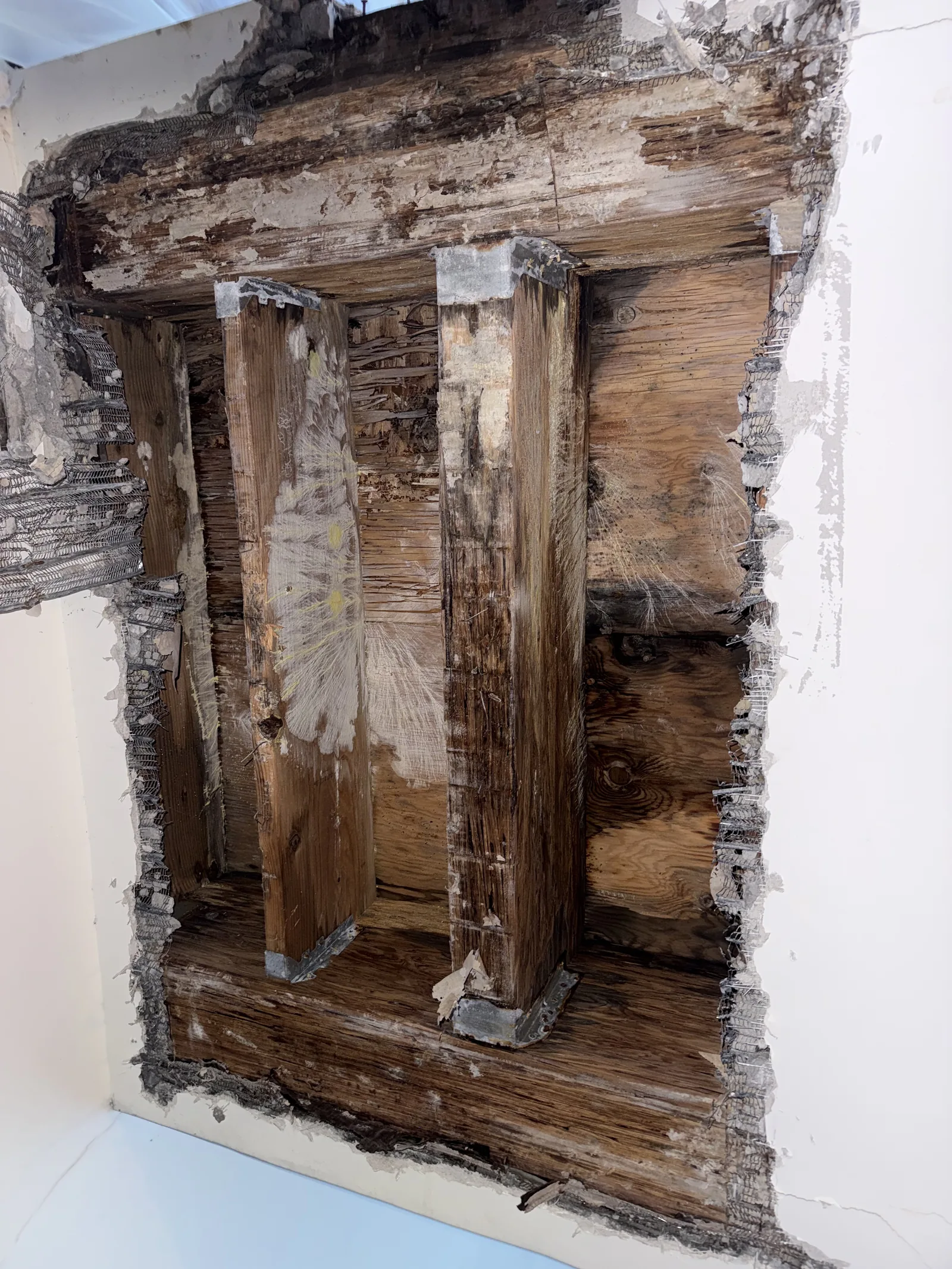
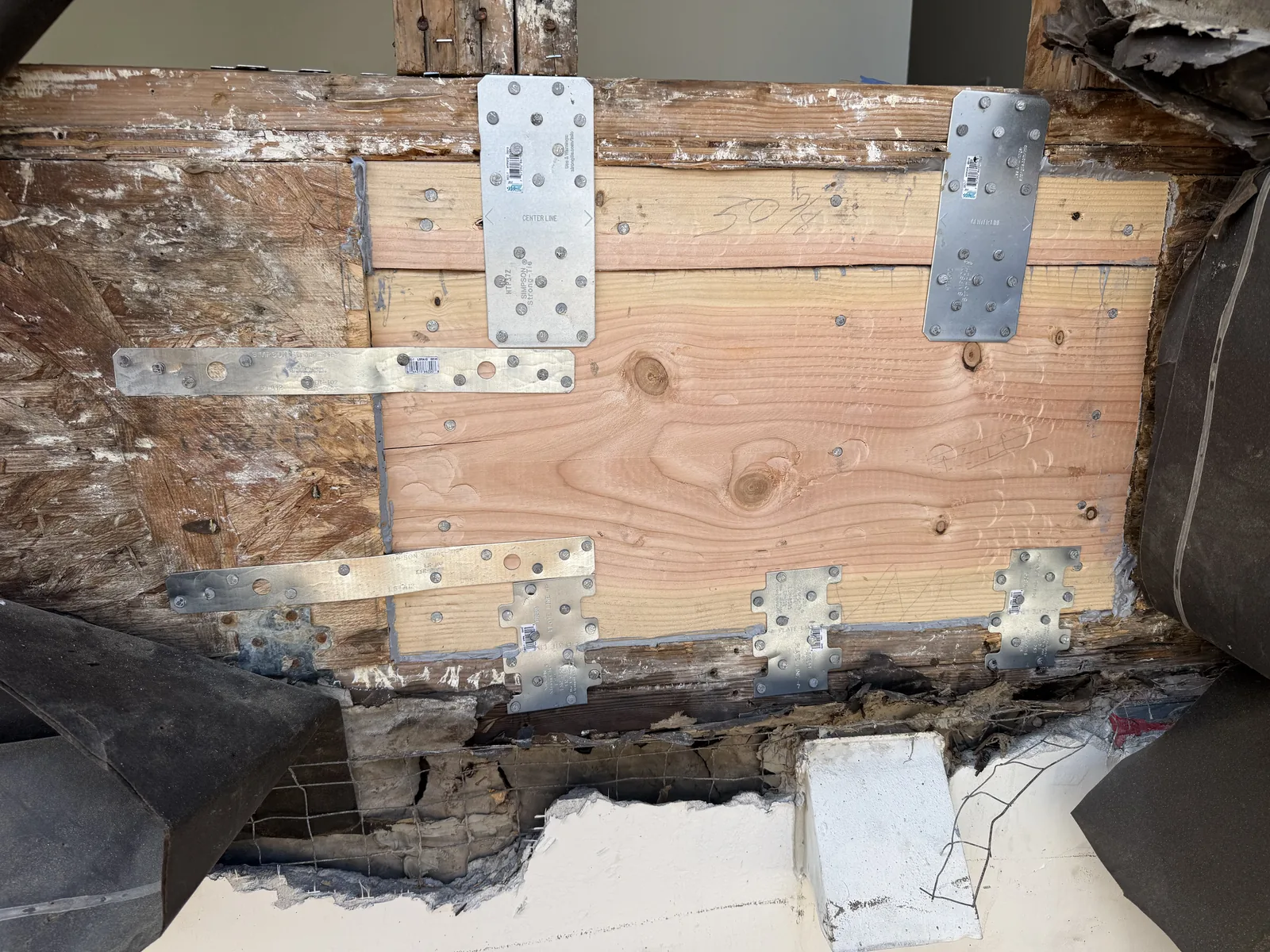
When an assessment finds compromised structural elements, the repair follows the findings: framing replacement, beam and column repair, sistering of damaged joists, foundation crack repair, and structural reinforcement. Older buildings with long-term deterioration may need broader rehabilitation, such as upgraded framing, foundation retrofits, or seismic improvements.
Signs that call for an assessment
- Diagonal cracks in drywall, plaster, or stucco
- Doors and windows that stop closing squarely
- Uneven or sloping floors
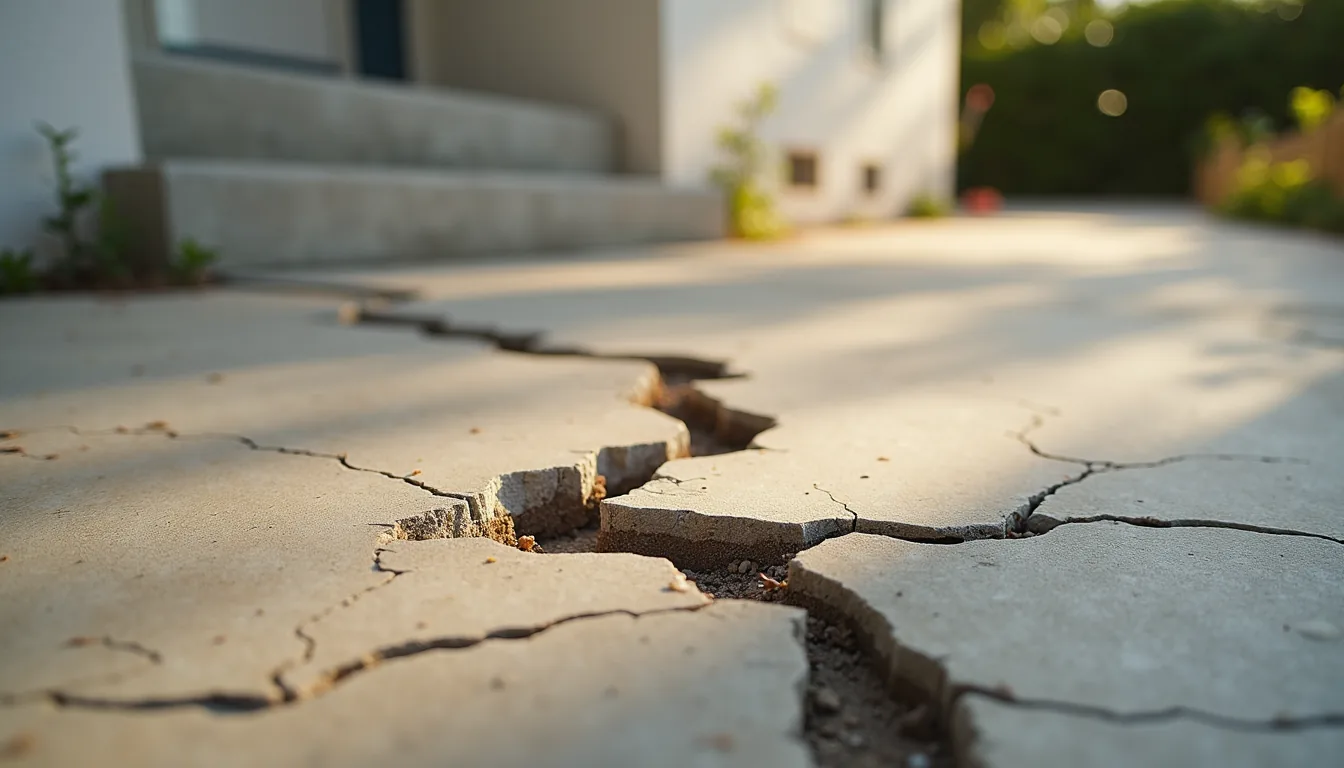
- Cracked or heaved walkways and slabs
- Soft, rotted, or damaged framing found when a wall, ceiling, or floor is opened
Foundation settlement and drainage
Differential settlement, where one part of a foundation moves more than another, shows up as diagonal cracks, doors and windows that stop closing squarely, and uneven floors. It is often associated with expansive clay soils that swell and shrink with seasonal moisture, or with drainage that carries water toward the foundation instead of away from it. On hillside lots, grading and drainage around the structure matter even more, because water that is not routed away from the foundation on a slope has somewhere to go.
Engineering, permits, and the repair
When the findings involve load-bearing framing, foundations, or other structural elements, a licensed structural engineer evaluates the condition and specifies the repair, and the work follows that specification. Not every crack calls for an engineer, and a general contractor's license is not an engineering license: the assessment identifies when an engineer's evaluation is needed, and we arrange it when the scope requires one. Structural repairs generally need a building permit from the authority that governs the address, with inspections as the work proceeds; Design, Engineering & Permitting explains how drawings, engineering, and plan check fit together.
Leaks, moisture, and the building envelope
Recurring stains, swollen trim, or a leak that keeps coming back usually mean the source has not been found. The work starts by tracing where water enters, through roofing, flashing, windows, stucco, siding, plumbing, or drainage, before opening more than needed. Then the entry point and the damage it caused are repaired as one plan, so the same failure does not return behind new finishes.
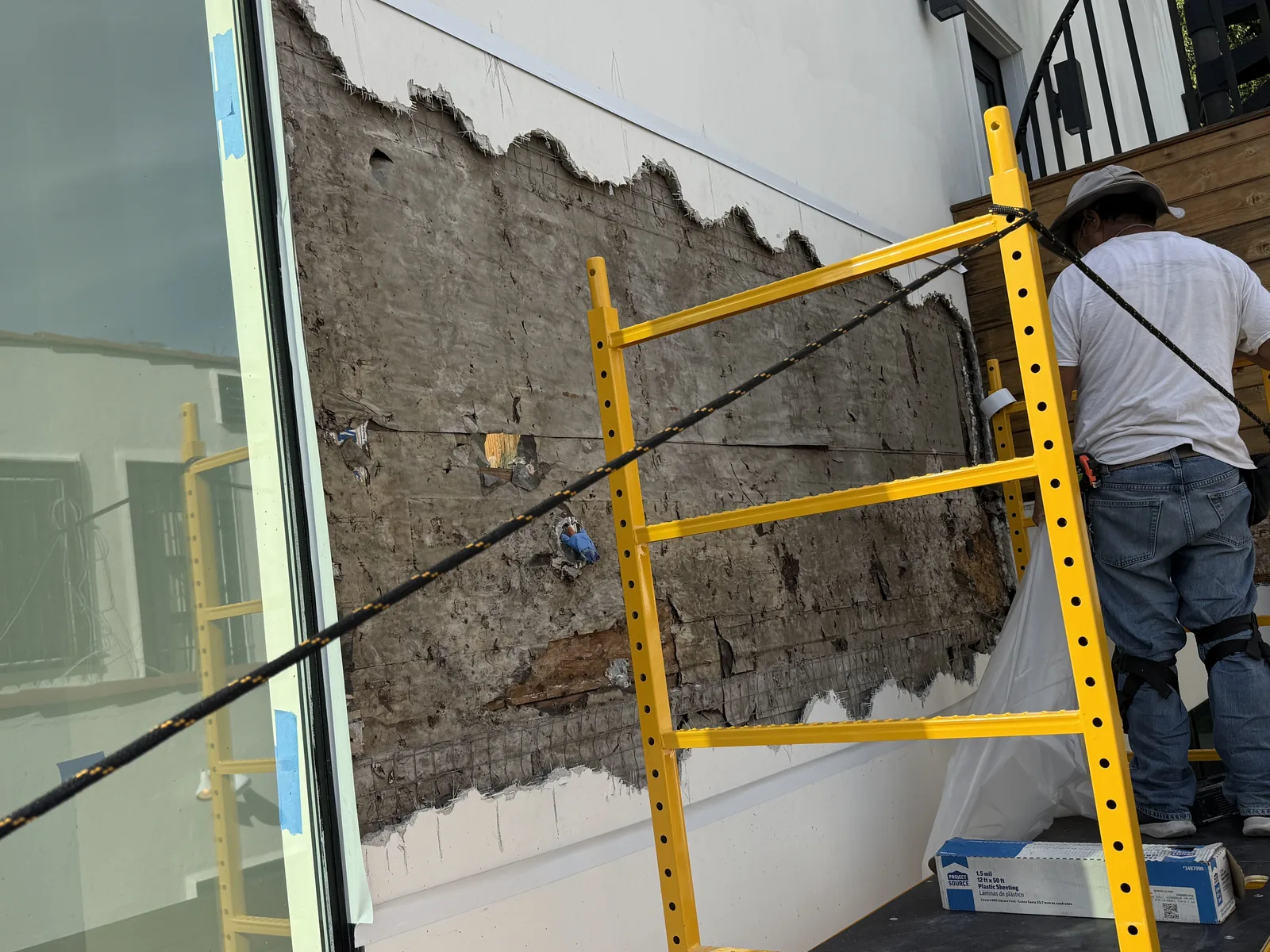
Exterior rehabilitation covers stucco repair, siding replacement, flashing and sealant renewal, window and door replacement, trim, paint, and finish work, often alongside roofing and envelope repairs so the exterior is addressed in one coordinated project. Drywall and finish repair are part of the restoration when the damage behind them has been corrected.
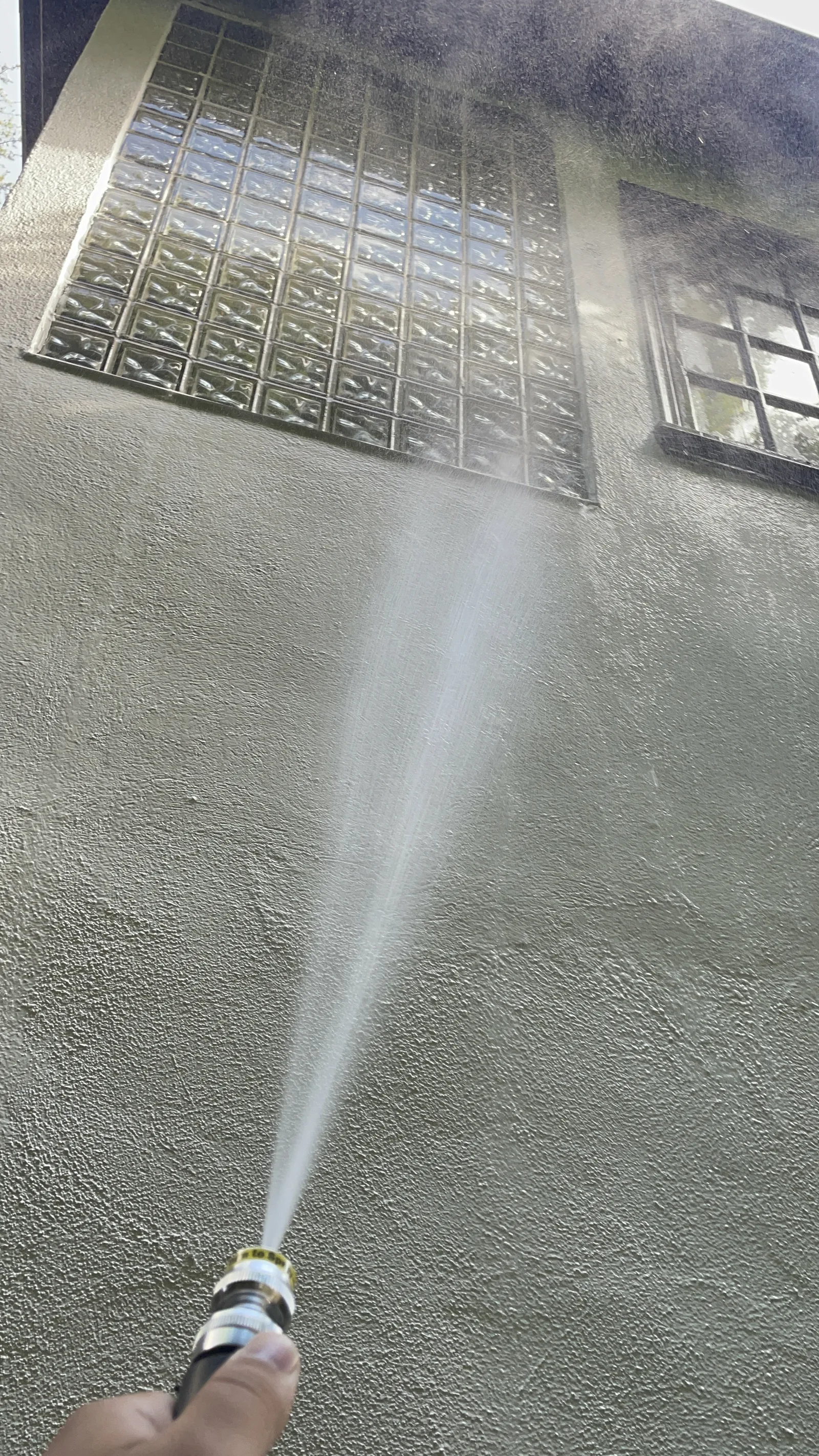
Active leak or water damage inside the home?
Source control, drying, contents and temporary housing coordination, insurance documentation, and the rebuild are covered on Water Damage Restoration & Reconstruction.
Construction quality, defects, and damage during a project
If you suspect substandard work on a recent remodel, a newly purchased home, or a project in progress, we review the construction against code requirements and industry practice and document what we find: what is deficient, what it affects, and what the corrective work would involve. The same applies when damage happens during construction, whether from your own project, neighboring work, or an error.
Mid-project checks look at demolition, rough-ins, and finish work before the next stage or payment. A completion review walks the finished work against the contract scope and produces a punch list. We can review work done by another contractor. Our findings describe conditions and corrective work; they do not determine legal liability, prove fault, or replace an expert retained for a dispute.
Before you buy or renovate, residential and commercial
Before you buy a home or commit to a major remodel, a construction-focused review walks the property and looks at the structure, finishes, plumbing, electrical, and visible signs of past damage or substandard work, with a realistic scope of what would need to be addressed. It is not a comprehensive certified home inspection: it covers what is visible and accessible on the day, and concealed conditions, such as inside walls, under slabs, or in sealed systems, may need opening up or a specialist's test.
For commercial property owners and tenants, the same approach documents building condition, deferred maintenance, code concerns, and repair needs, which is useful before a lease, a purchase, or capital planning.
Restoration and reconstruction after water, fire, storm, or impact
After significant damage, the work moves from stabilization to a full rebuild. Temporary protection and stabilization come first, coordinated with the insurer where a claim is open; then the damage is documented and the reconstruction is scoped, from demolition and framing through finishes and final inspection. Restoration ranges from targeted repairs to full interior and exterior work on a home affected by damage, deferred maintenance, or age.
Fire damage assessments look at the framing, finishes, smoke and soot penetration, and building systems exposed to heat before reconstruction is planned. For water damage, see Water Damage Restoration & Reconstruction.
Code corrections, unpermitted work, and failed inspections
Corrections start from the document that names the problem: a correction notice after a failed inspection, a city notice about unpermitted work (in the City of Los Angeles, an LADBS Order to Comply), or a sale inspection report. We read it against the actual site conditions, arrange as-built drawings and engineering when the building department requires them, apply for the corrective permit with the department that governs the address, perform the correction, and coordinate re-inspection. The building department decides whether the work is approved and signed off.
How an assessment and repair move forward
Clarify the concern and the documents
You tell us what you are seeing and what prompted the call, and share any notices, reports, plans, or photographs. We confirm the fee, access, timing, and what the findings will cover before booking.
Assess the accessible conditions
We walk the property, take photographs and notes, and look at the components relevant to the concern, including what is adjacent to the obvious damage.
Document the findings and what needs a closer look
The written findings explain what we found, what is urgent, what can wait, and where further investigation is needed: opening a wall, an engineer's evaluation, or a specialist's test.
Prioritize and estimate
If repairs are needed, you receive a proposed scope and estimate, with the parts that can only be priced once concealed areas are opened shown as a range.
Coordinate engineering and permits when required
A licensed structural engineer is brought in when the findings call for one, and permits are applied for with the authority that governs the address.
Repair, review, and close out the agreed work
The agreed work is completed, newly found conditions are documented for your approval, required inspections are coordinated, and the finished work is walked with you.
Cost by scope
An assessment is priced by the property's size, the type of review, and the scope, and we confirm the fee before scheduling. Repairs are priced from a written scope rather than a single rate. What moves the number:
- Hidden versus visible. A problem found with the wall still open costs far less to correct than the same problem found after finishes are complete.
- Engineering. A surface-level correction does not need engineering; a beam, shear wall, or foundation repair usually does, which adds cost and time at the start.
- The surrounding construction. Opening one area of an older building can show that the adjacent framing, wiring, or plumbing is in worse condition than expected, which is why an estimate stays a range until the area is open.
- Access, permits, and finishes. Hillside or tight access, the permit path for the address, and matching existing materials all affect cost and schedule.
Decisions that stay yours
- Legalize or remove. When unpermitted work can be brought up to current code, legalizing it often preserves the space; when it cannot, removal may be the only path. Make that call with the cost of both options in hand.
- Speed or completeness. Under an escrow or move-in deadline, the fastest path and the most complete fix can differ. Both are legitimate choices once the tradeoff is clear.
- An independent review. On a larger correction you may want your own third-party inspector or engineer before committing to scope. We coordinate around that.
- How much to open up. Once a wall or ceiling is open, you can close it again or open a wider area to check nearby conditions. Opening more costs more now and can avoid a second disruption later.
- Matching existing materials. Correcting part of an older home can mean color-matching stucco, reproducing a trim profile, or finding a discontinued tile, rather than choosing a new finish.
Assessment and reconstruction on real projects.
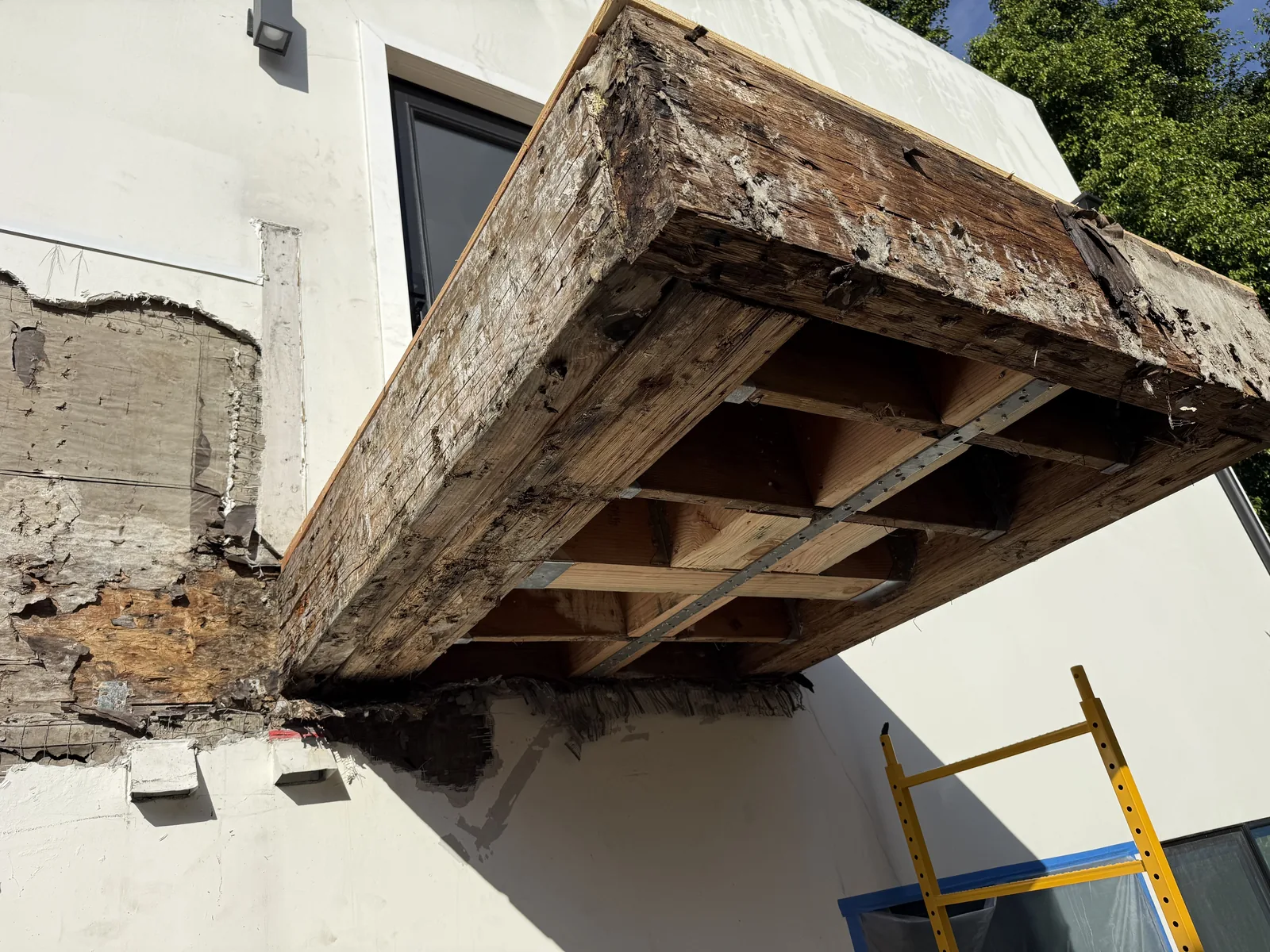
Hollywood Structural Water Damage Restoration
A second-floor balcony rebuilt from the structure up, with a structural engineer, a crane, and four sealed points of entry.
View project →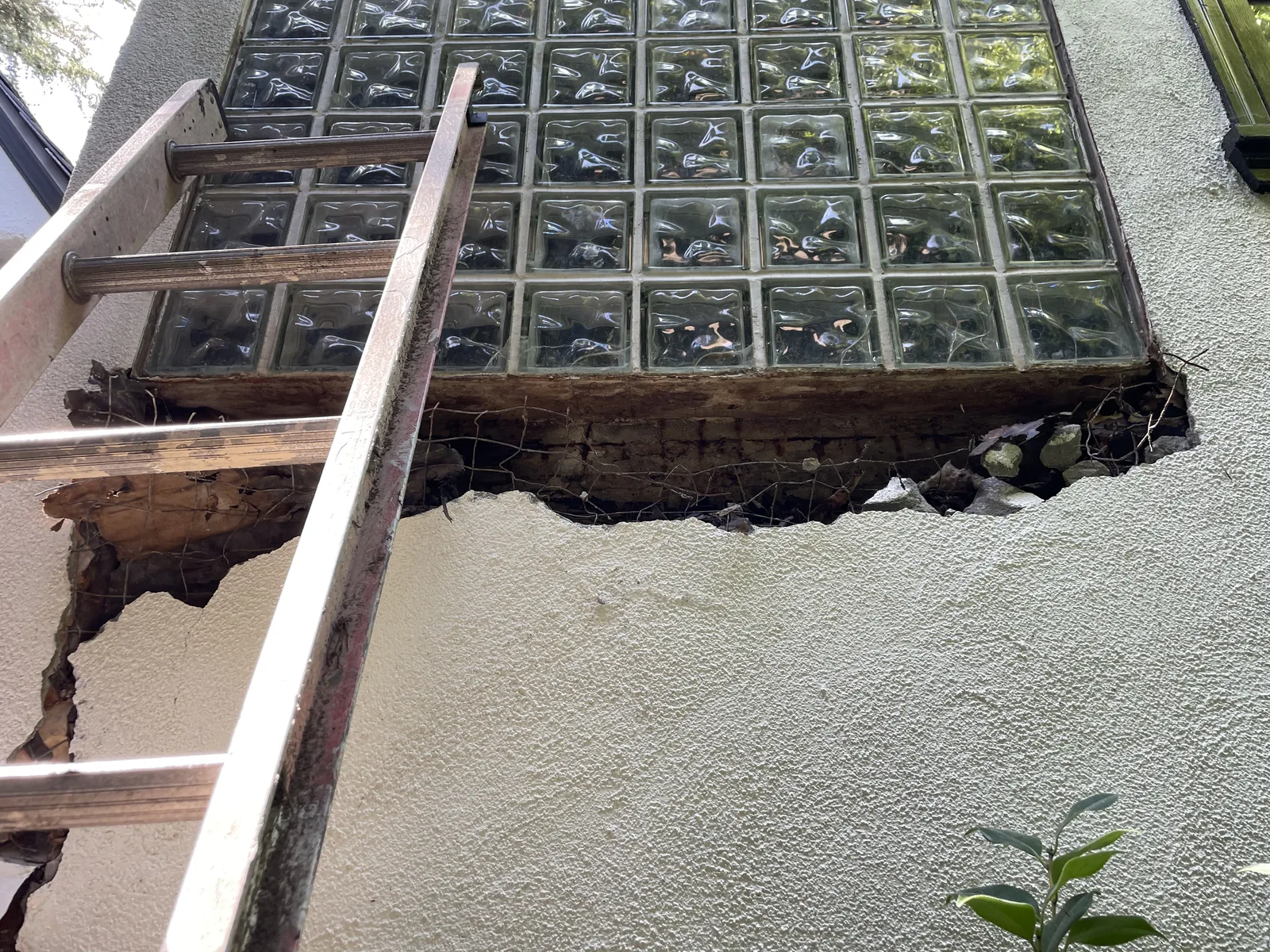
North Beverly Hills Water Damage Reconstruction
A small stain at the baseboard revealed years of hidden water damage, traced to unsealed flashing on the second floor.
View project →Serving Los Angeles and nearby communities
We work with property owners in these areas. Tell us the property address and what you are seeing so we can confirm the scope and next steps.
Construction and structural repair questions
What does a construction assessment include?
A walkthrough of the accessible areas related to your concern, photographs, written findings in plain language, priorities, notes on where further investigation is needed, and a proposed repair scope if repairs are needed. We confirm the fee, timing, and what the findings will cover before scheduling.
A leak keeps coming back. What should I do?
Have the entry point traced before another patch. A recurring leak usually means the repair addressed where water appeared, not where it enters, through flashing, a window, stucco, roofing, plumbing, or drainage. On the Beverly Hills project the source was a second-floor window, not the shower above the stained room.
Can you inspect work done by another contractor?
Yes. We review work in progress, suspected defects, and completed projects against the contract scope, code requirements, and industry practice, and document what we find and what the correction would involve.
What counts as a construction defect?
Work that does not meet code requirements, the approved plans, the manufacturer's installation instructions, or accepted practice, such as missing flashing, an incorrect nailing pattern, or a waterproofing detail left out. We describe the condition and the fix; deciding legal responsibility is outside our role.
What does a pre-renovation or pre-purchase review cover?
The visible and accessible structure, finishes, plumbing, electrical, and signs of past damage or substandard work, with a realistic scope of what would need to be addressed. It is construction-focused and does not replace a certified home inspection or specialist tests of concealed systems.
Do you assess commercial properties?
Yes. For owners and tenants we document building condition, deferred maintenance, code concerns, and repair needs, and can scope the corrective work. See also Commercial Construction.
Will I get a report with photos?
Yes. The written findings include photographs, plain-language explanations, priorities, and recommended next steps, and we walk you through them afterward. The delivery time and the level of detail are confirmed when the assessment is booked.
How is your assessment different from an engineer's?
A contractor's assessment describes conditions and the practical repair; a licensed structural engineer evaluates structural adequacy and specifies structural repairs. When the findings involve load-bearing elements or foundations, we arrange the engineer's evaluation and build to that specification, as on the Hollywood balcony.
Can you correct unpermitted work or a failed inspection?
Yes. We review the notice or report against the site, arrange as-built drawings and engineering when required, apply for the corrective permit with the governing building department, perform the work, and coordinate re-inspection. Approval and sign-off are the department's decision.
Can you document damage for an insurance claim?
Yes. With your authorization we provide photographs, written findings, and the construction scope and estimate, and answer your adjuster's questions about the construction work. Coverage decisions remain between you and your insurer.
What if more damage is found once walls are opened?
Concealed conditions can change the scope. We document what was found, explain the proposed change and its cost, and proceed with your written approval. That is why estimates for concealed areas are given as ranges.
How much does it cost, and how long does it take?
Assessments are priced by property size, review type, and scope, confirmed before scheduling. Repairs are priced from the written scope, and timing depends on that scope, engineering, the permit path for the address, and material lead times. We give you the estimate and schedule for your project rather than a universal figure.
Do I have to hire Shulmen for the repair after an assessment?
No. The findings are yours whether you hire us, another contractor, or wait. We are glad to quote the work if you want us to.
Tell us what you are seeing
Describe the concern, the address, and any notices or reports you have. We will explain the next step, from an assessment to the repair.
Shulmen Construction LA | CSLB #1077837