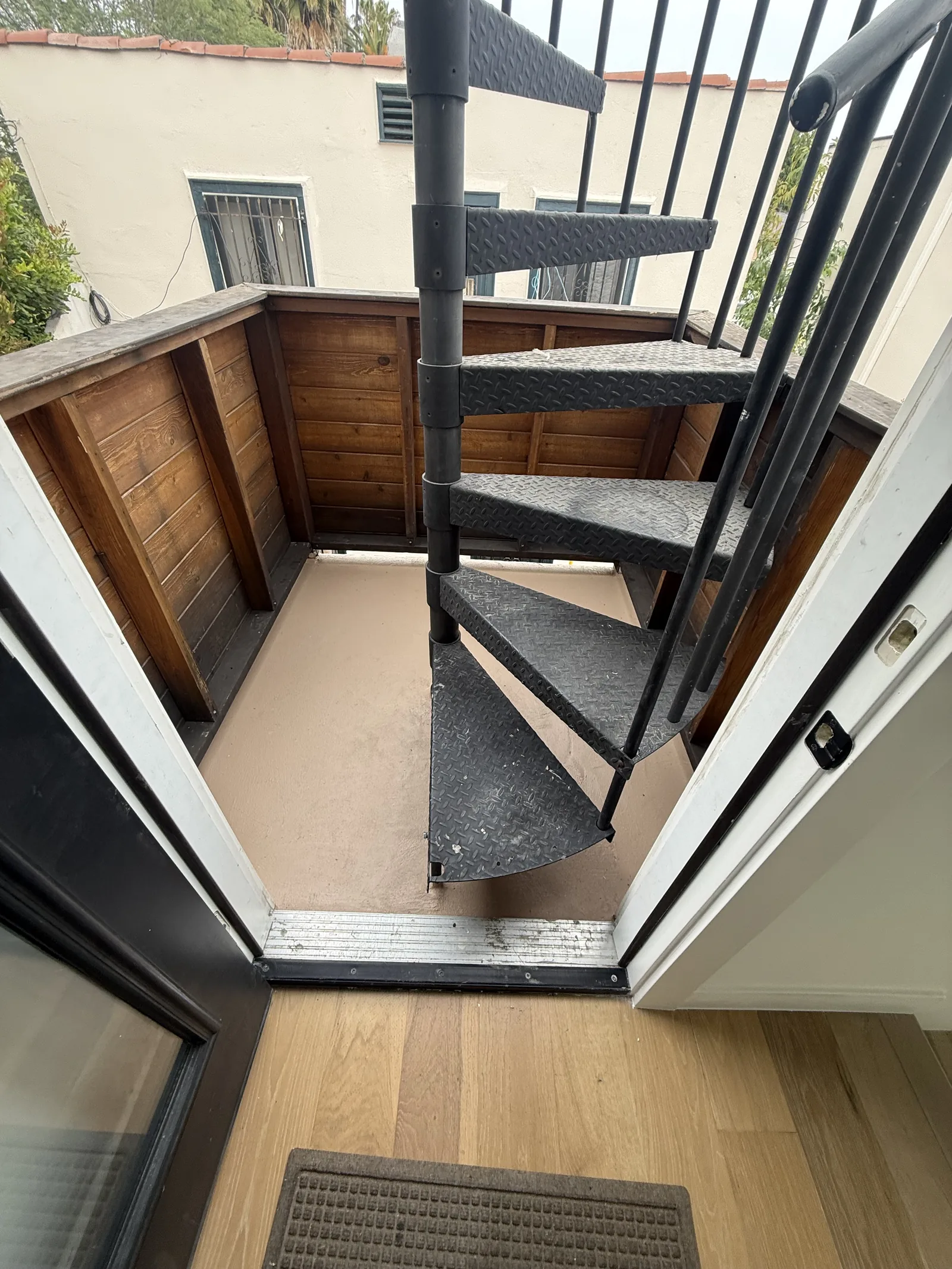
Hollywood Structural Water Damage Restoration
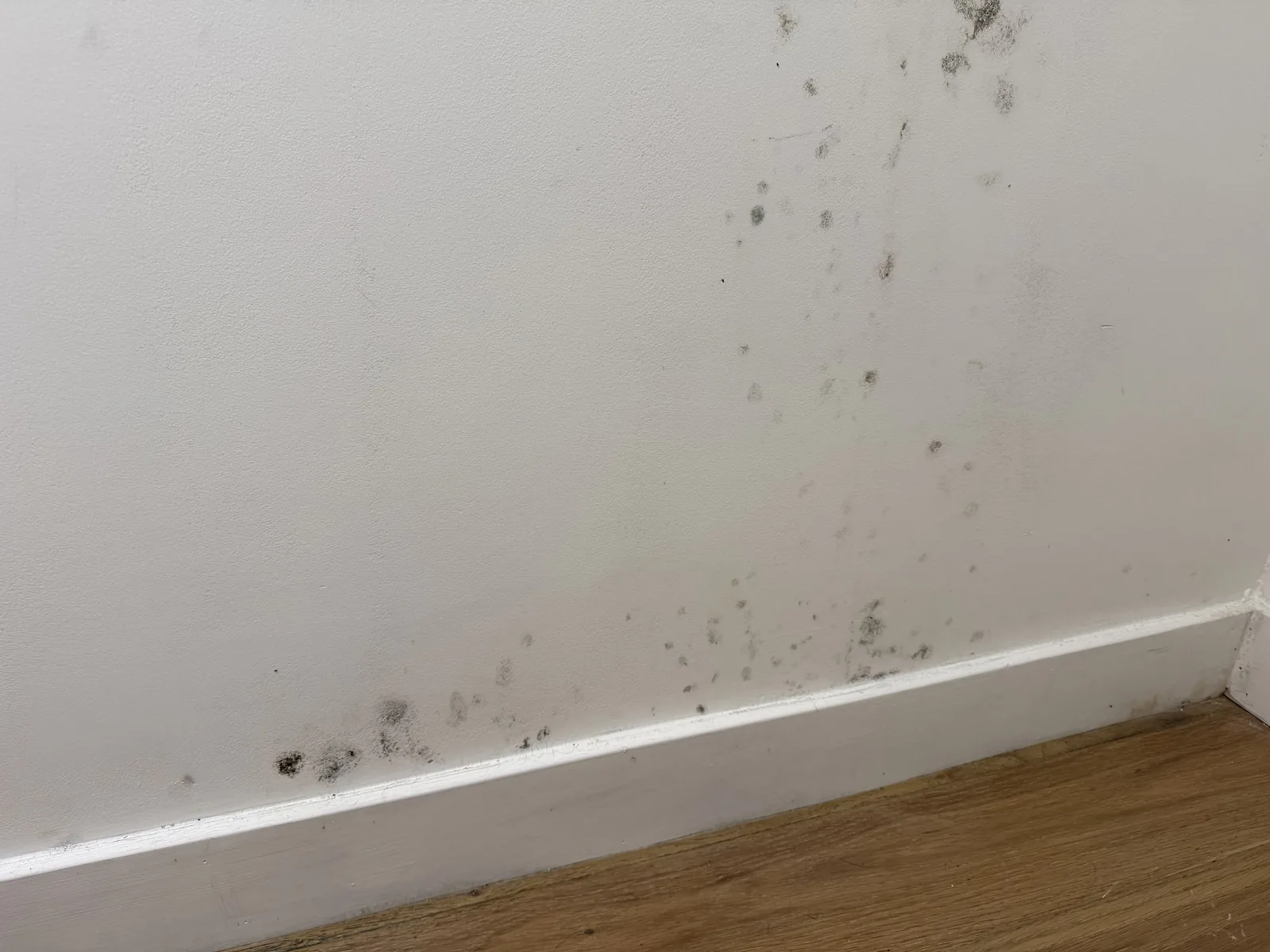
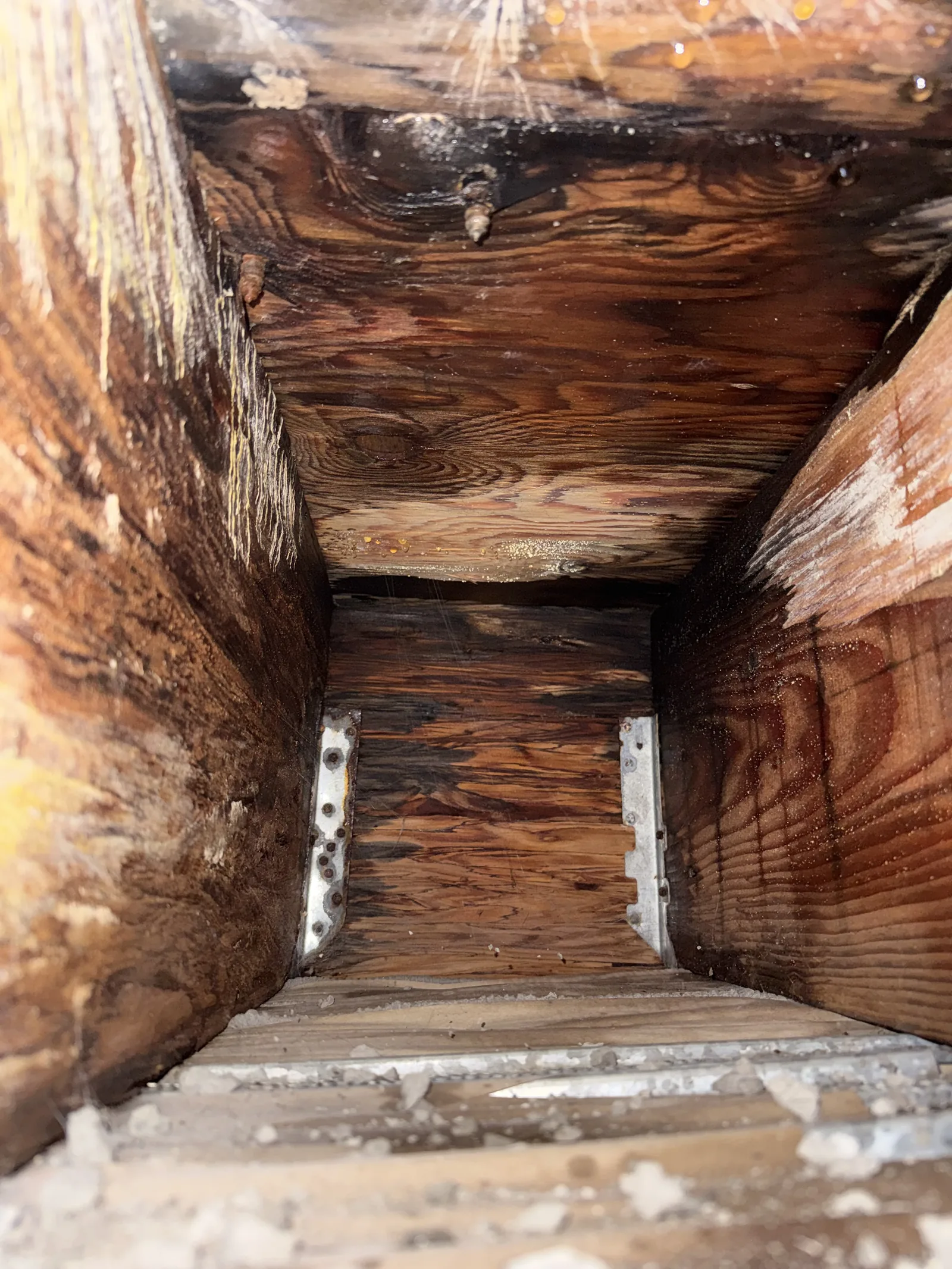
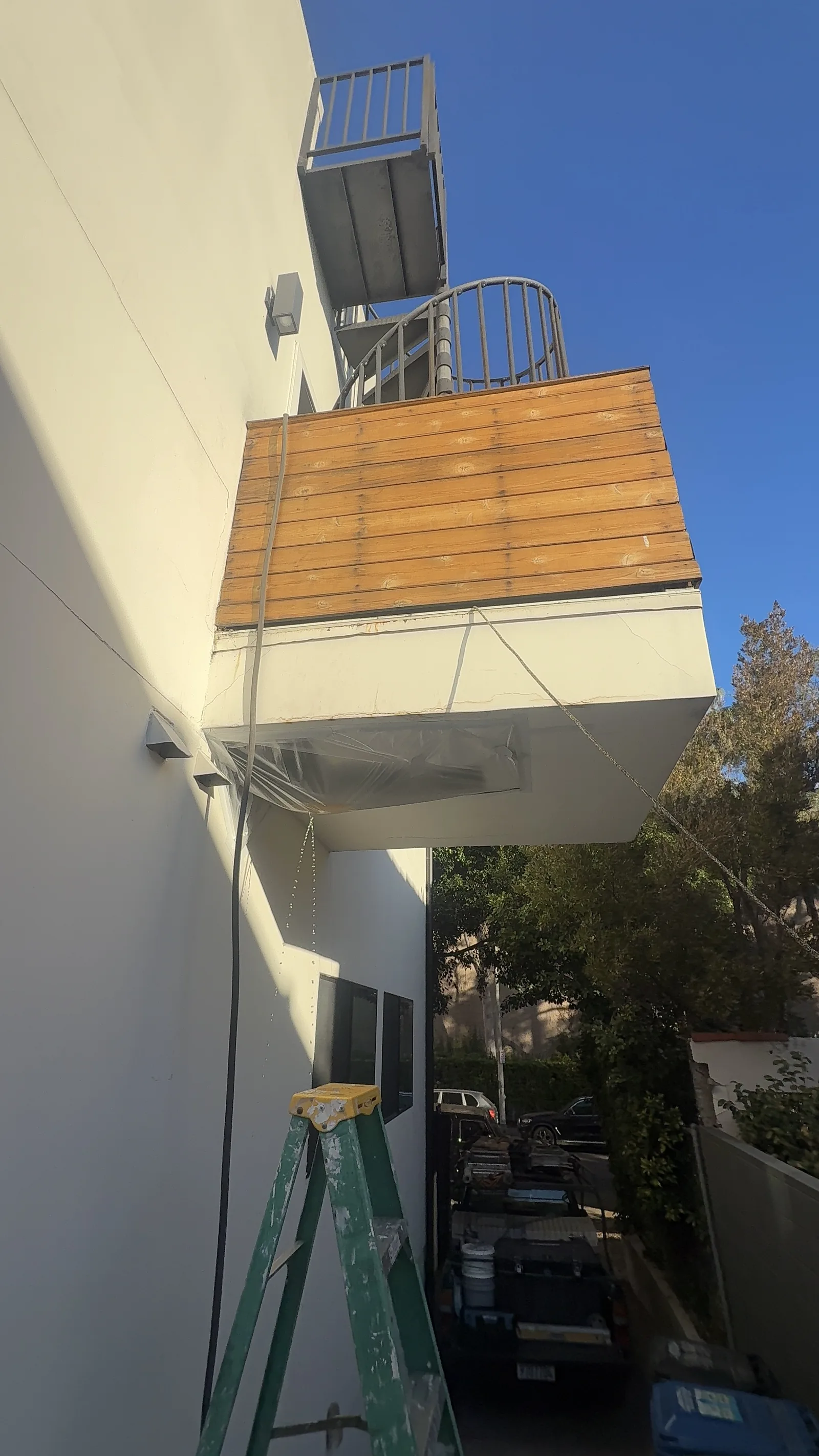
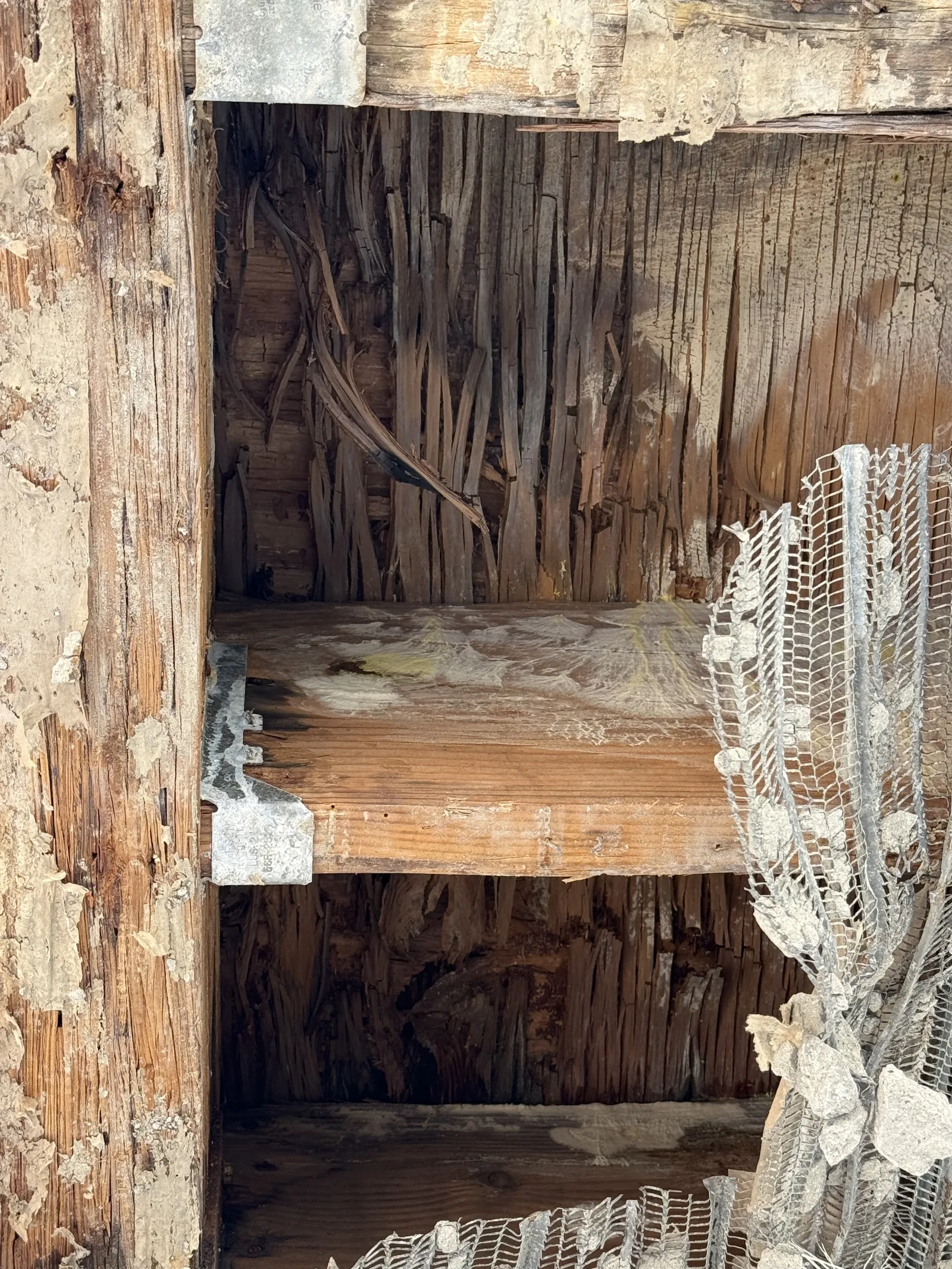
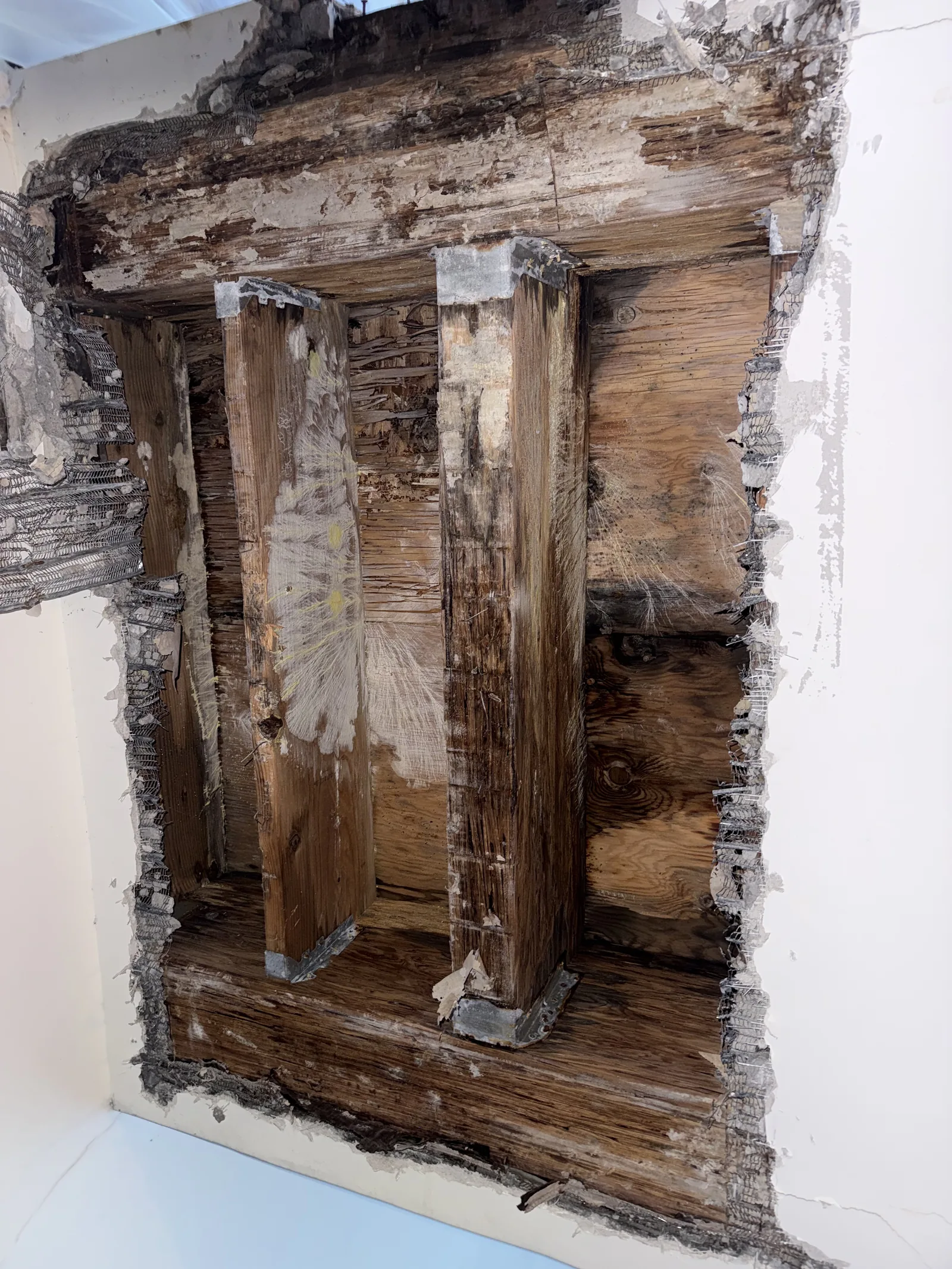
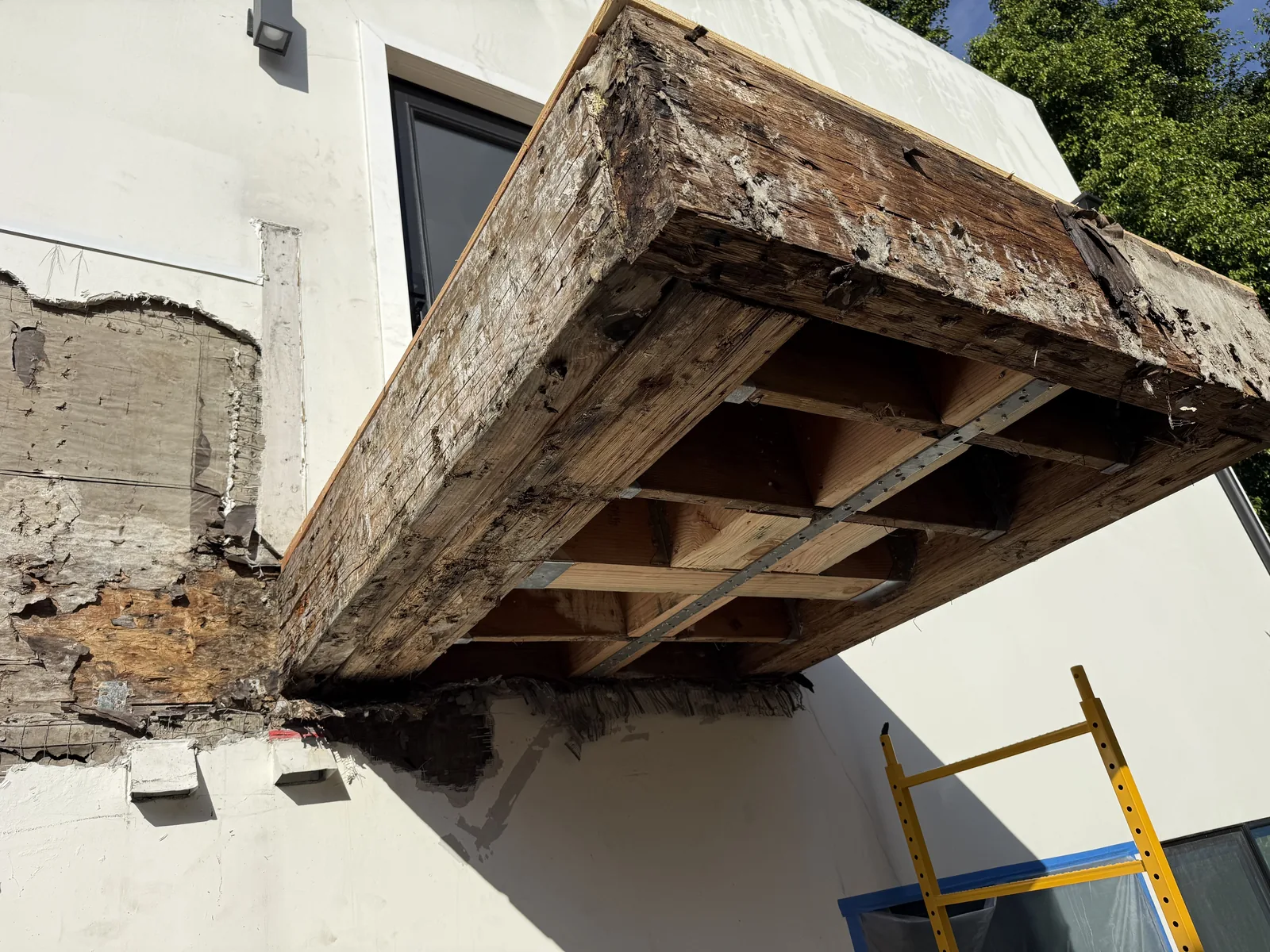
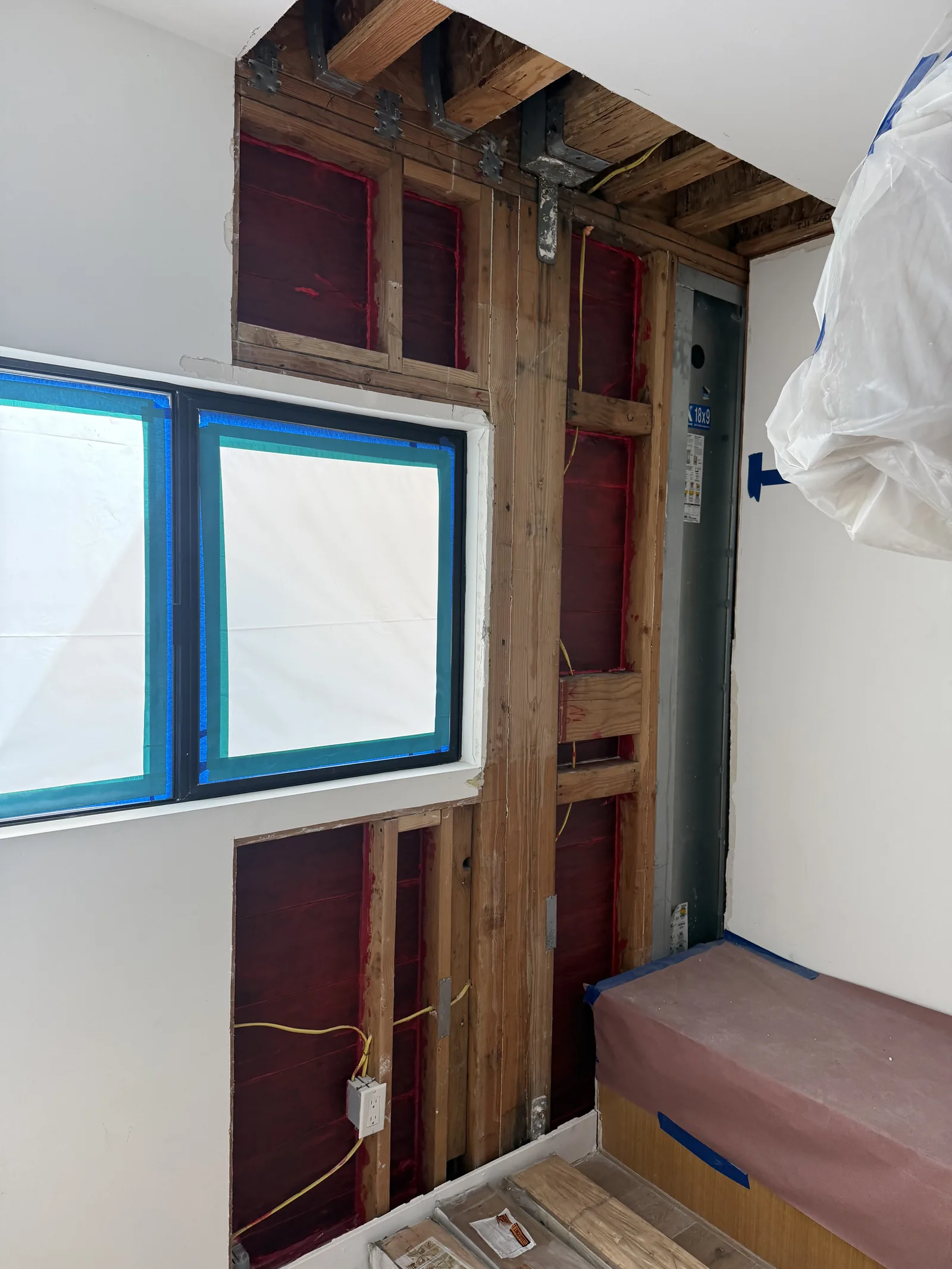
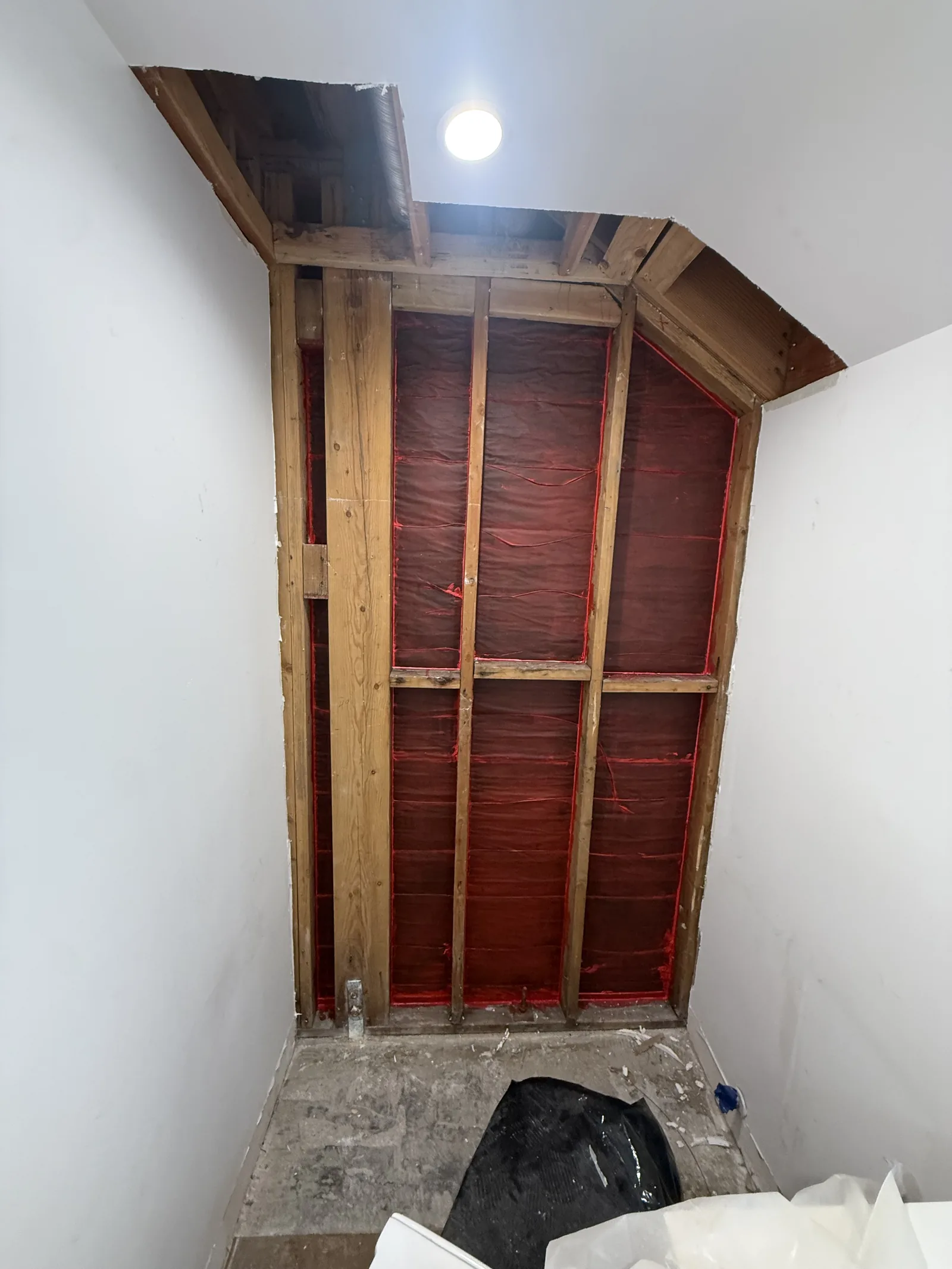
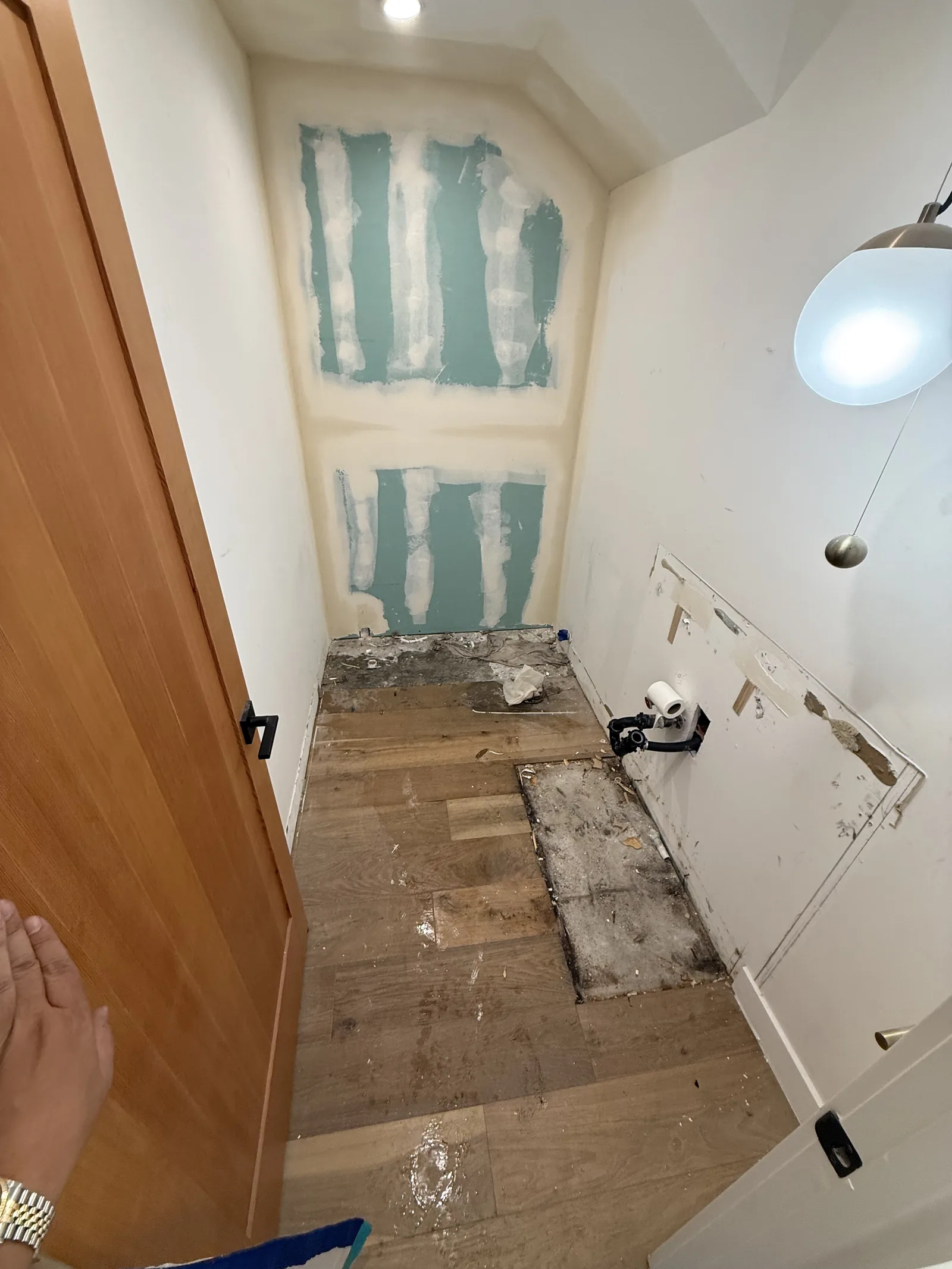
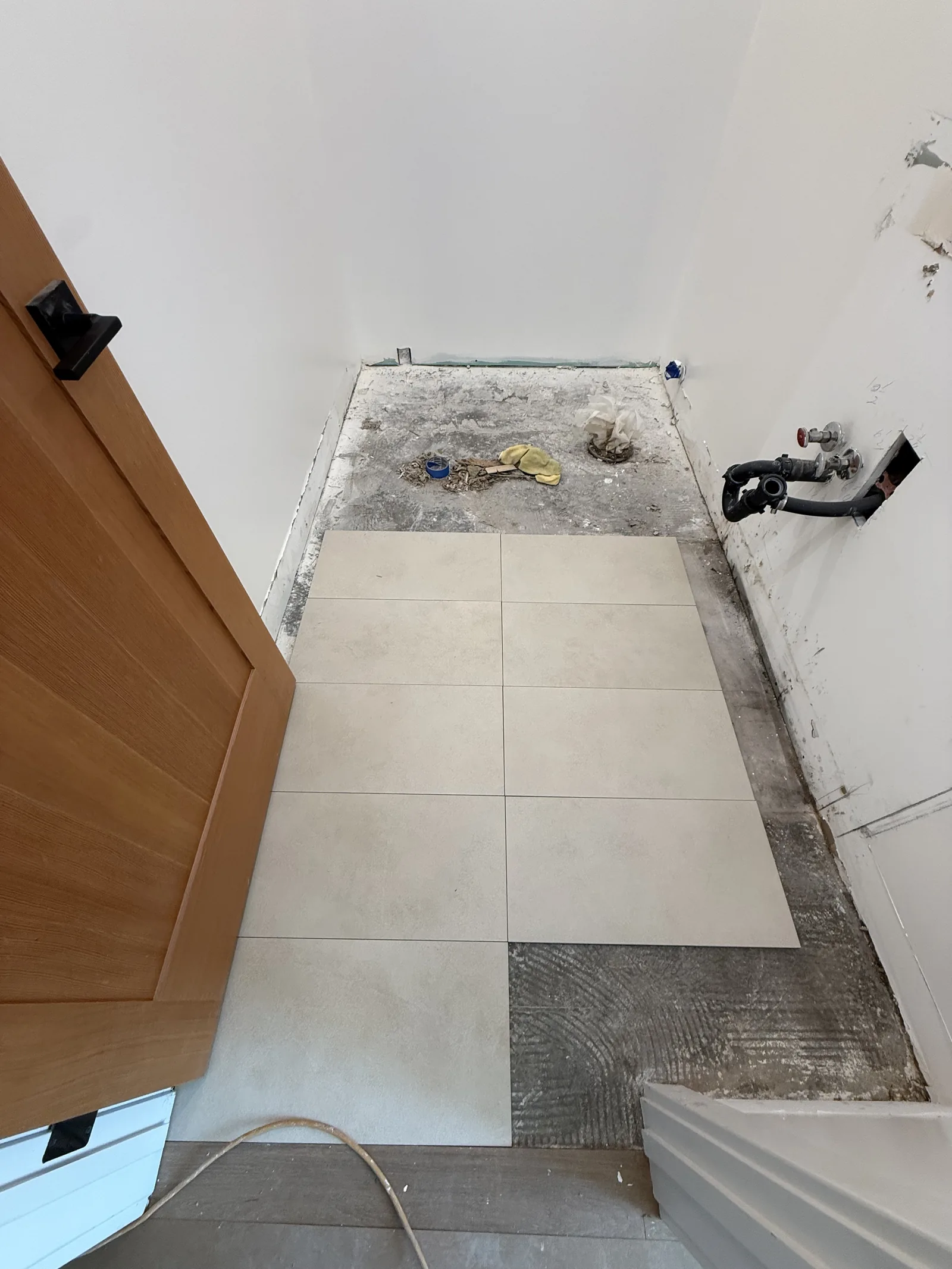
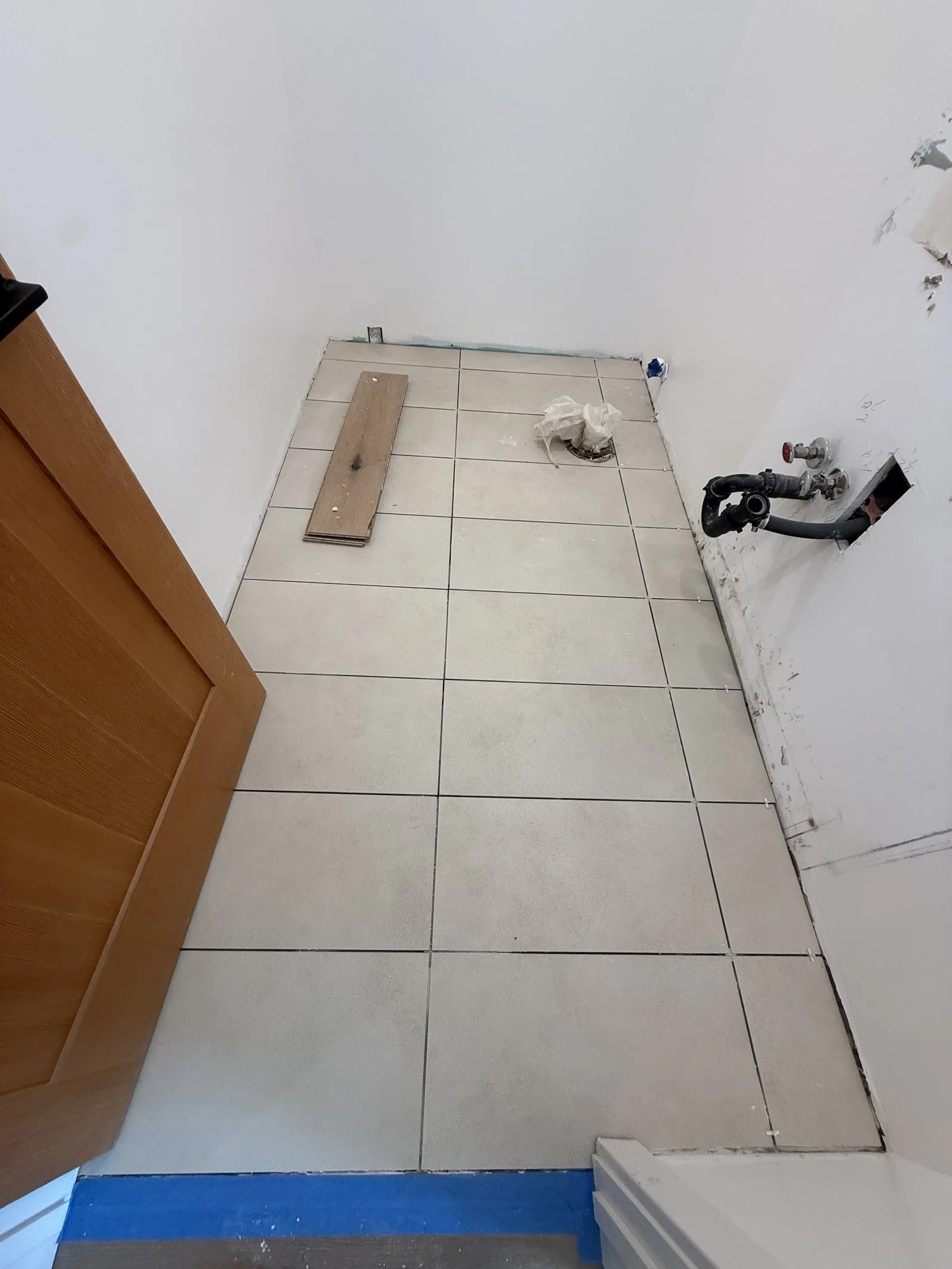
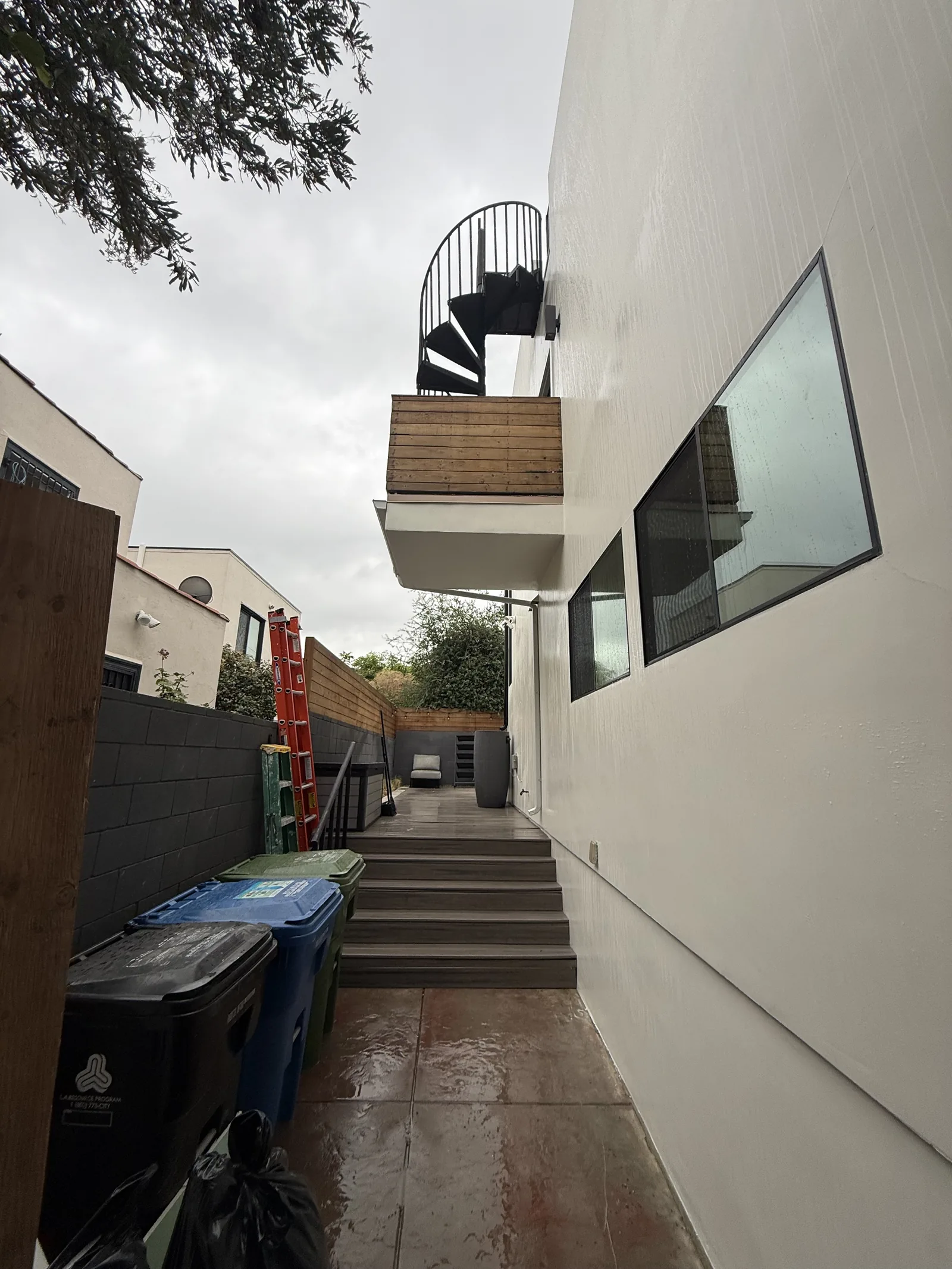
A balcony that drained toward the house instead of away from it, with water reaching the framing and both floors below.
- Neighborhood
- Hollywood
- Project type
- Water Damage & Structural Repair
- Permit authority
- LADBS
The brief
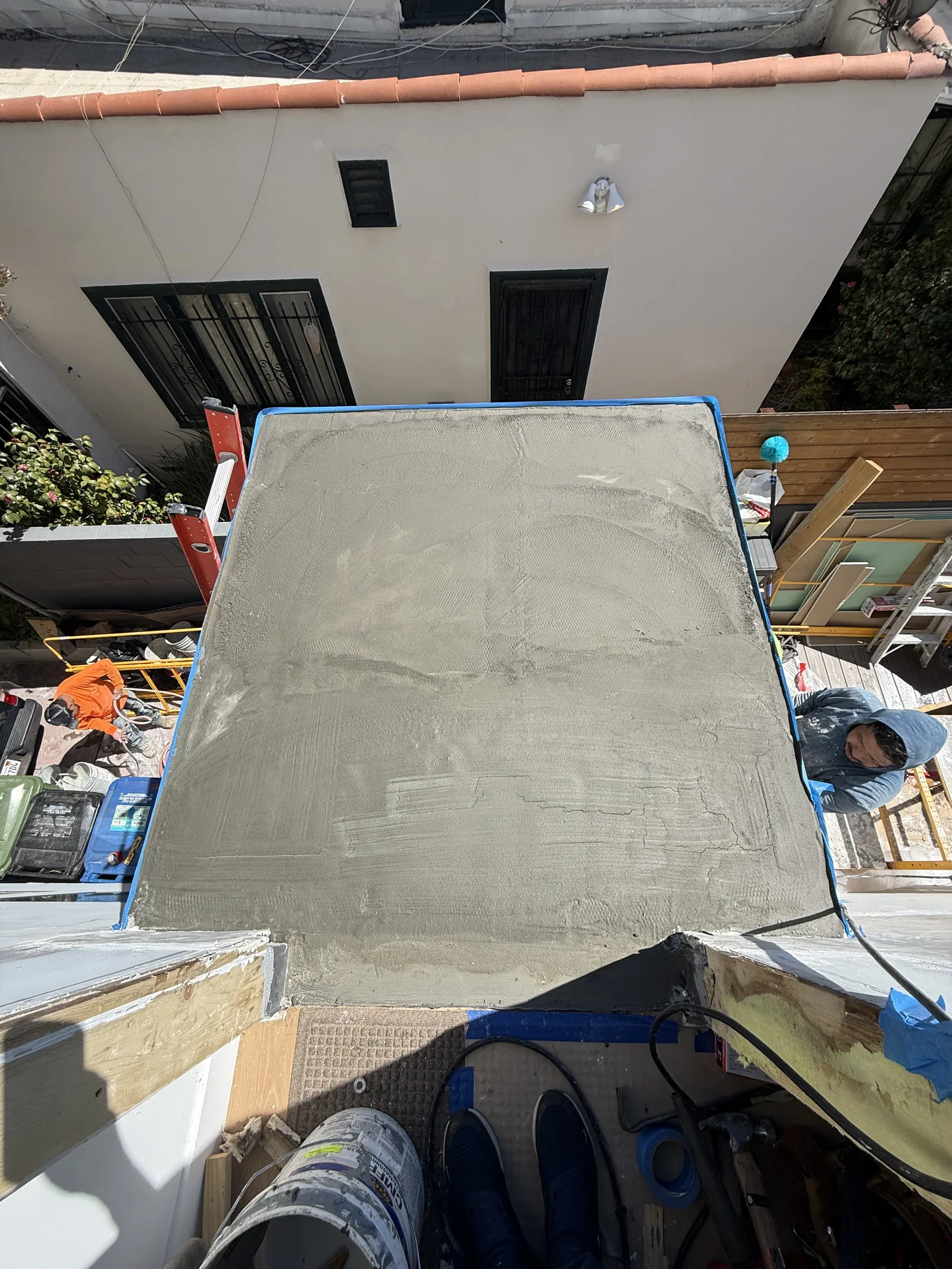
A second-floor balcony in Hollywood, rebuilt from the structure up as part of a structural water damage restoration after years of water getting into the house through it.
The challenge
The balcony sloped the wrong way. Instead of shedding water away from the building, it drained back toward it. There was no rain gutter.
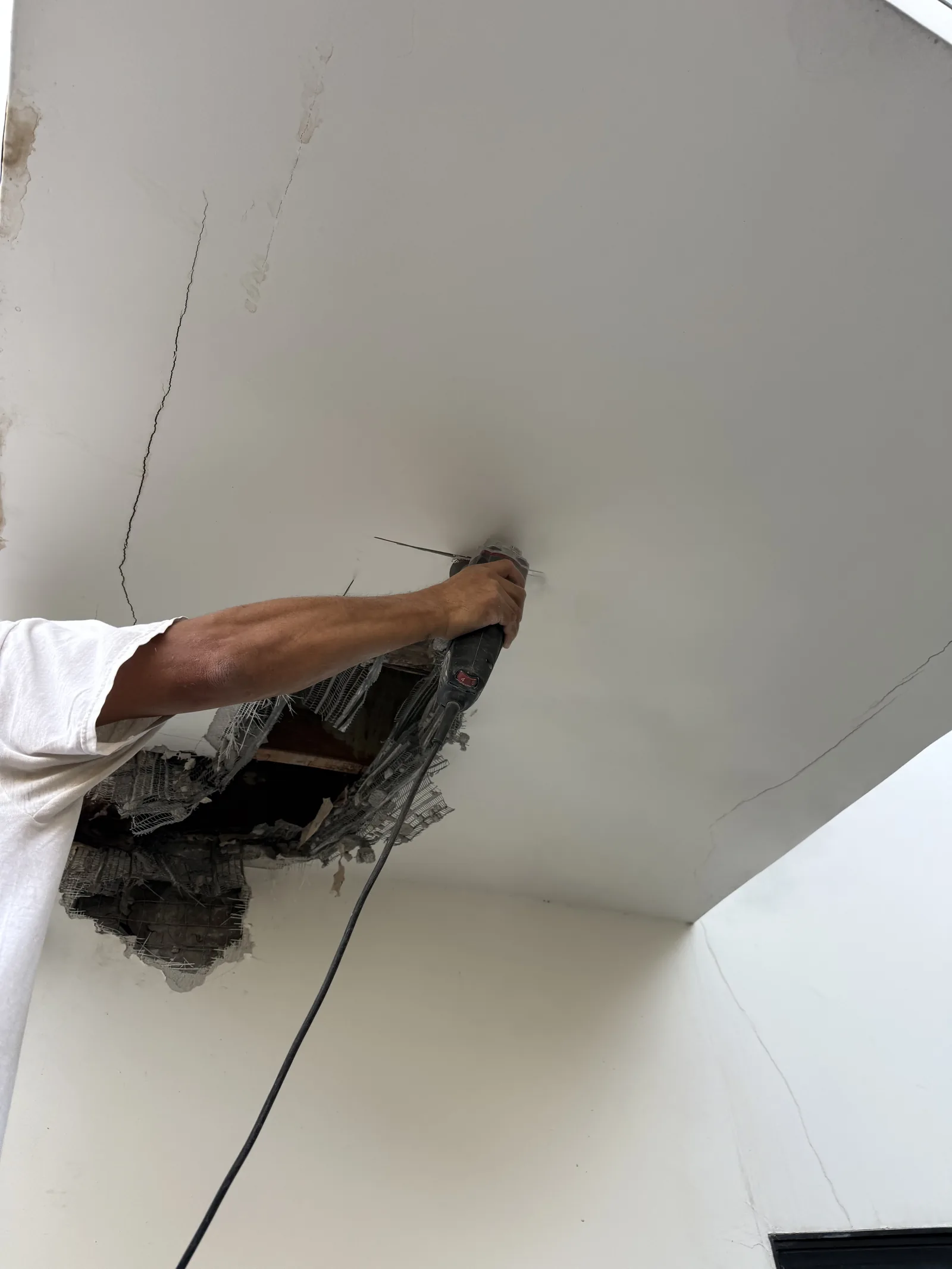
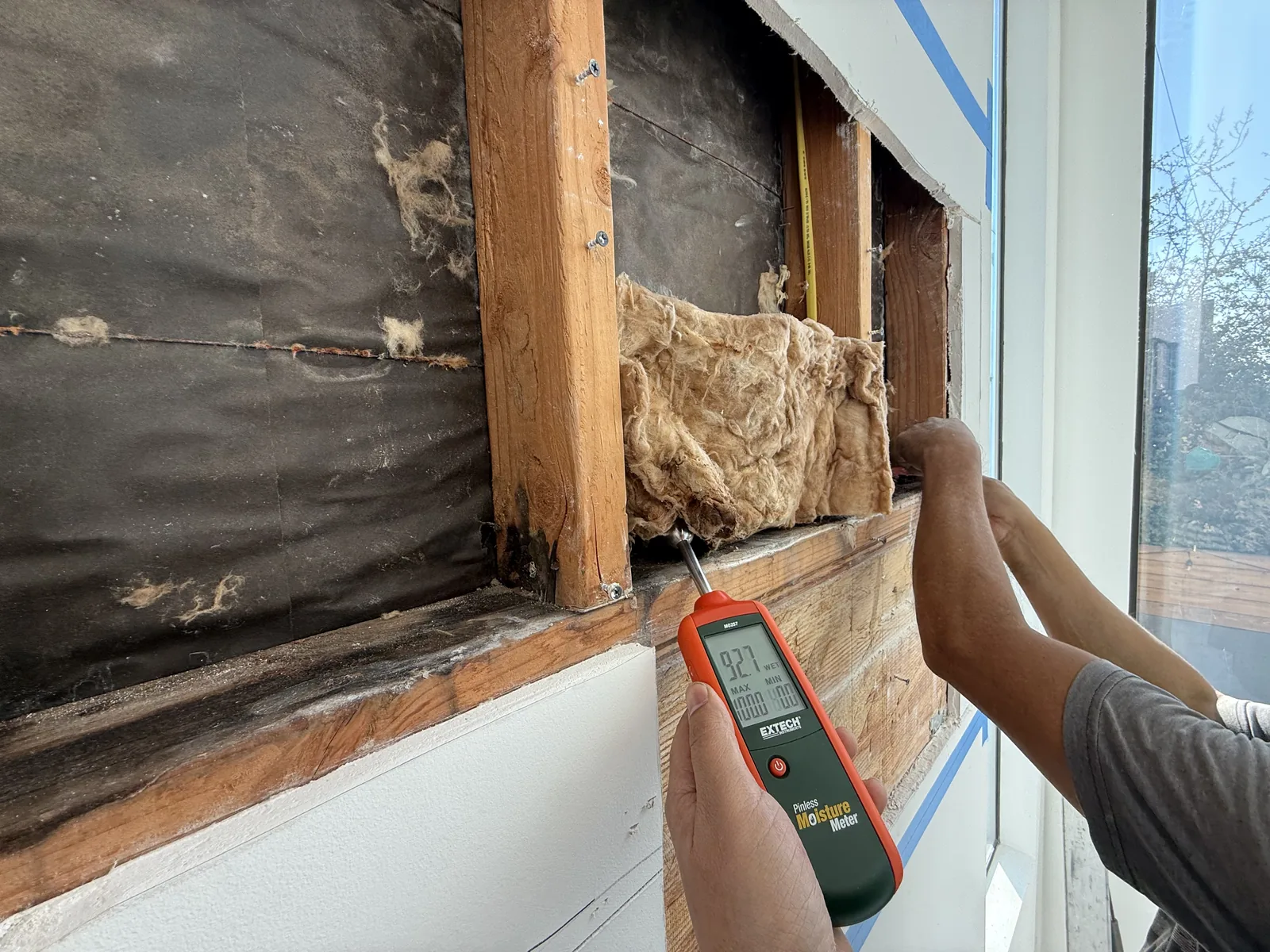
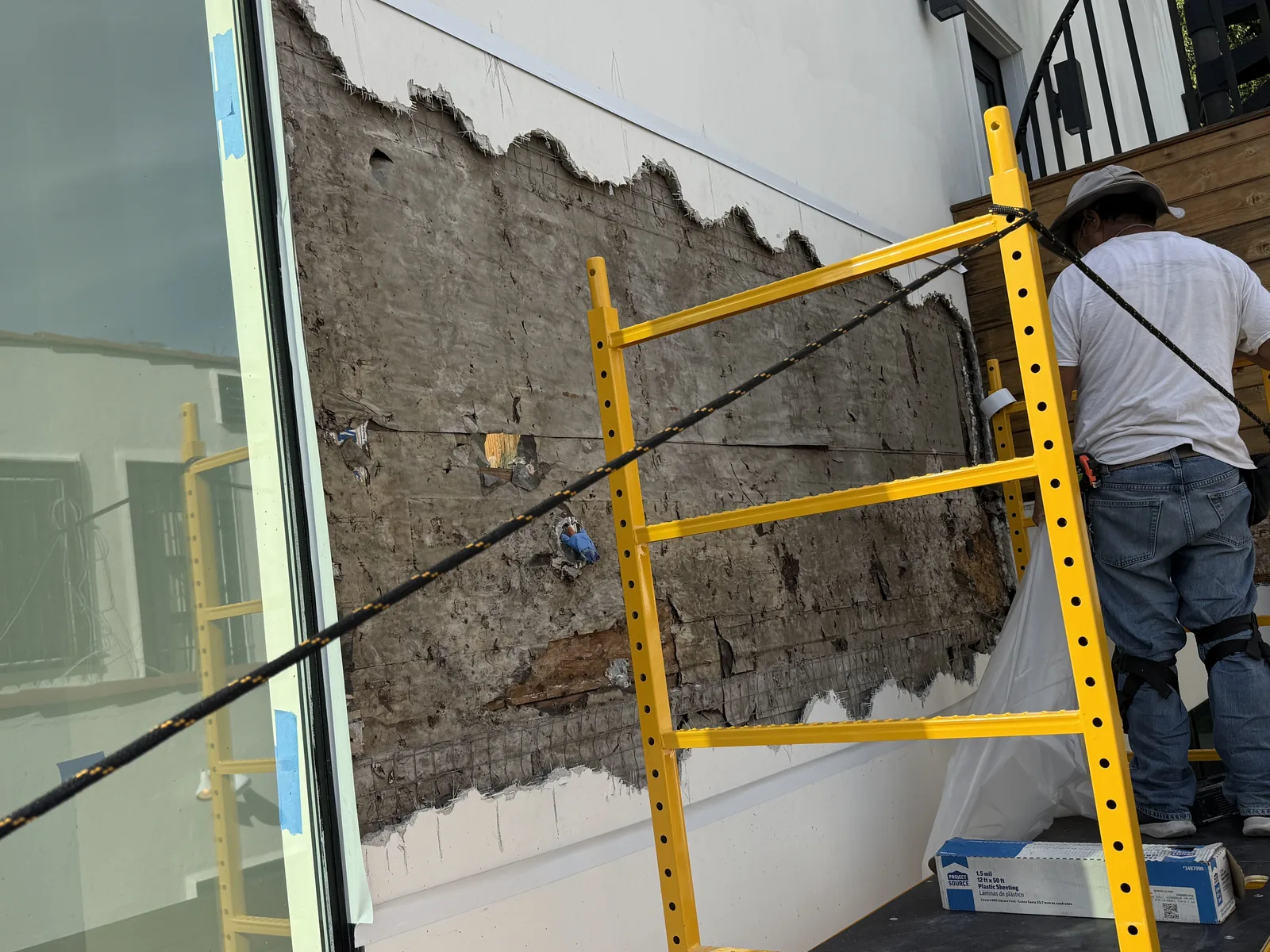
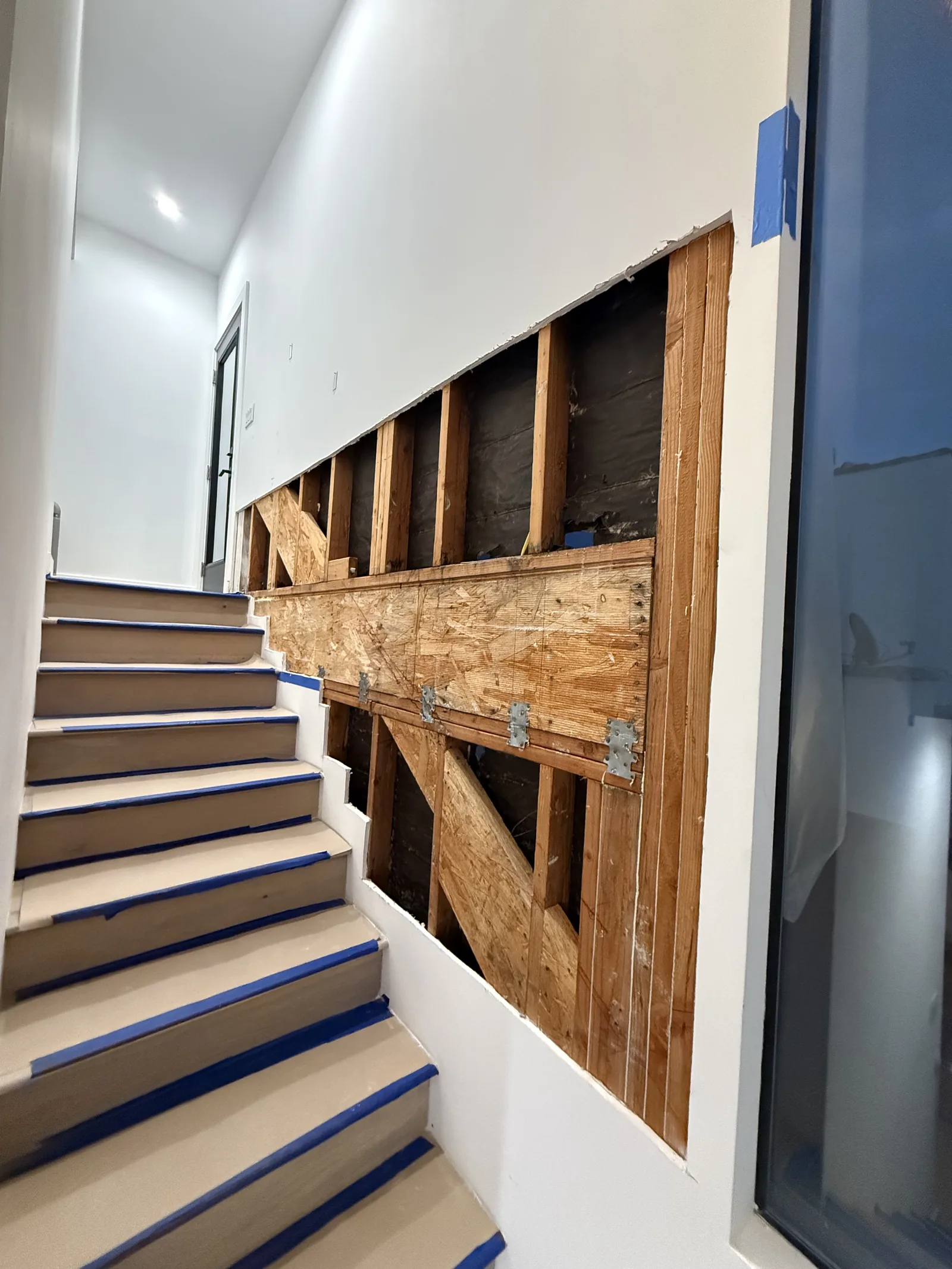
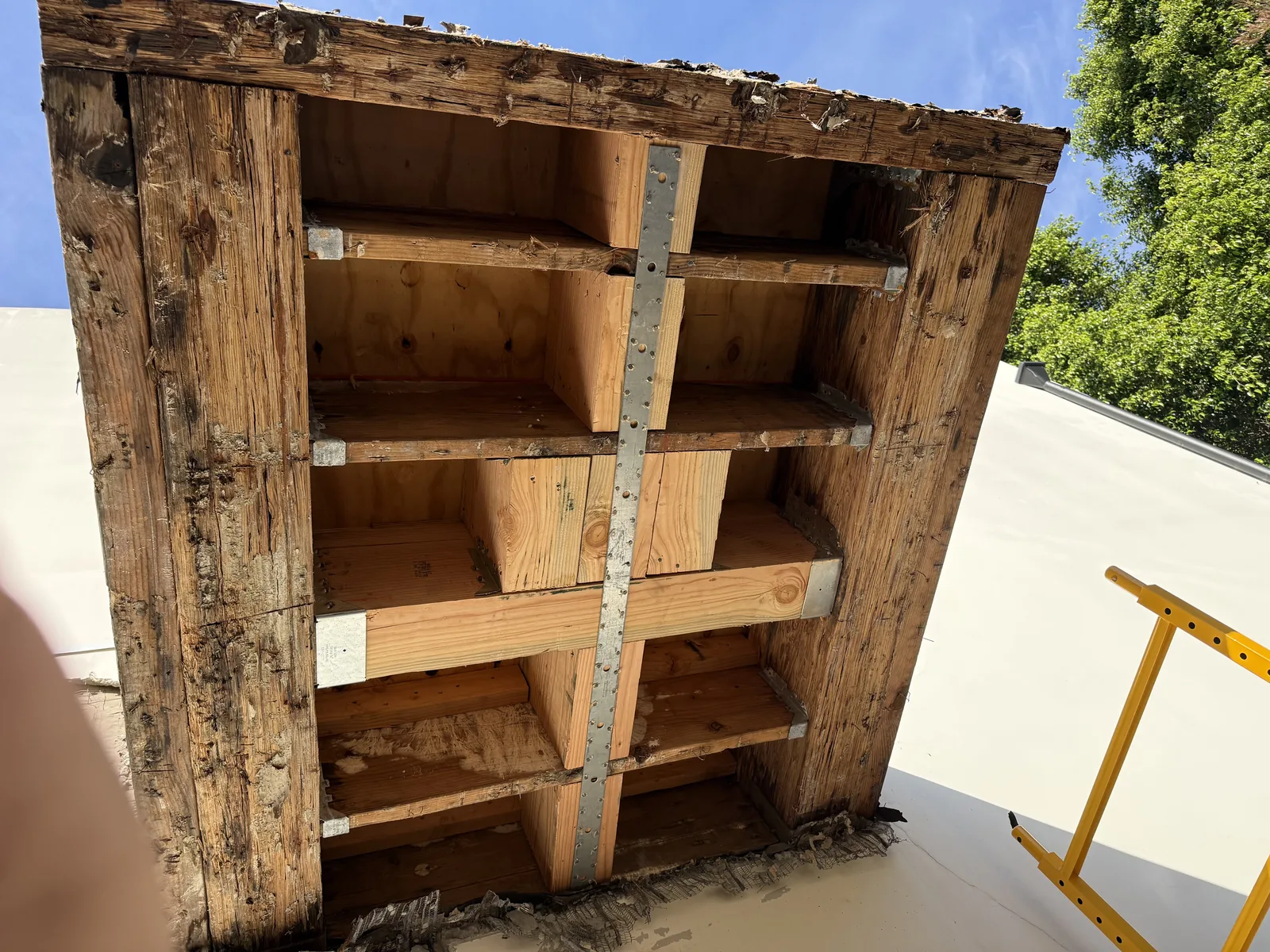
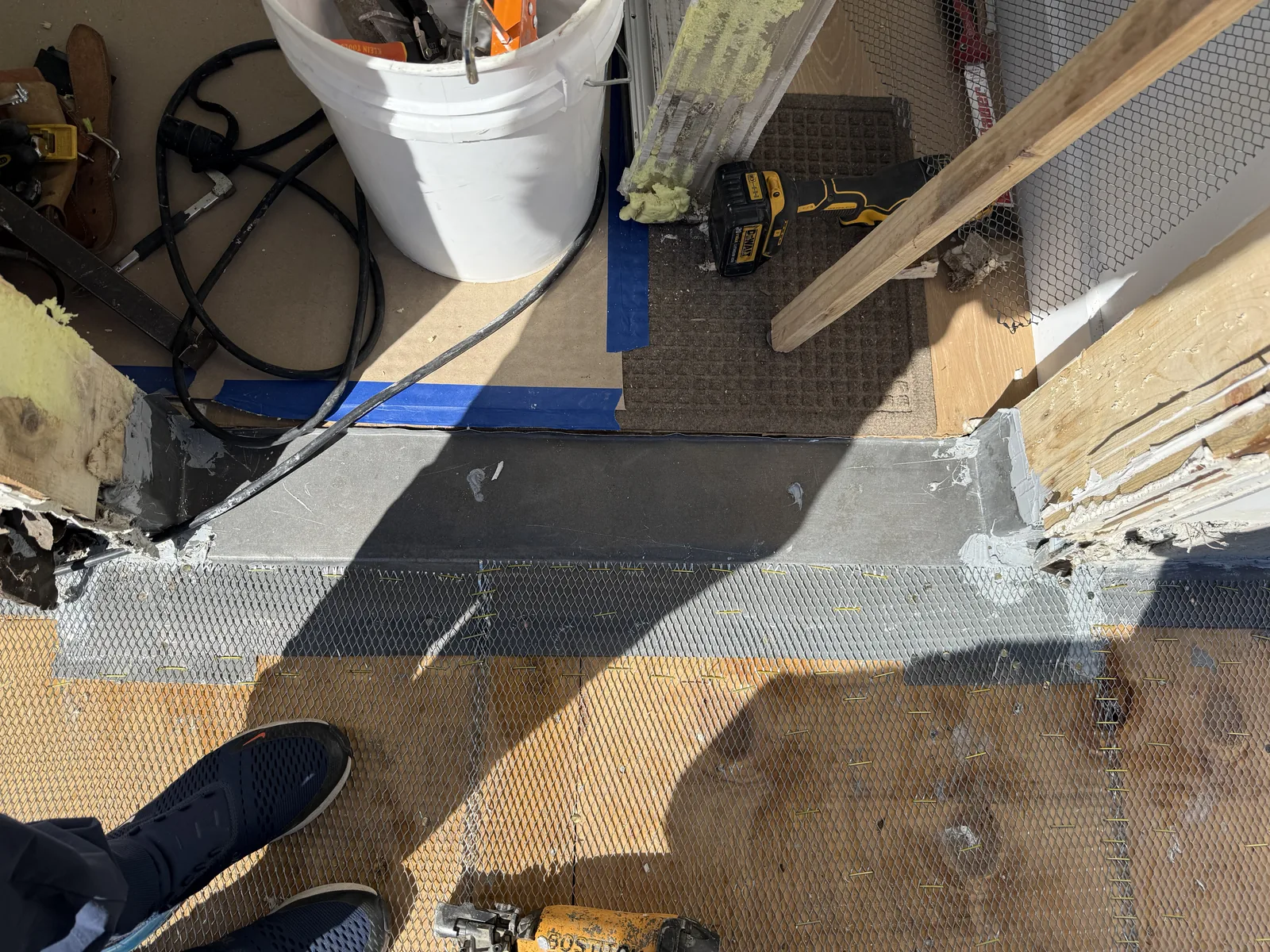
Add a crack in the stucco, a failed door seal, and flashing at the balcony edge that was not sealed, and water had four separate ways in. It reached the framing of the balcony structure, then the second floor, then the first.
Finding the source was the hard part. A leak that shows up on the first floor did not necessarily start there, and this one had not started in one place at all.
We traced it with thermal imaging, moisture meters, and an endoscope inspection camera. But the equipment only shows you where moisture is. Reading what that means, and working backward to where water actually enters, is the part that takes experience. Four separate points of entry, each one contributing, none of them obvious on its own.
The solution
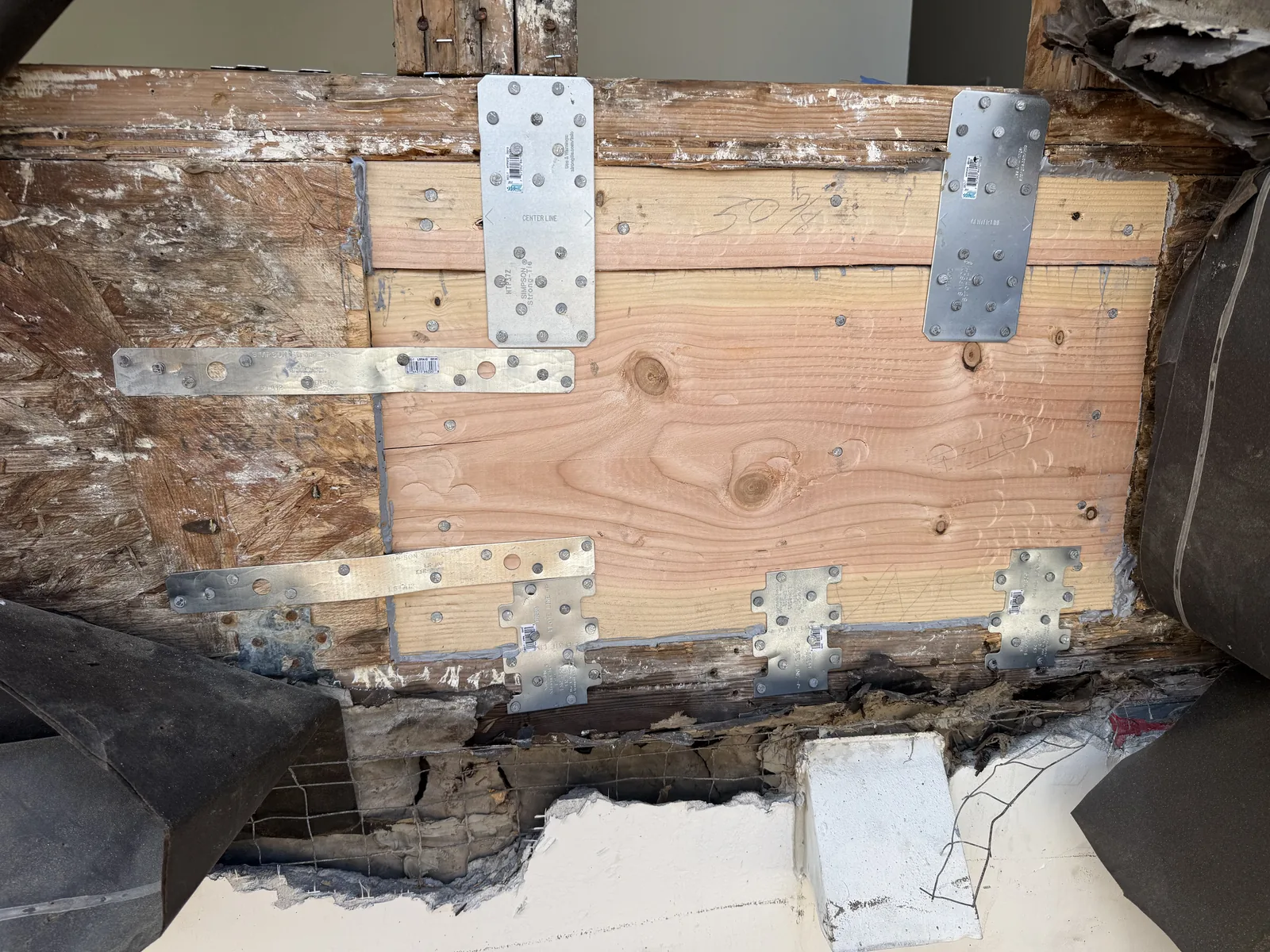
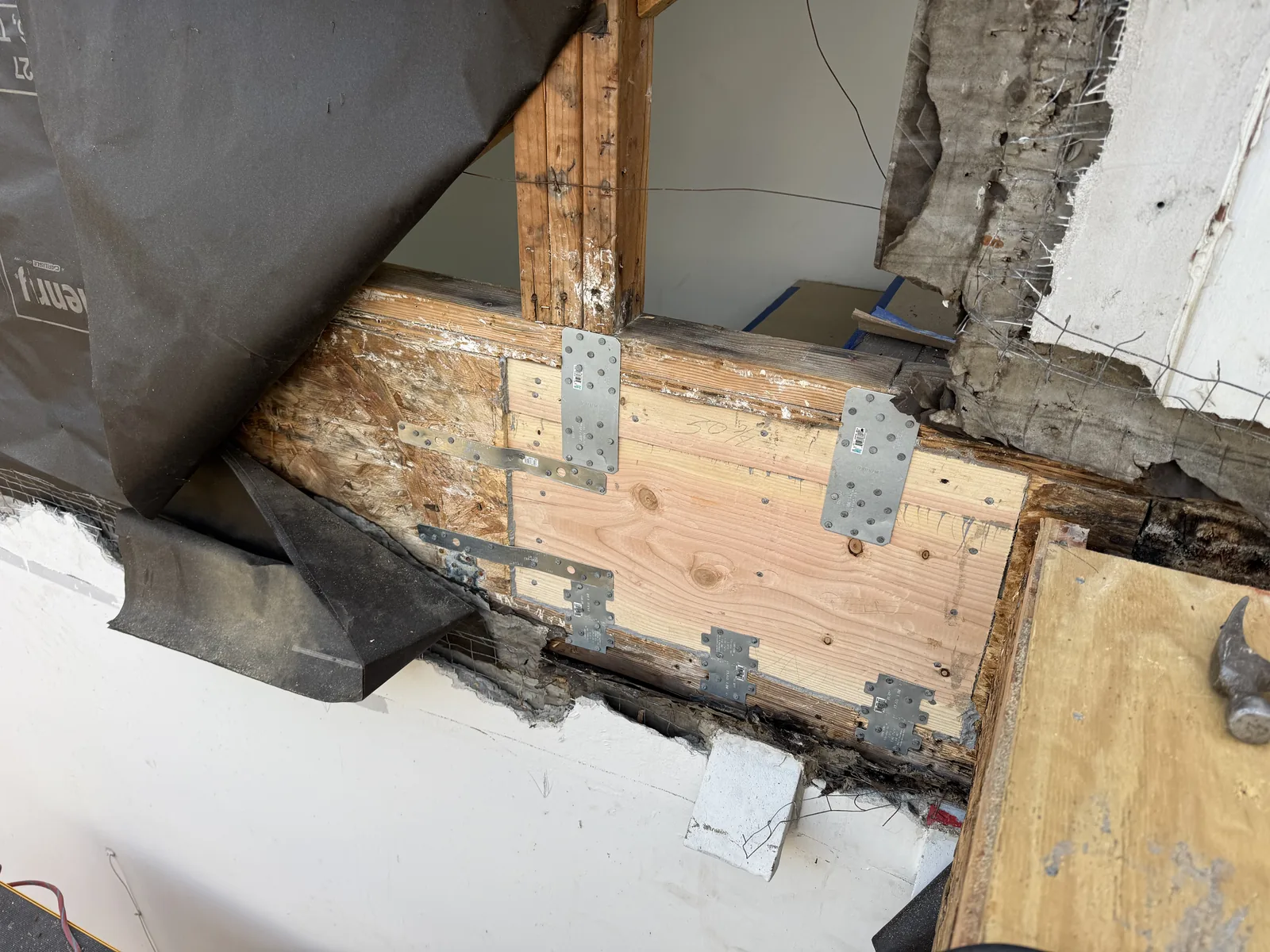
This was not a repair we could scope on our own. A structural engineer was brought in, and the work followed his sketch, his load calculations, and his instructions.
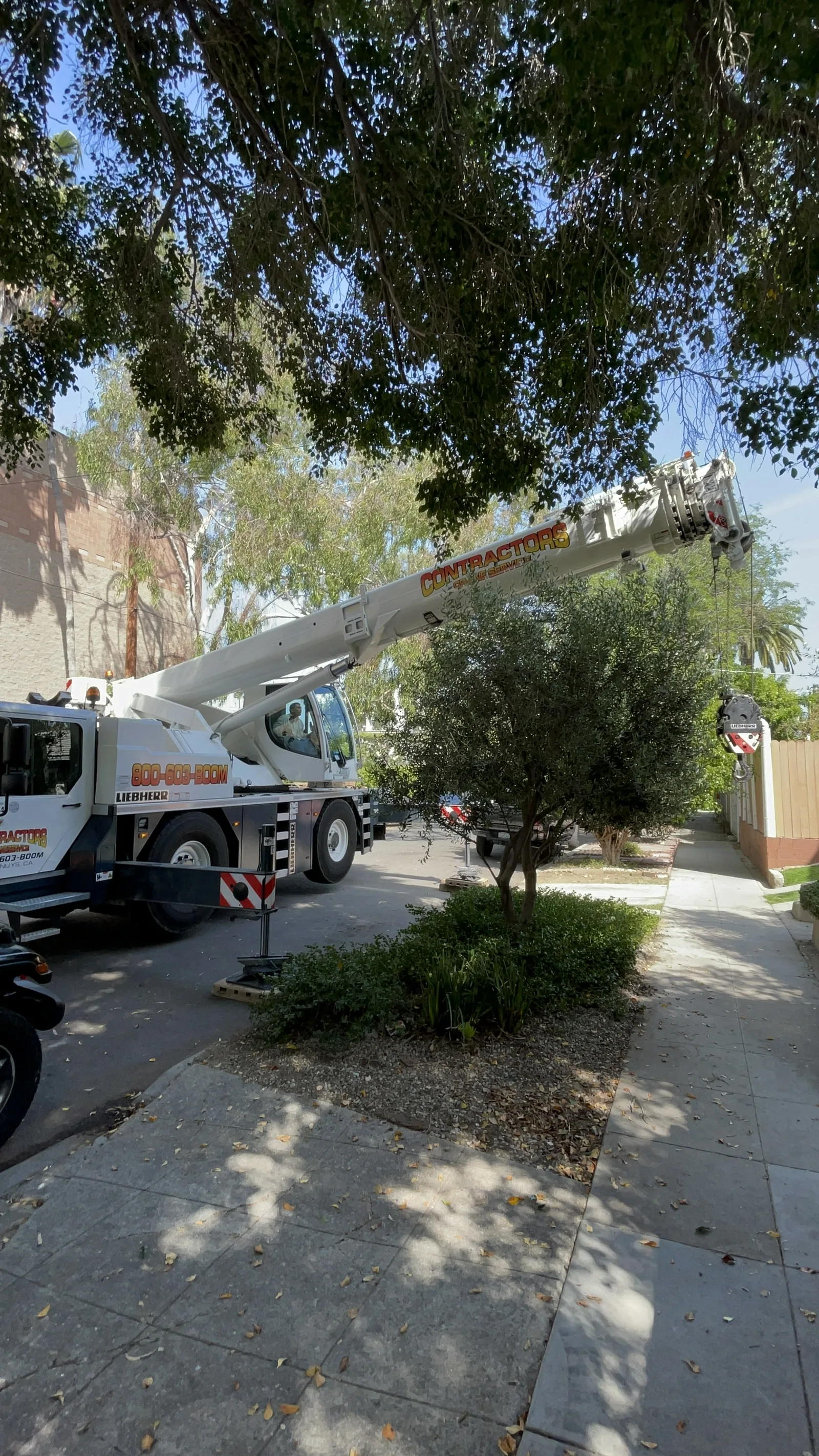
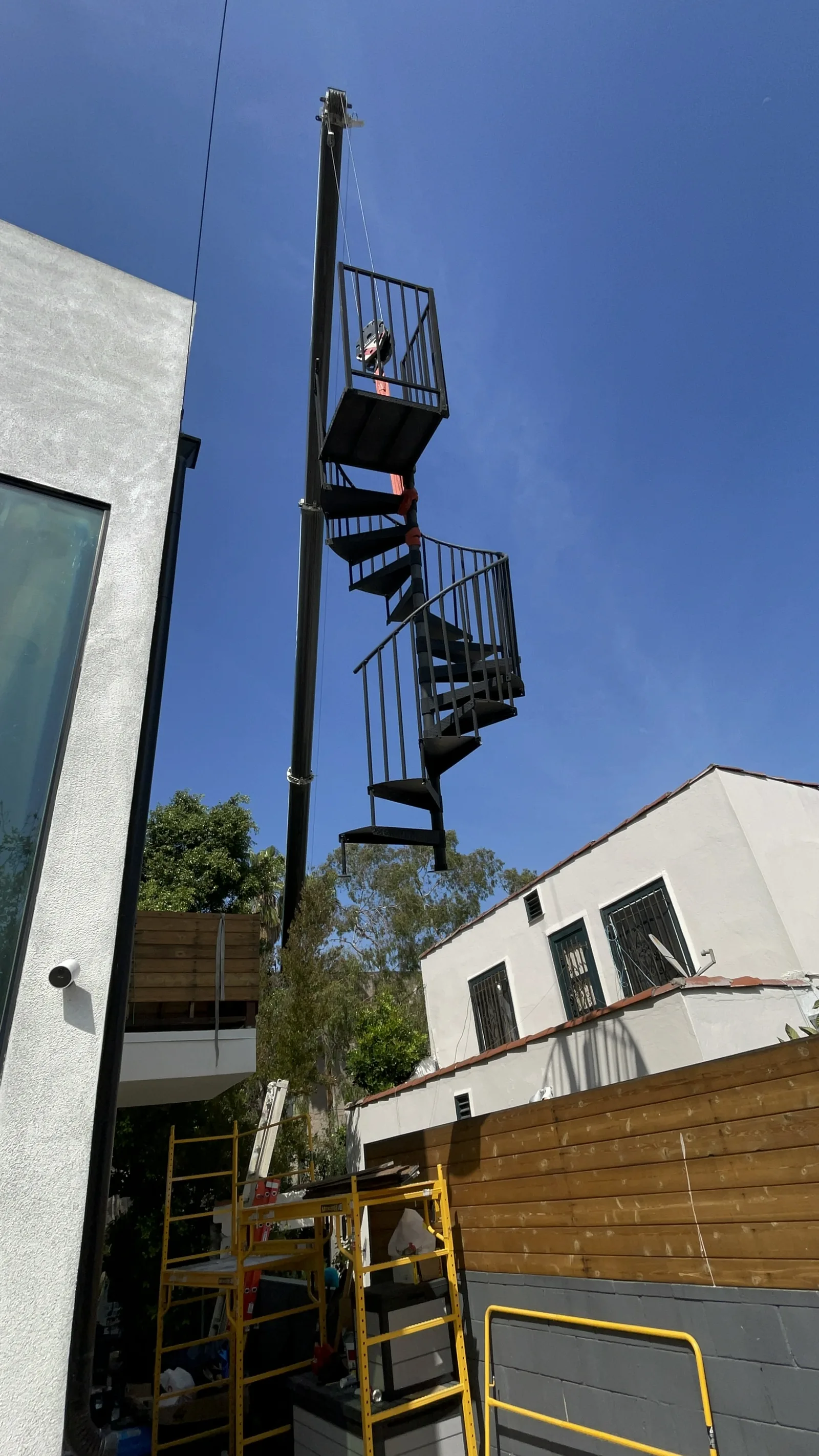
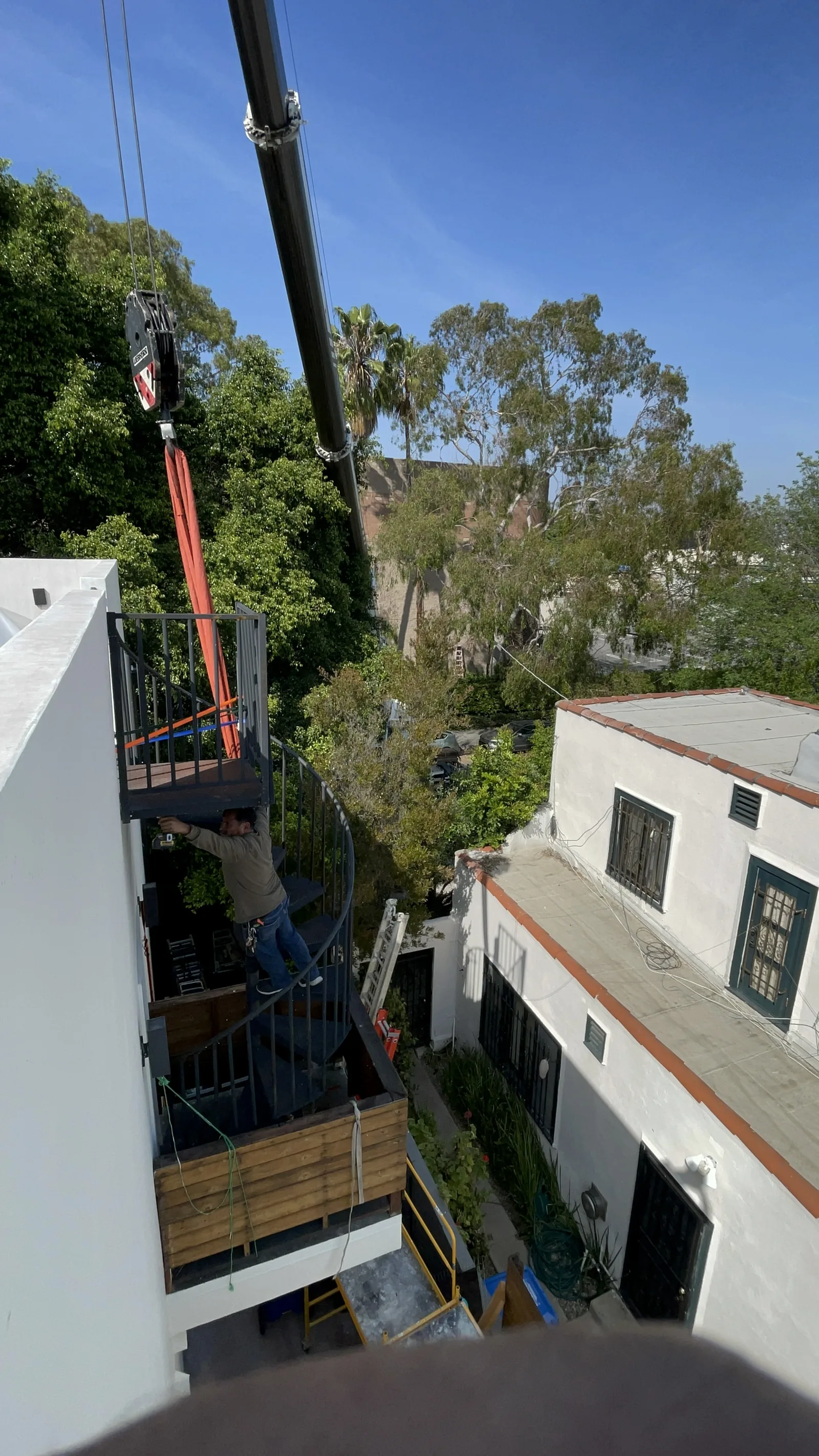
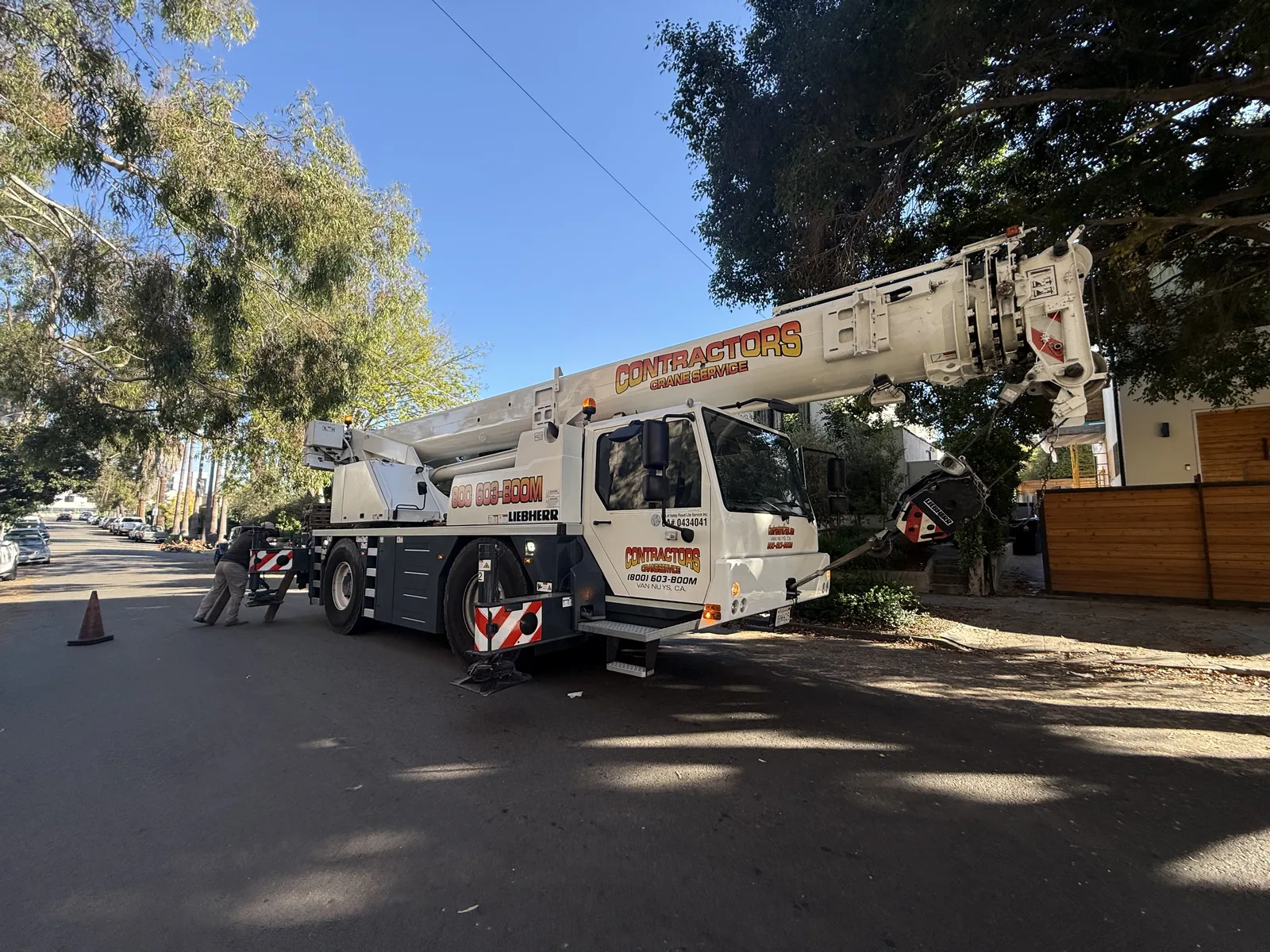
The staircase and railings came off first. That took a crane.
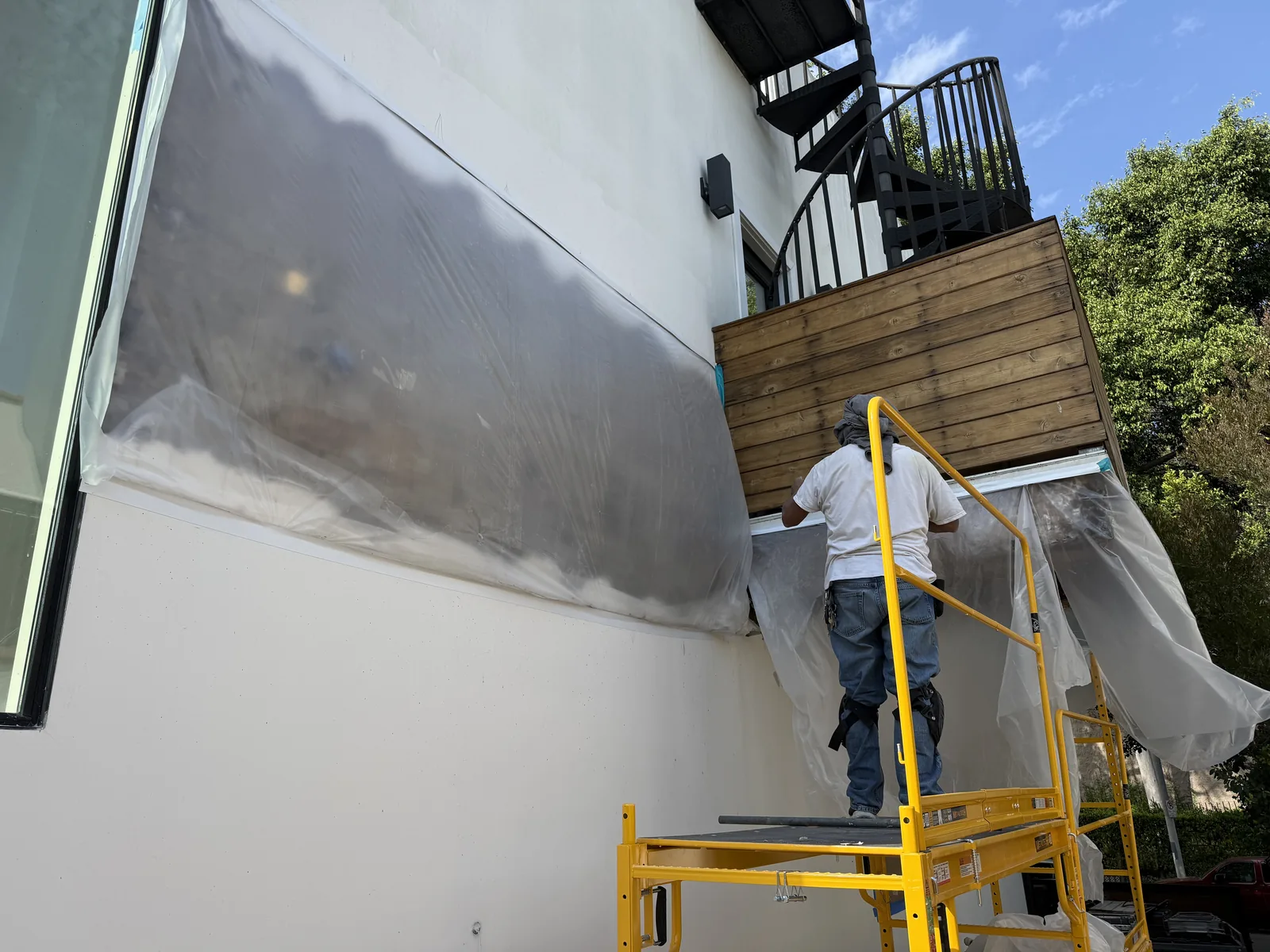
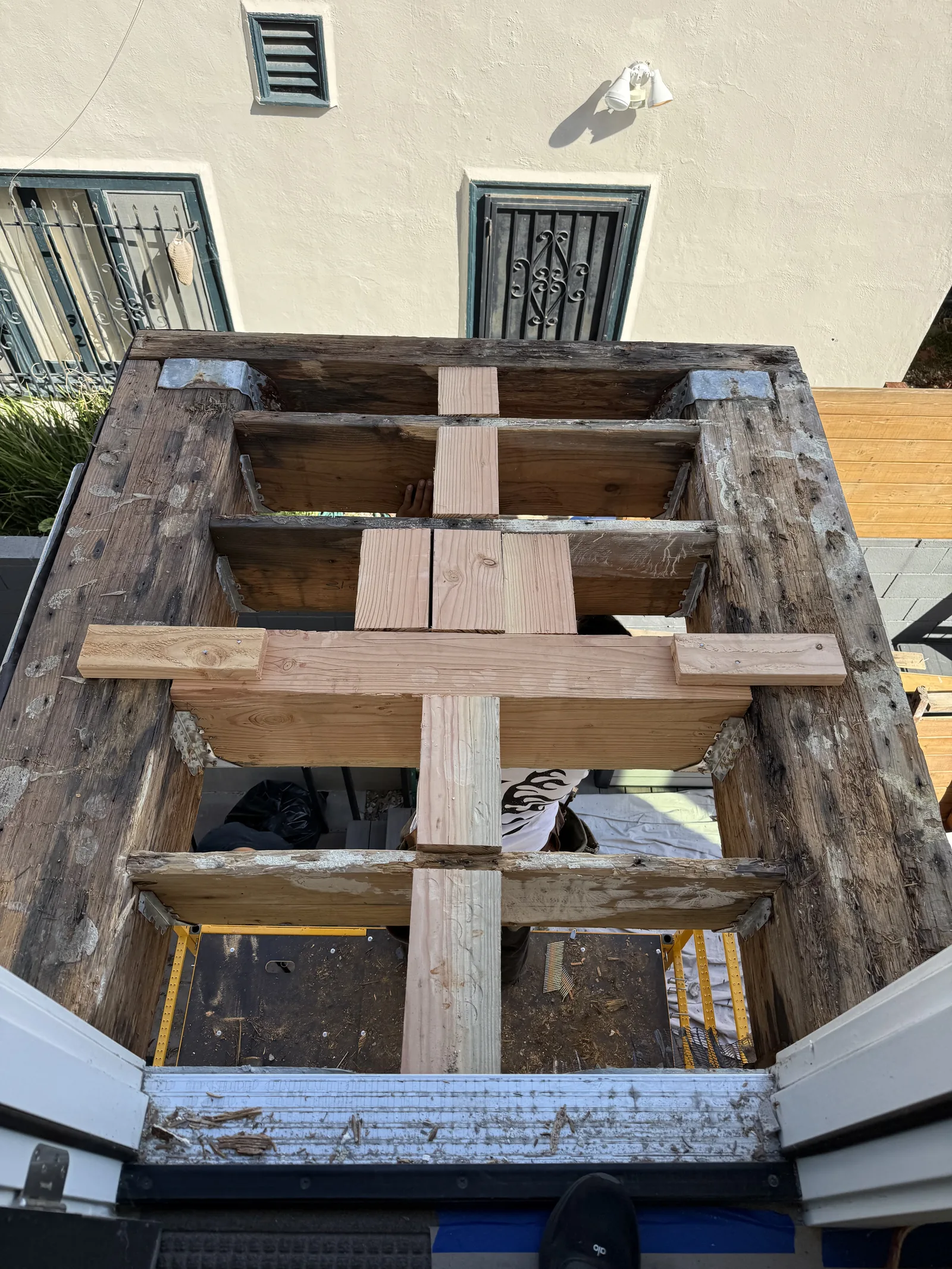
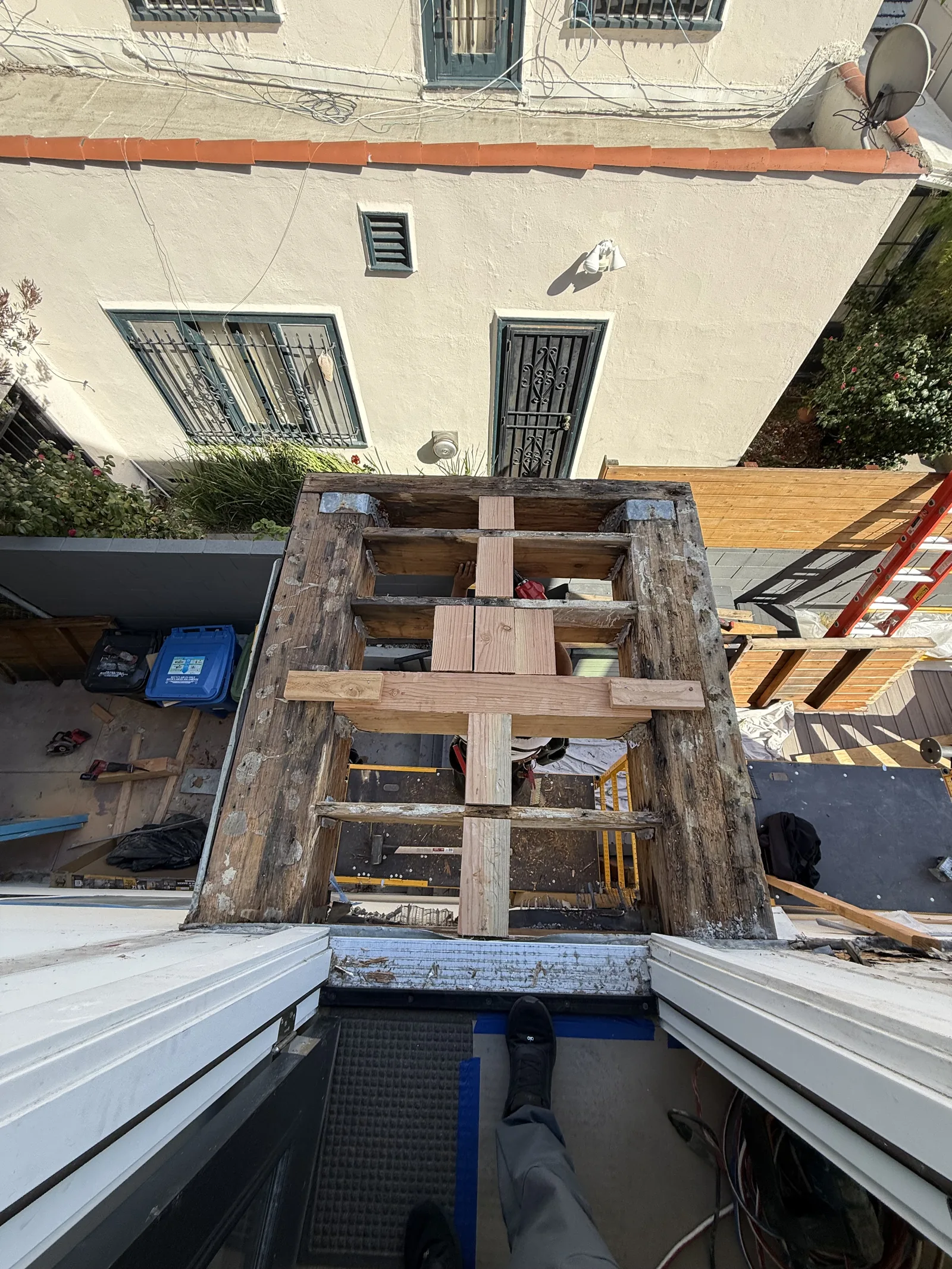
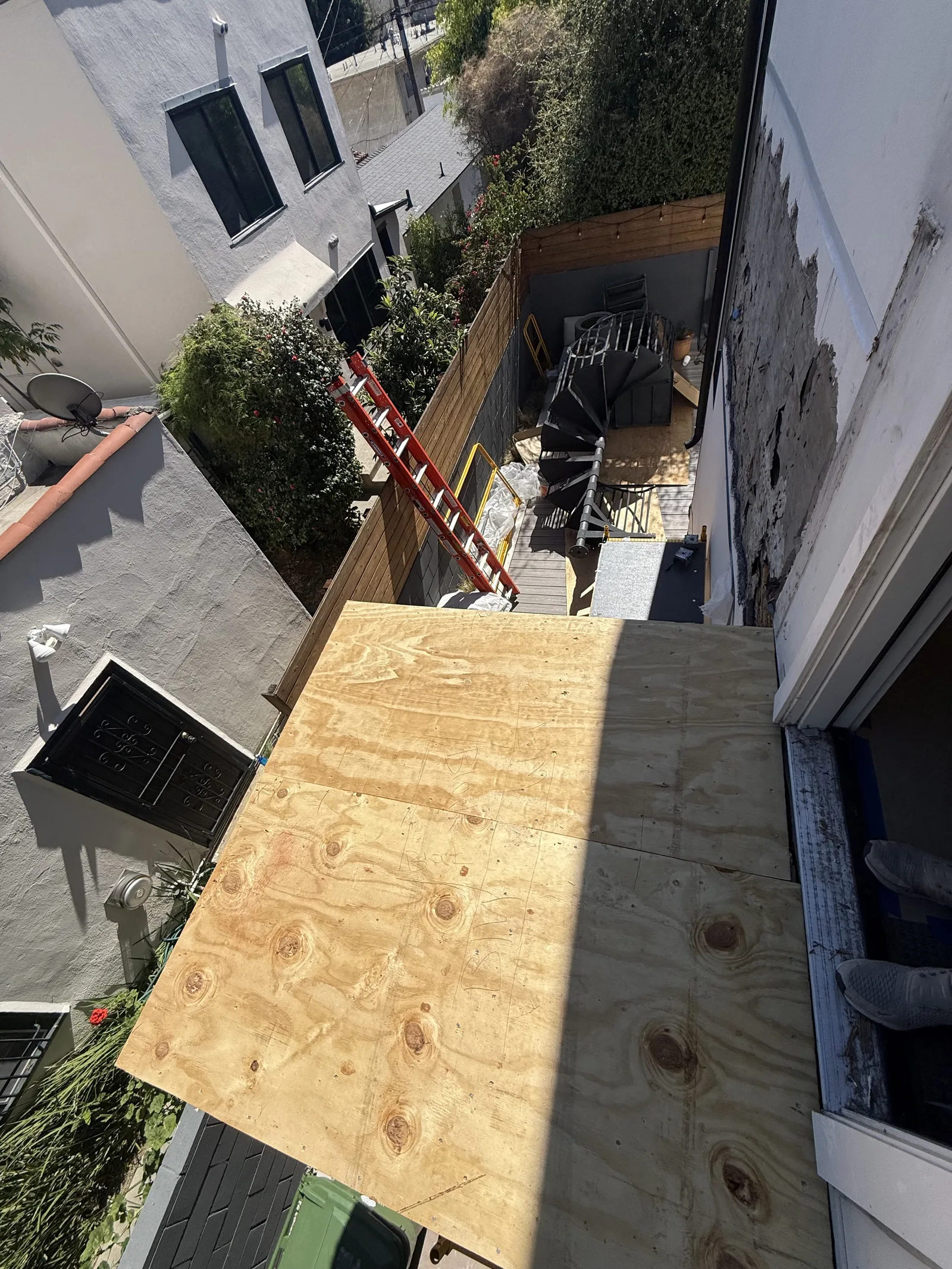
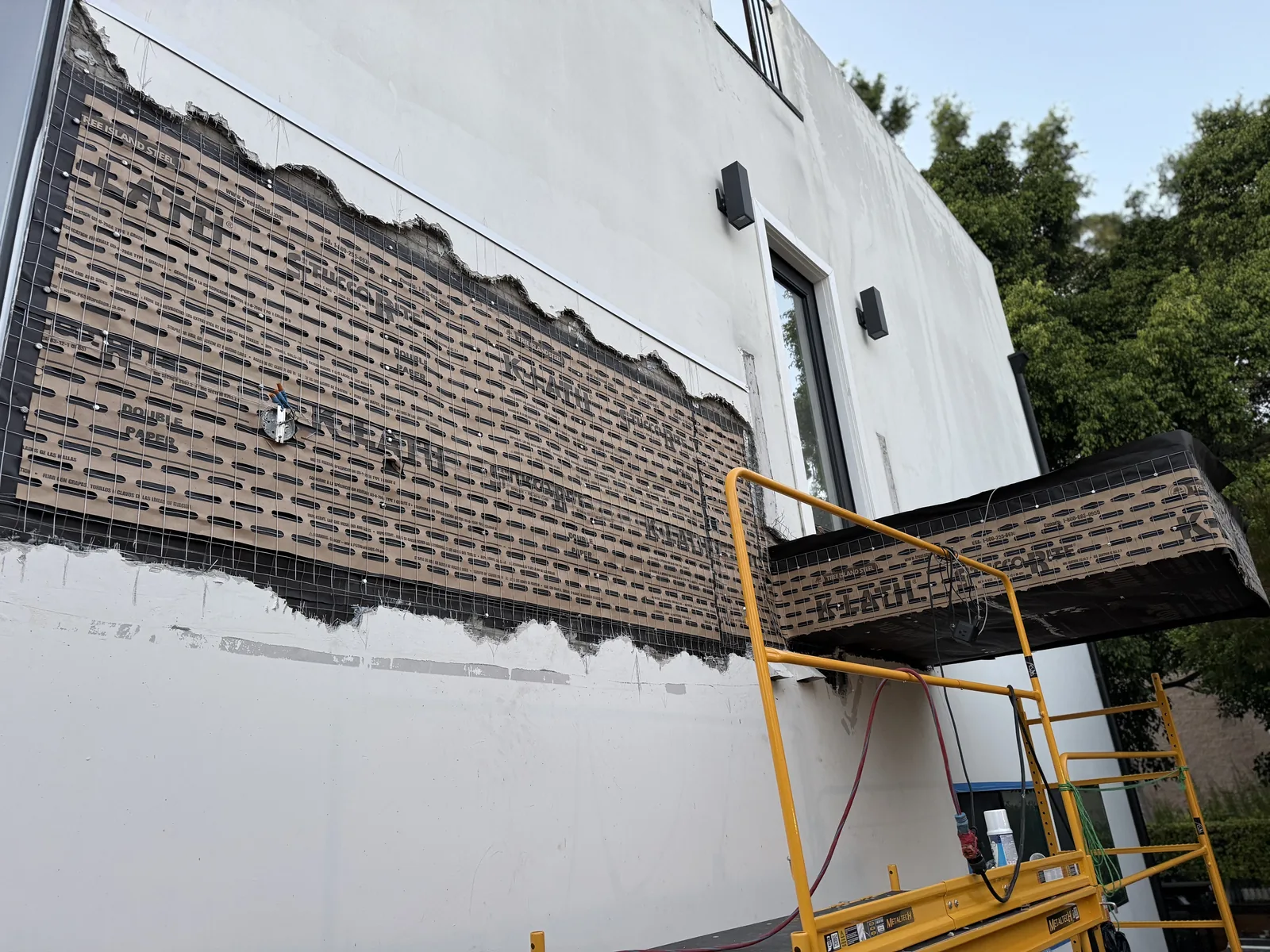
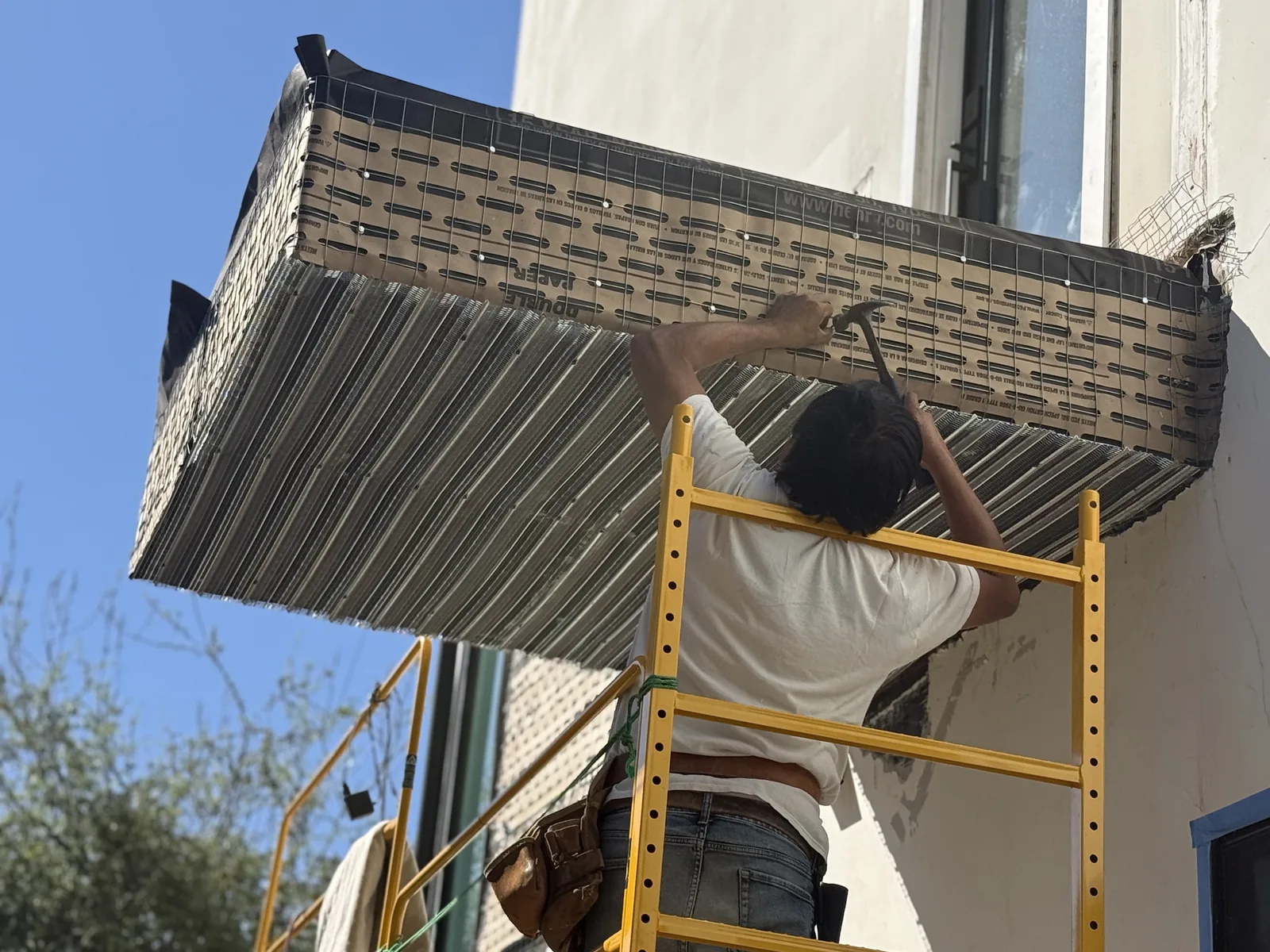
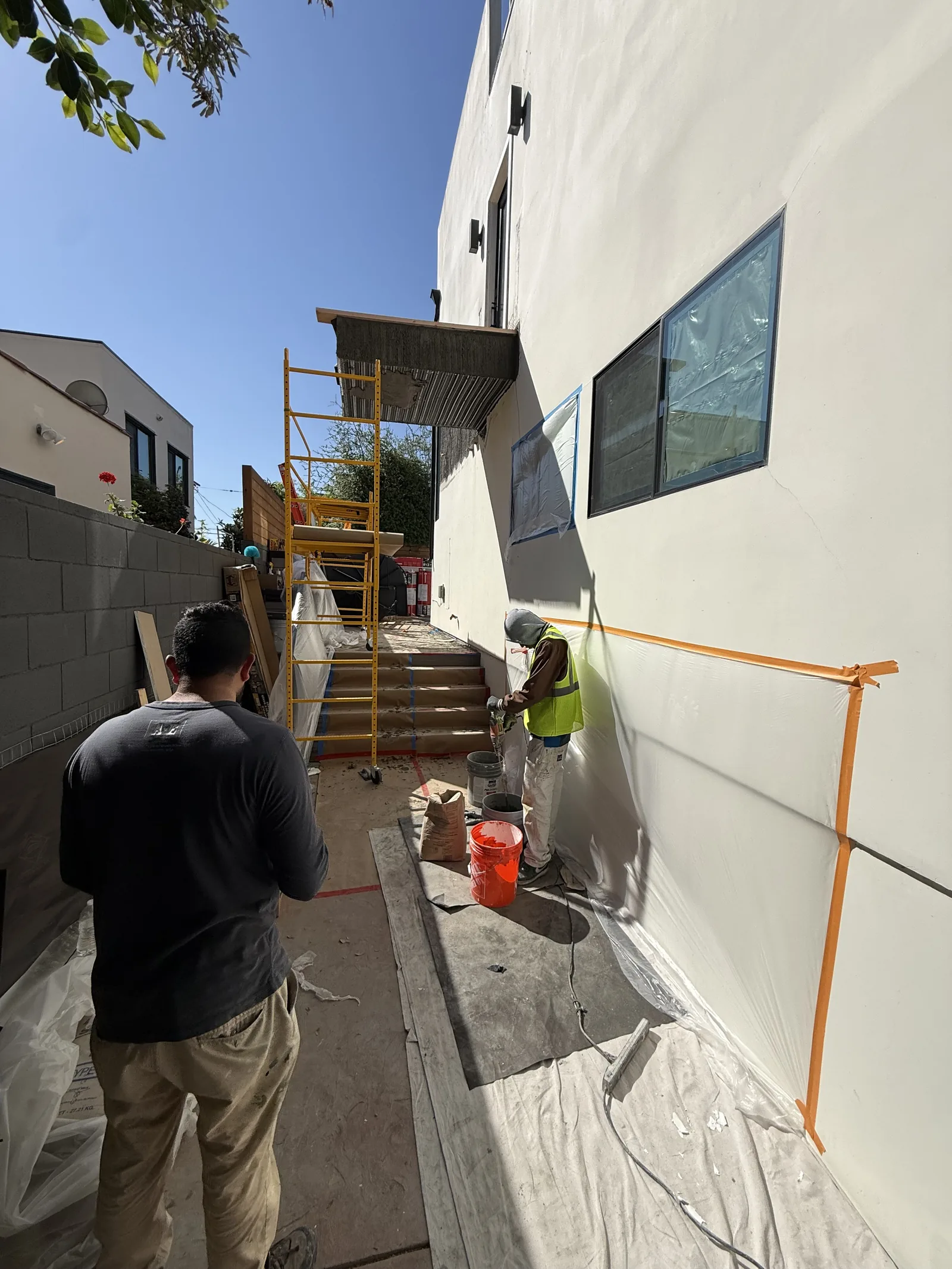
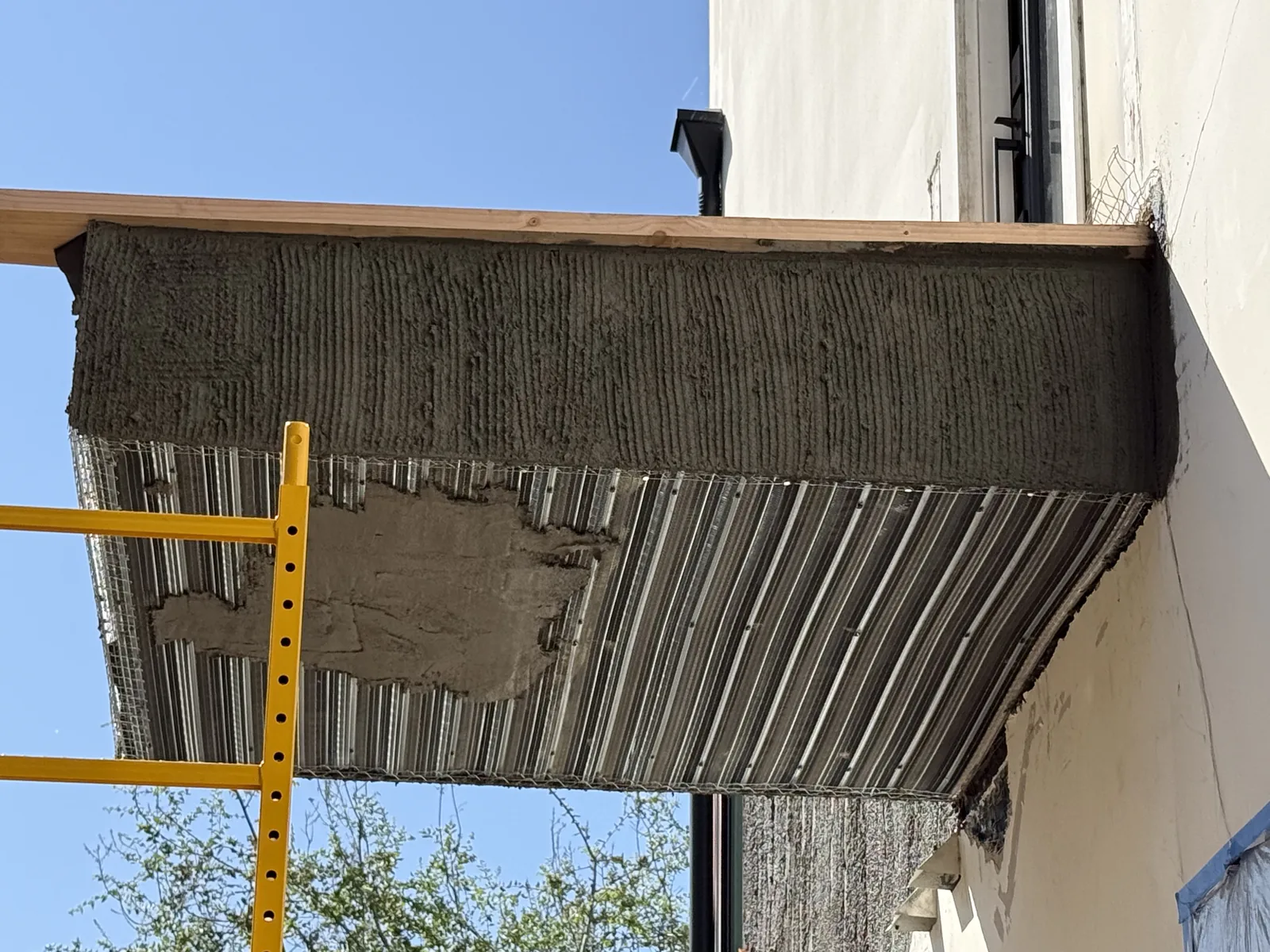
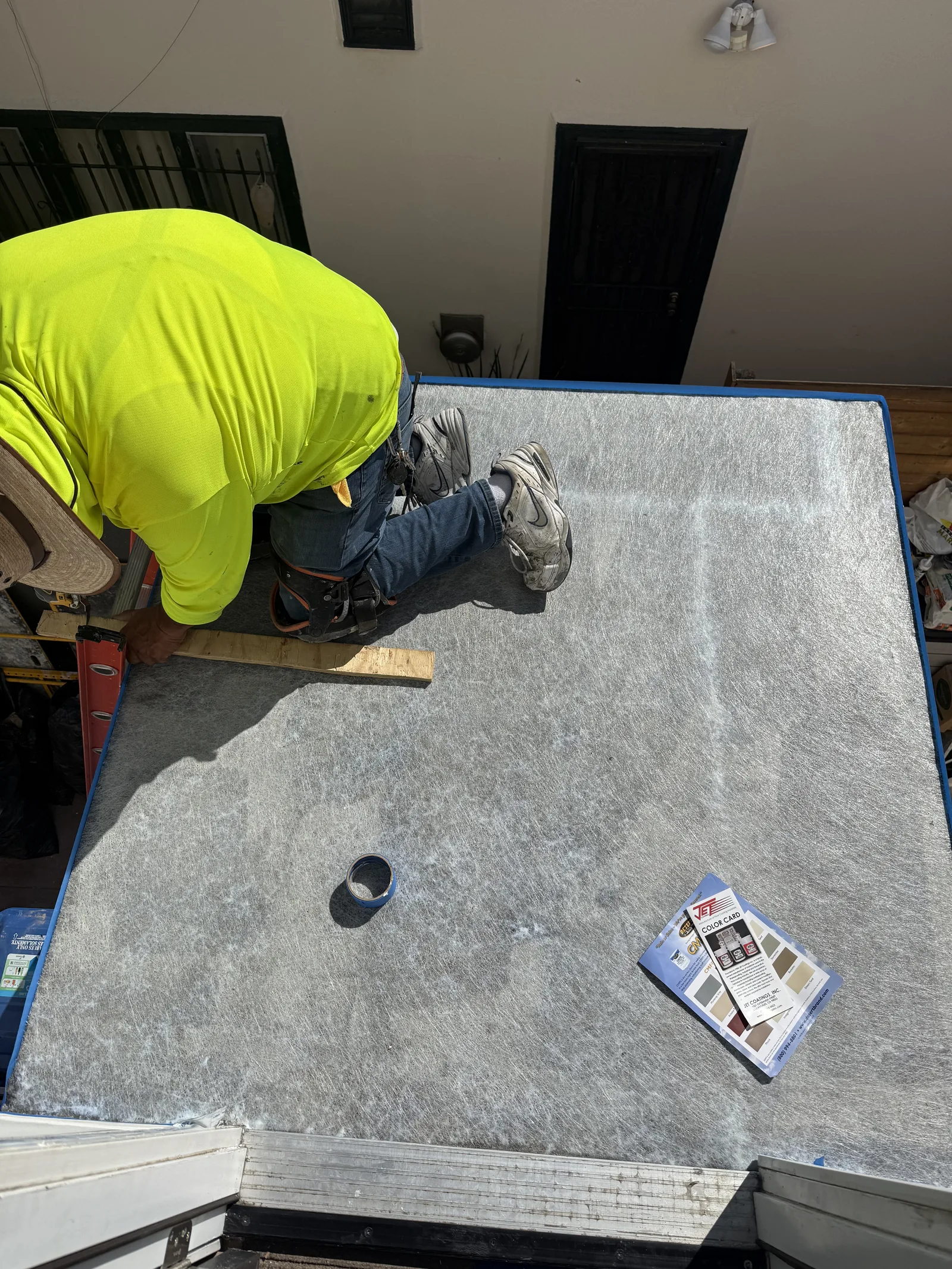
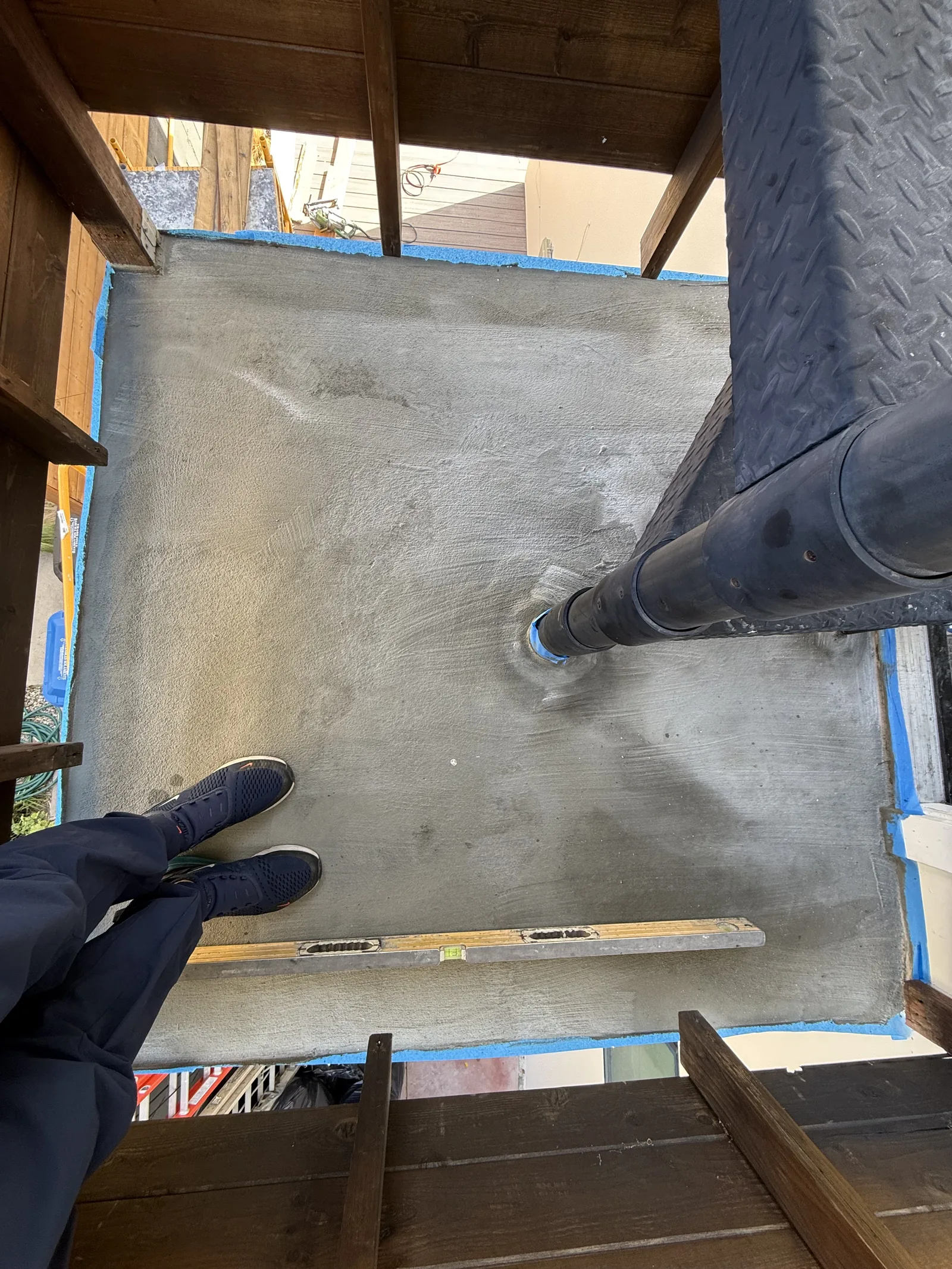
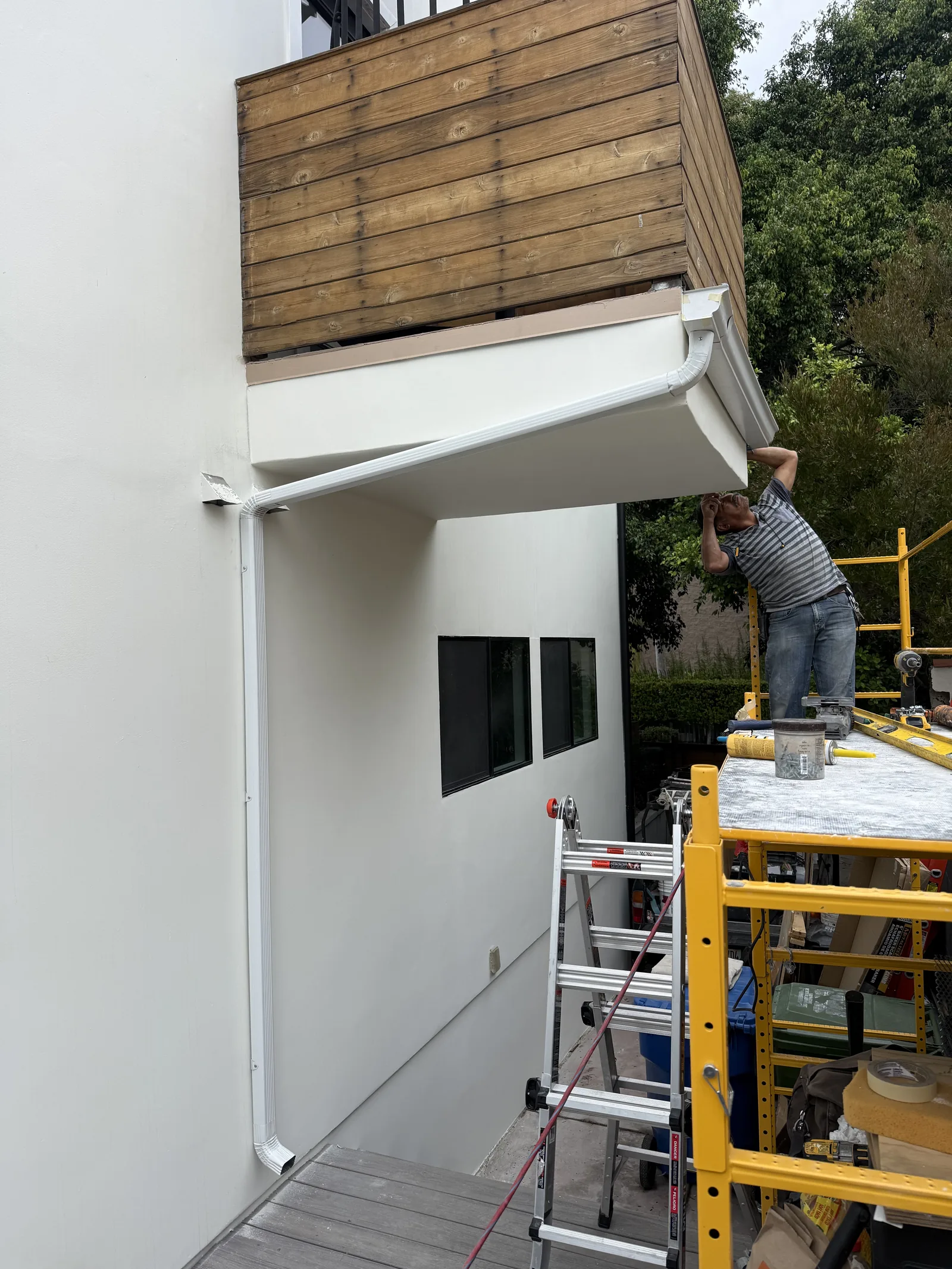
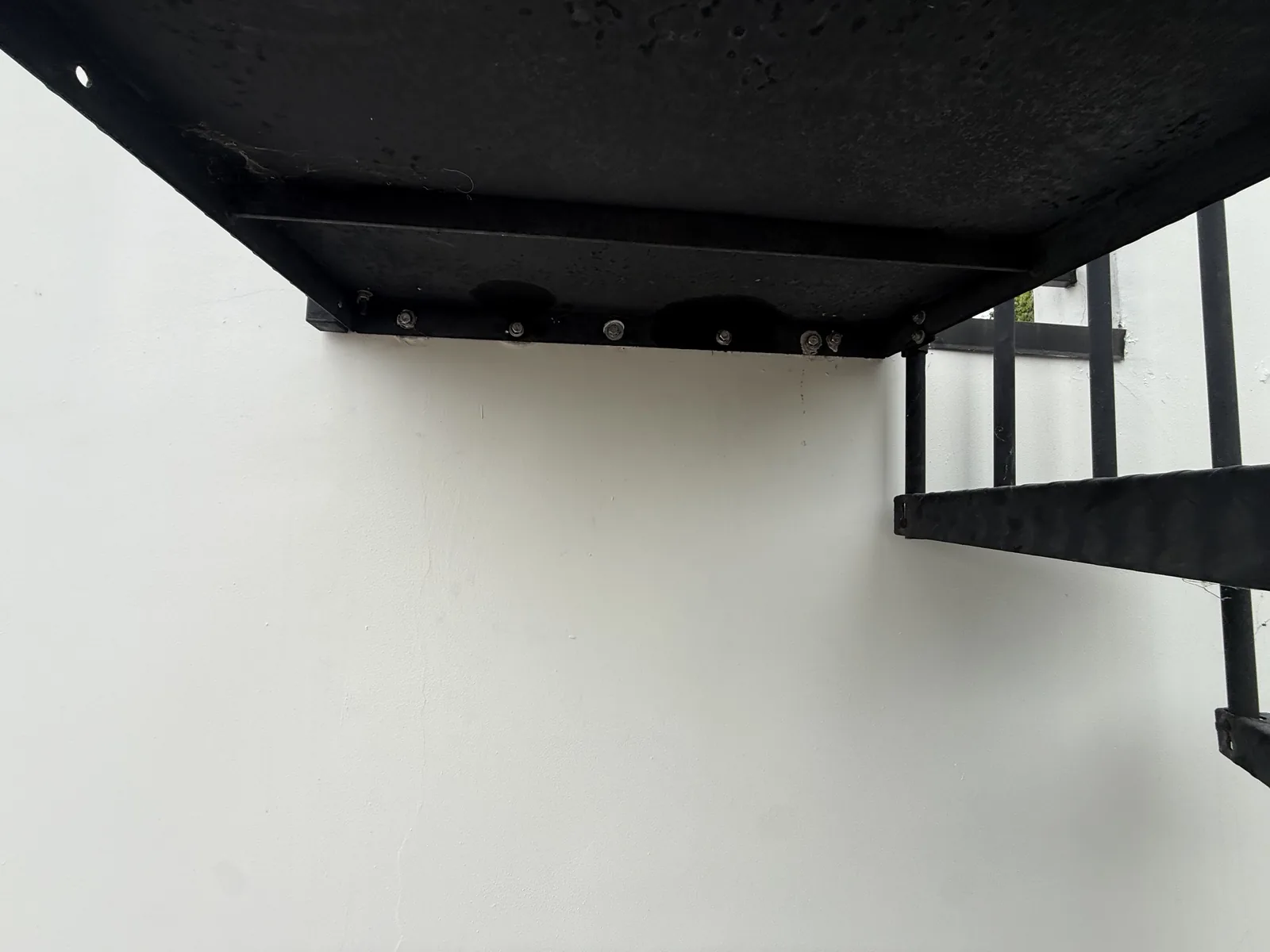
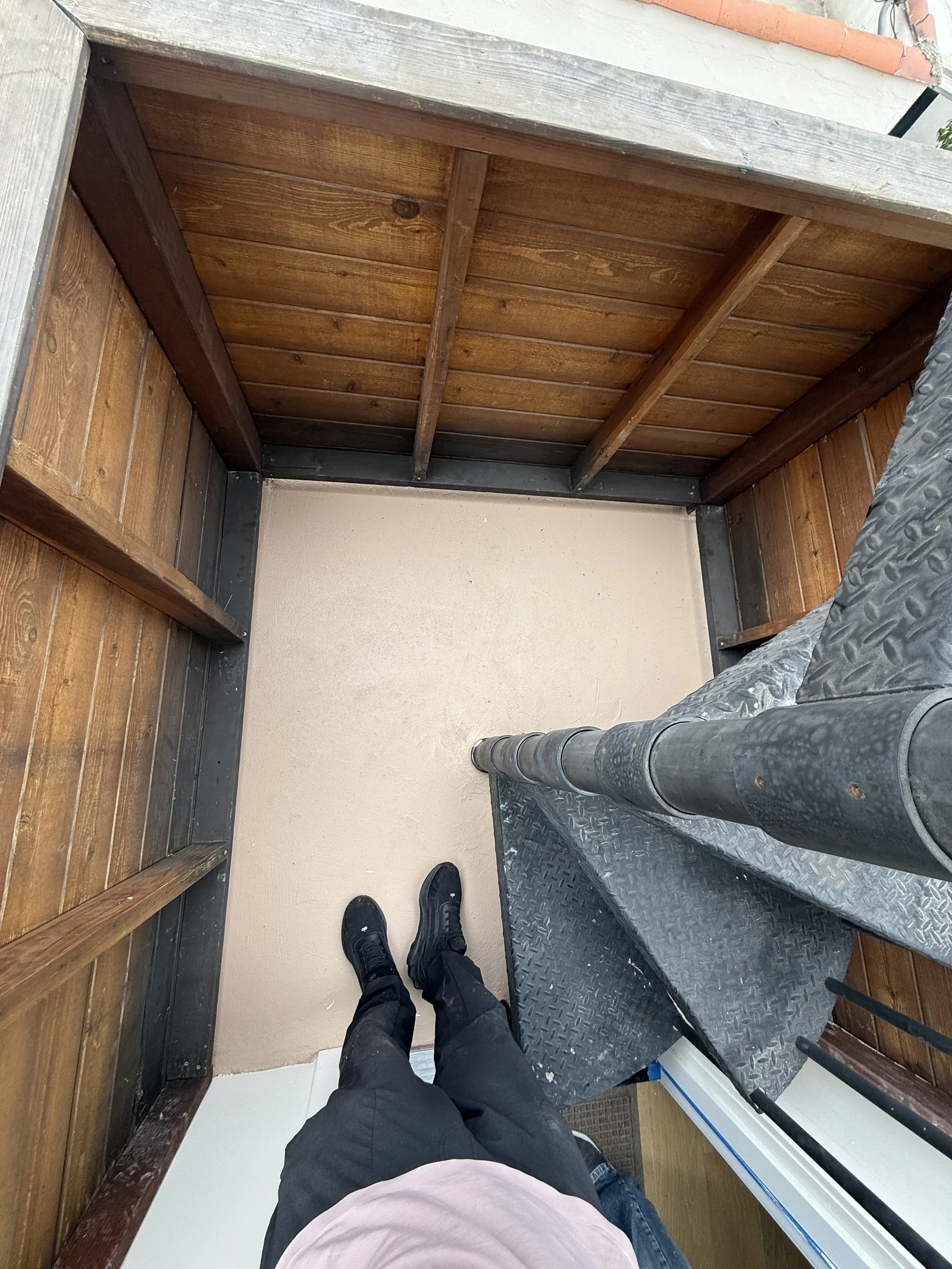
Then the balcony was reconstructed and reinforced to the engineer's specification. We built in a slope that had not existed before, so the deck sheds water away from the house. The decking was waterproofed with spray-on fiberglass. A new rain gutter went in where there had never been one.
The stucco crack, the door seal, and the edge flashing were all corrected, so none of the four paths remained.
The work was permitted through LADBS. The project took about a month and a half.
Scope of work
- Leak detection and tracing to four separate points of entry
- Thermal imaging, moisture meters, and endoscope inspection
- Structural engineering: sketch, load calculations, and specification
- Crane removal of staircase and railings
- Balcony reconstruction and structural reinforcement
- New slope built into the deck for drainage
- Spray-on fiberglass waterproofing
- New rain gutter
- Stucco crack repair
- Door seal replacement
- New flashing at the balcony edge
Before & after
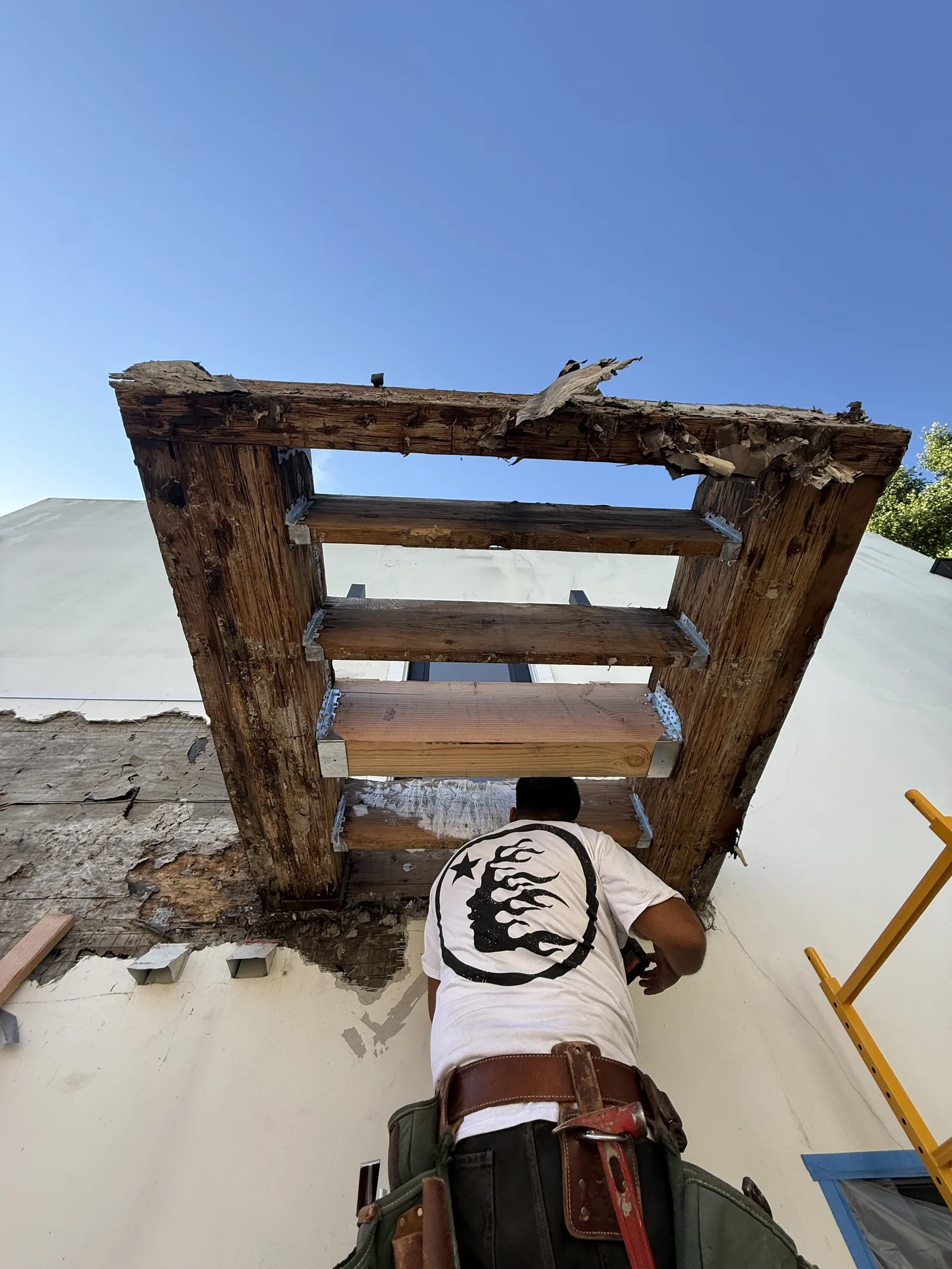
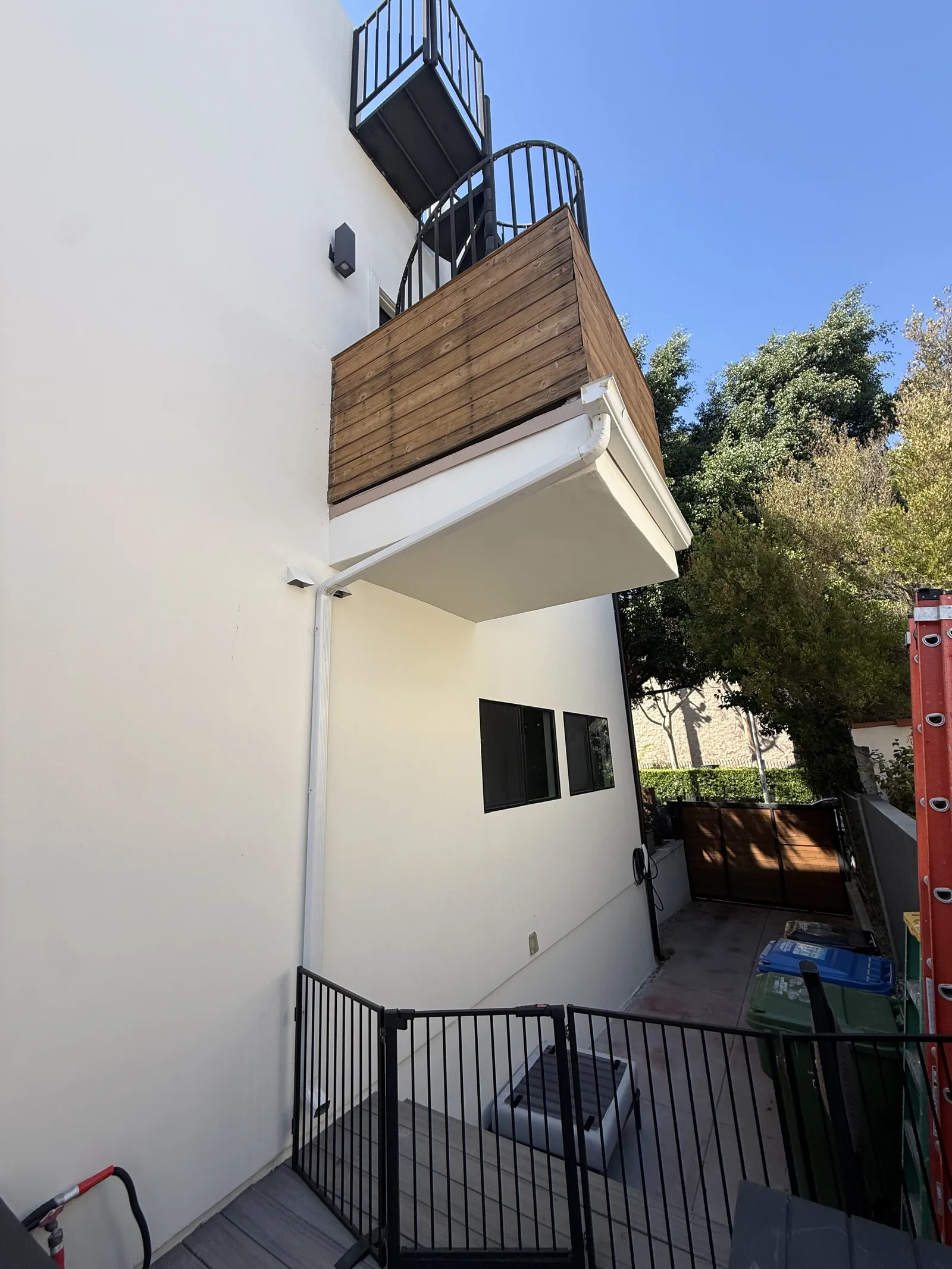
The work
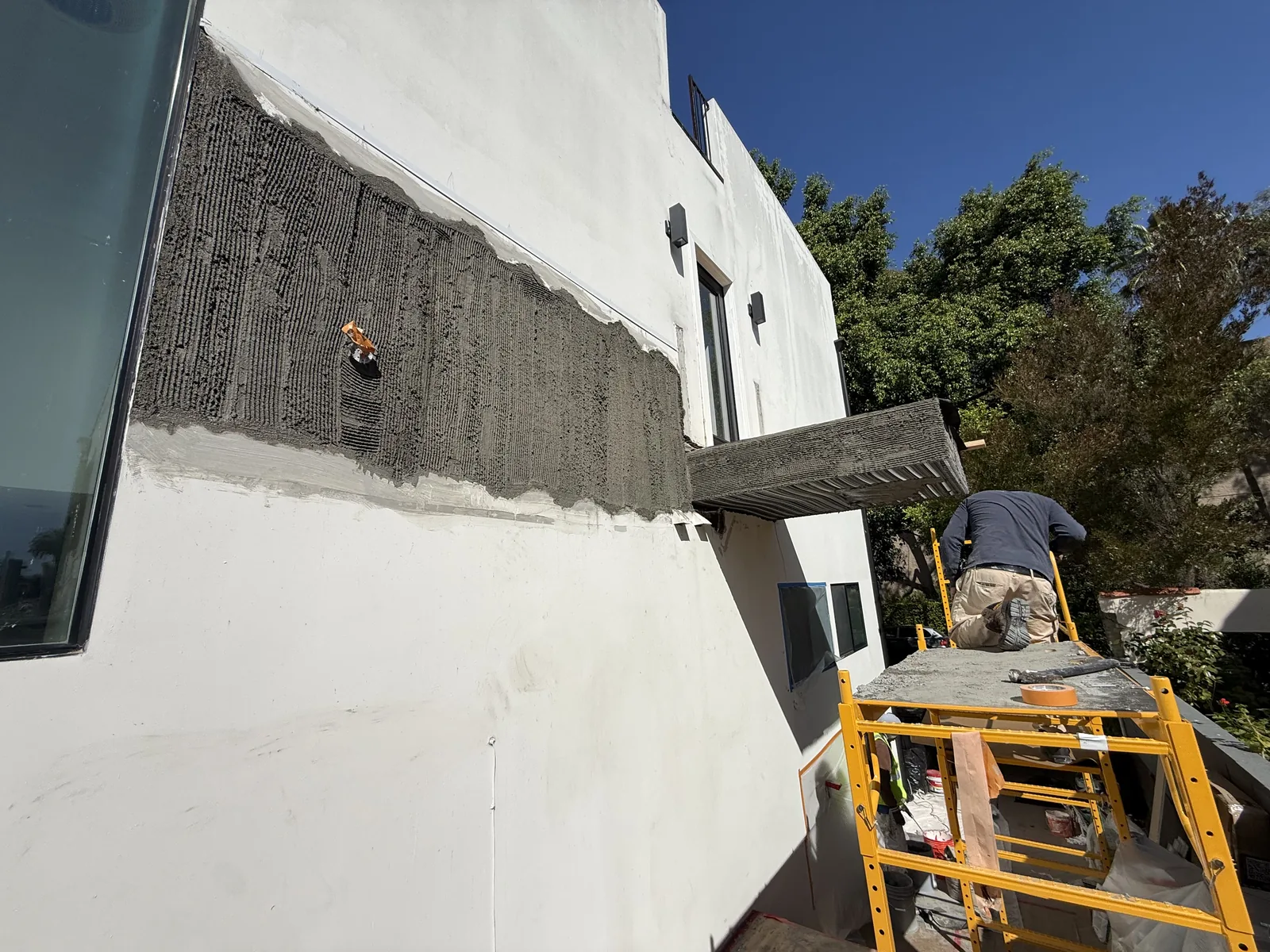
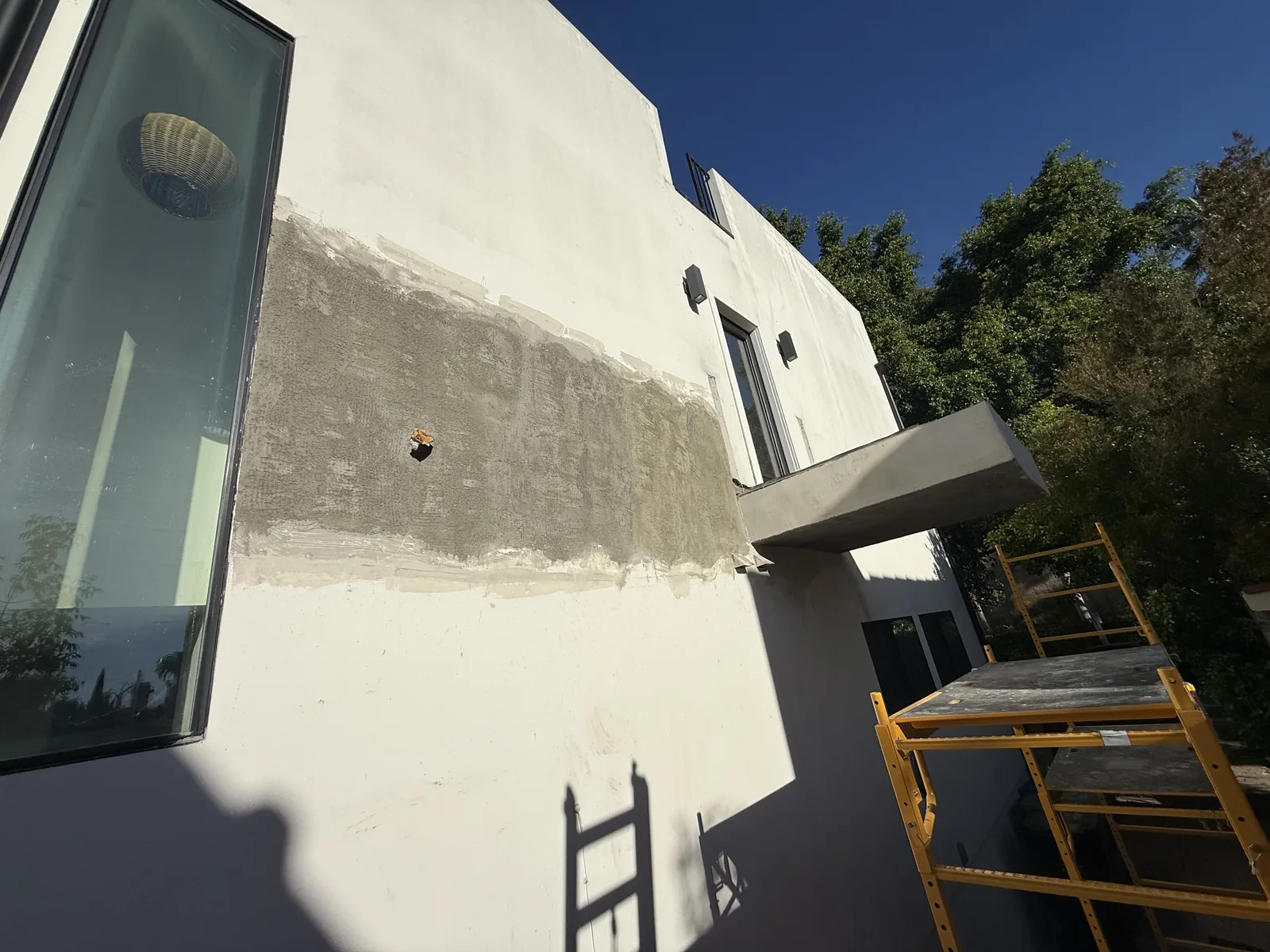
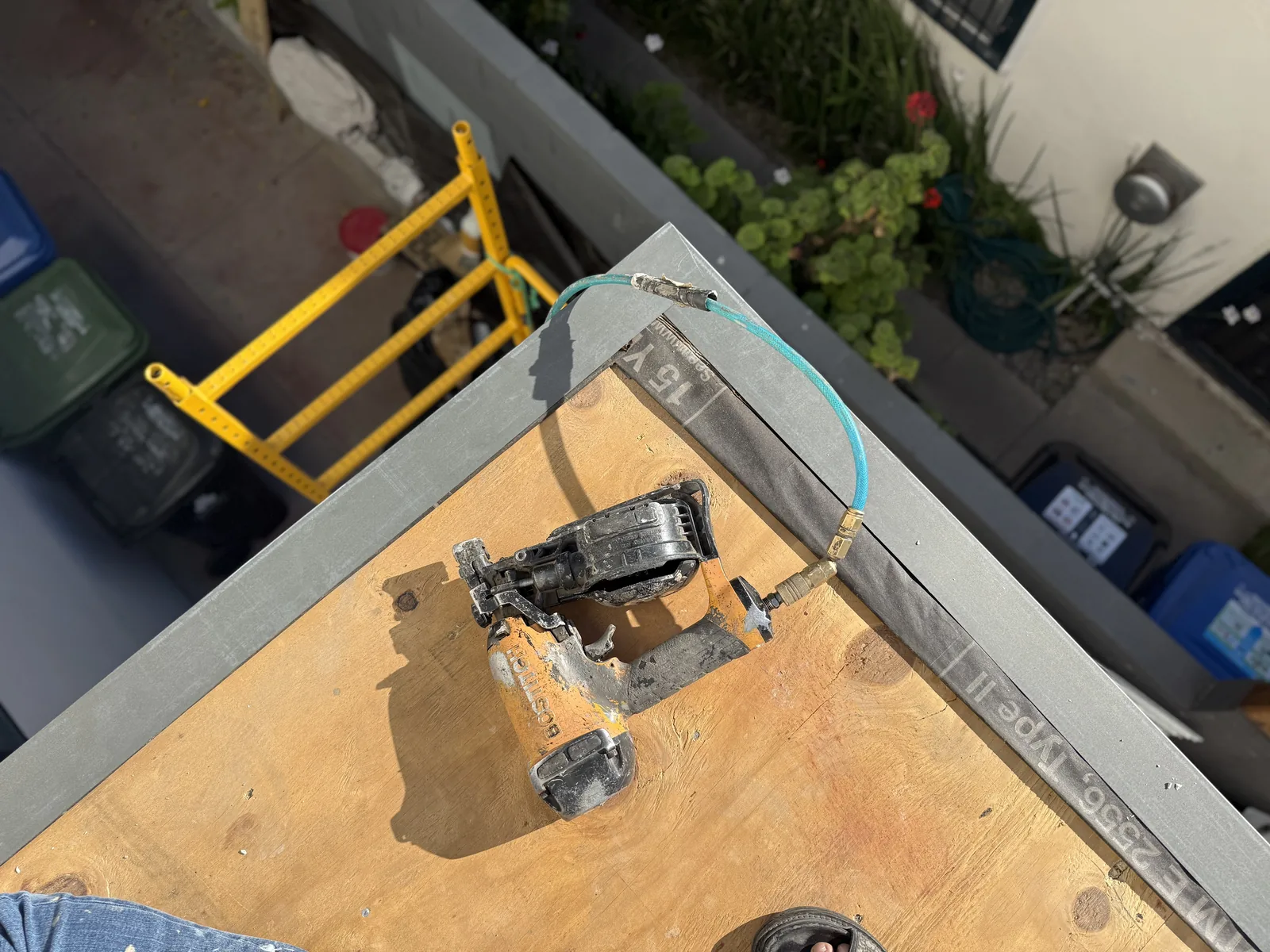
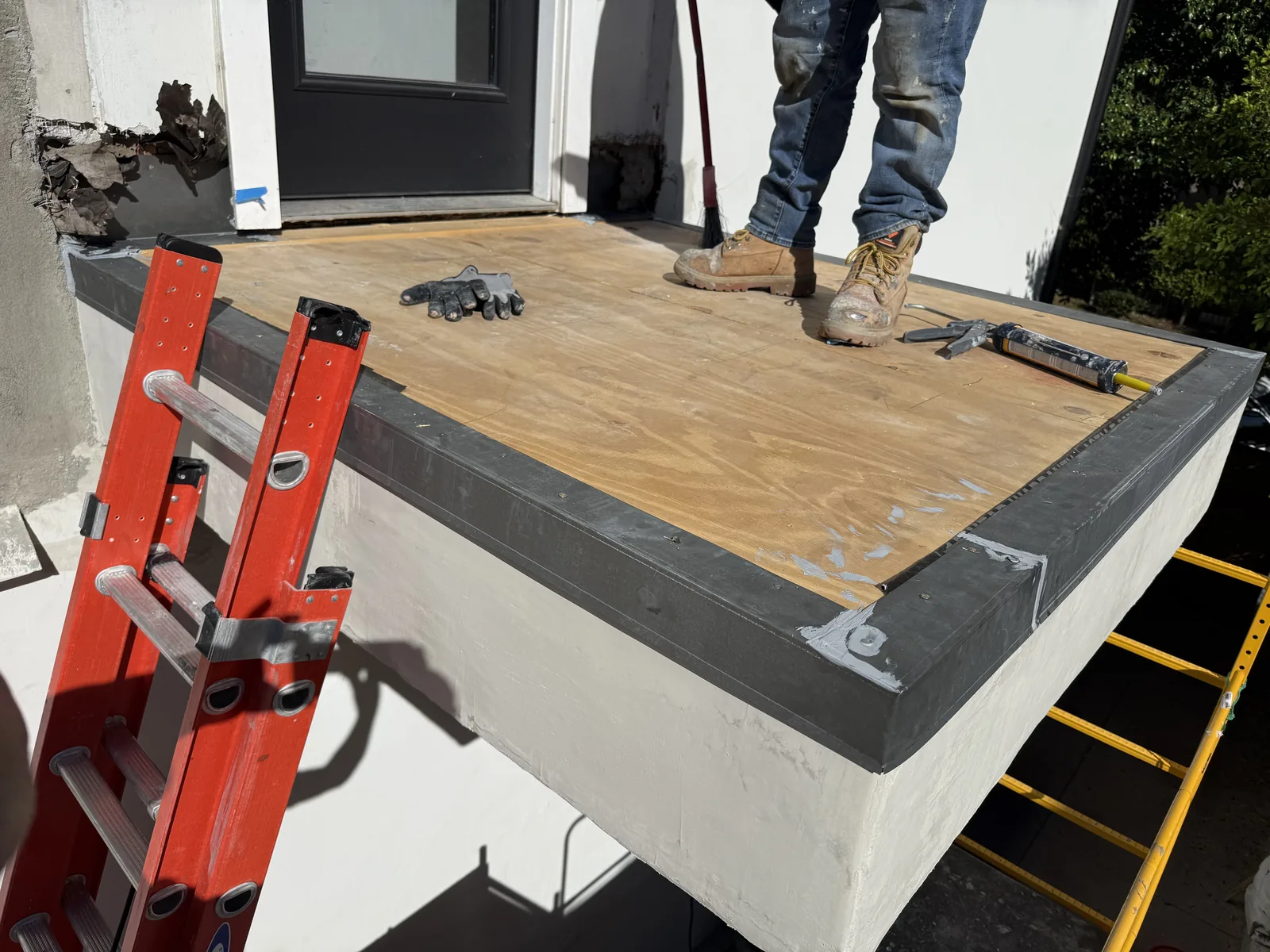
The result
Common questions
How do you find a leak that could be coming from more than one place?
By combining thermal imaging, moisture meters, and an endoscope camera, then reading what the readings actually mean rather than stopping at the first wet spot. On this structural water damage restoration, the leak turned out to have four separate points of entry, not one.
Why would a balcony repair need a structural engineer?
When the repair means reconstructing the balcony itself, not just resurfacing it, the work has to follow an engineer's sketch, load calculations, and specification. That was the case here, where the balcony structure was rebuilt and reinforced to the engineer's instructions.
Why remove a staircase and railings by crane instead of by hand?
When the structure is too large to move through the property any other way. On this project, the staircase and railings came off by crane before the balcony was rebuilt, and a crane returned later to set the reconstructed staircase back in place.
What stops a rebuilt balcony from developing the same drainage problem again?
Correcting every path water was using to get in, not just the obvious one. Here that meant a new slope built into the deck, spray-on fiberglass waterproofing, a new rain gutter, and fixing the stucco crack, door seal, and edge flashing that had let water through before. A structural engineer's sign-off on the rebuild is what makes those fixes hold.
Water draining toward the house instead of away from it?
Call (310) 717-0432 or request a consultation — we will trace every point of entry before we scope the repair.
Call (310) 717-0432