North Beverly Hills Water Damage Reconstruction
A small black stain at the baseboard turned out to be years of hidden water damage running up to the second floor.
- Neighborhood
- Beverly Hills
- Project type
- Water Damage & Structural Repair
- Permit authority
- City of Beverly Hills
The brief
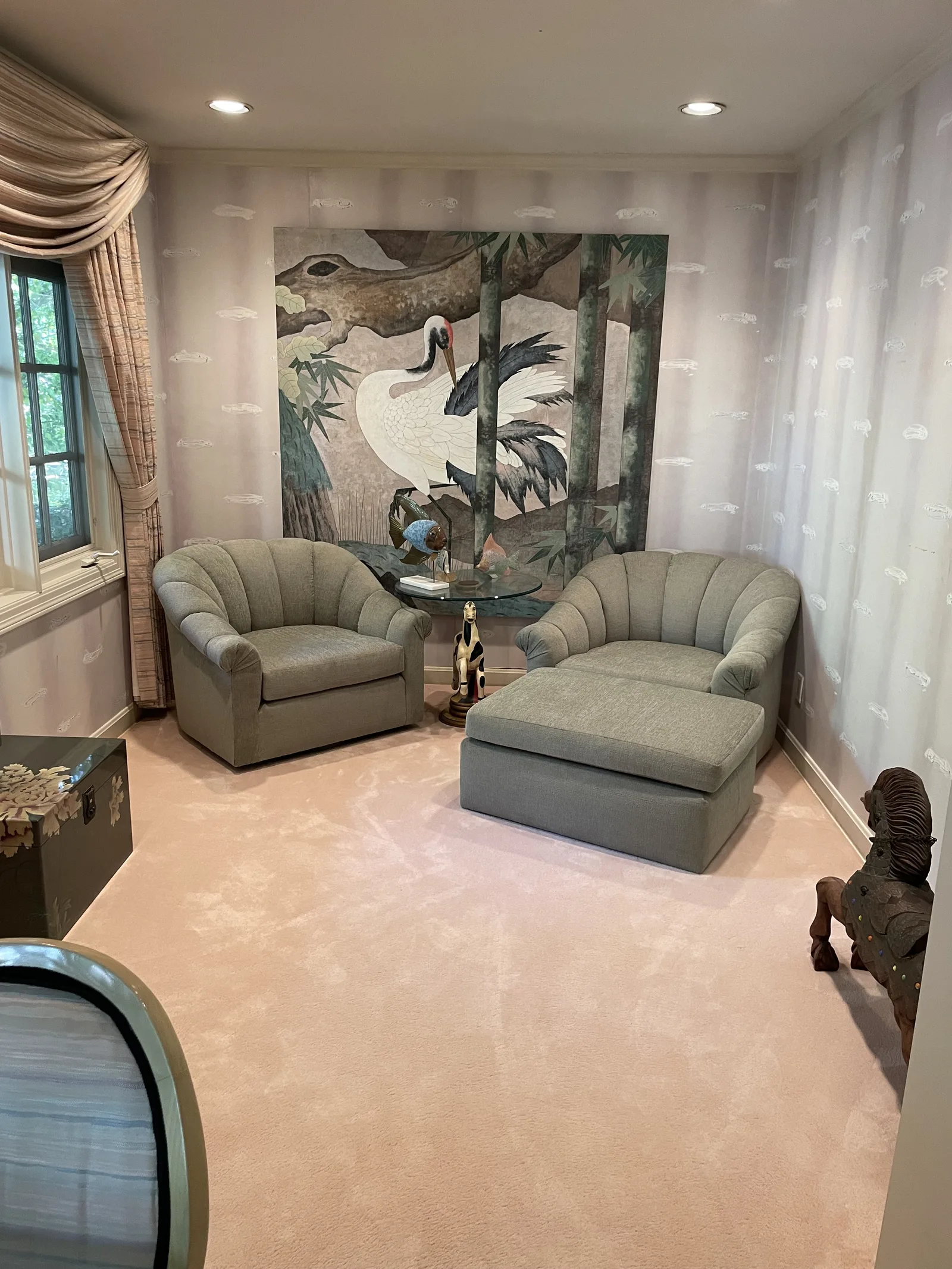
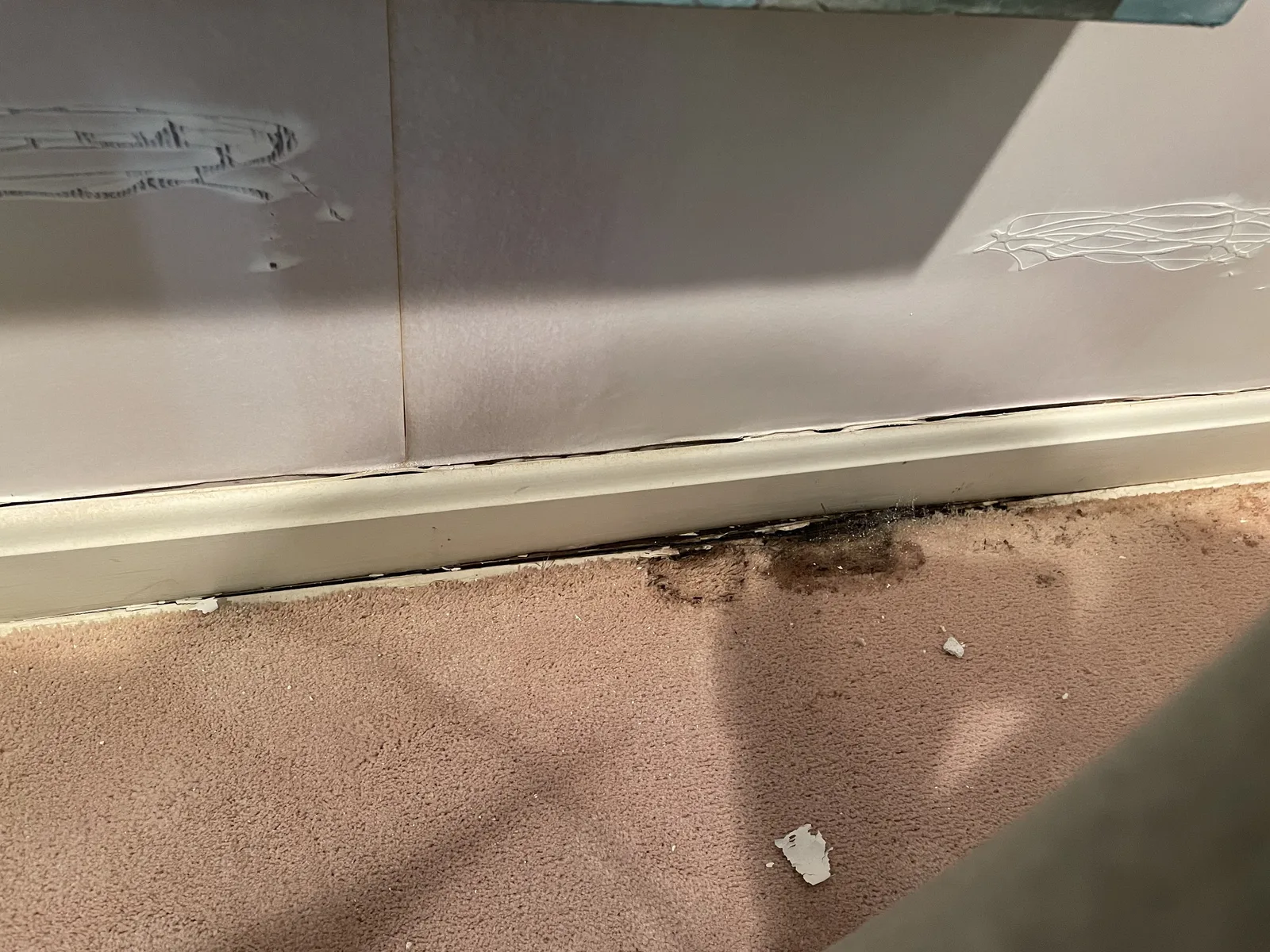
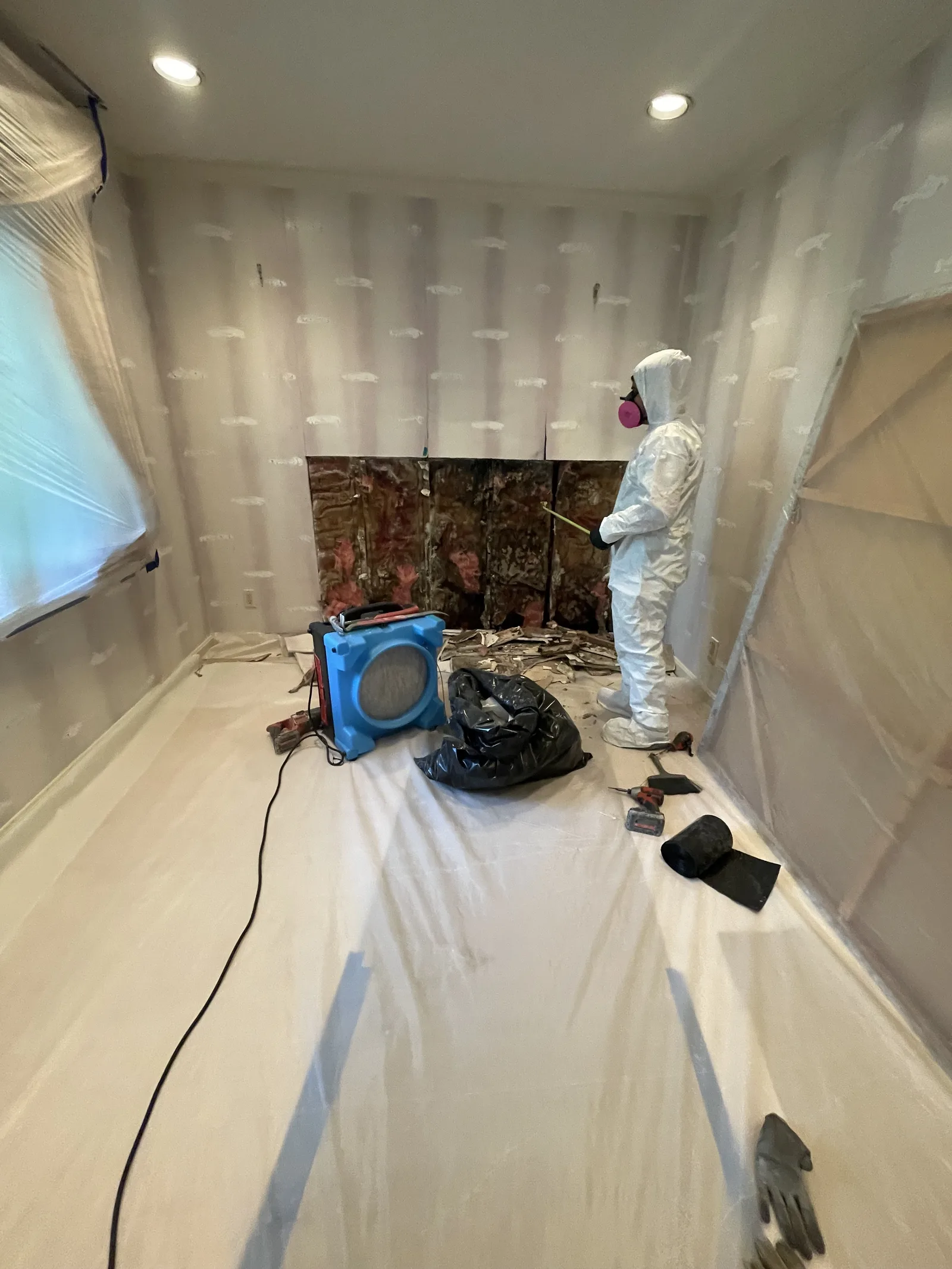
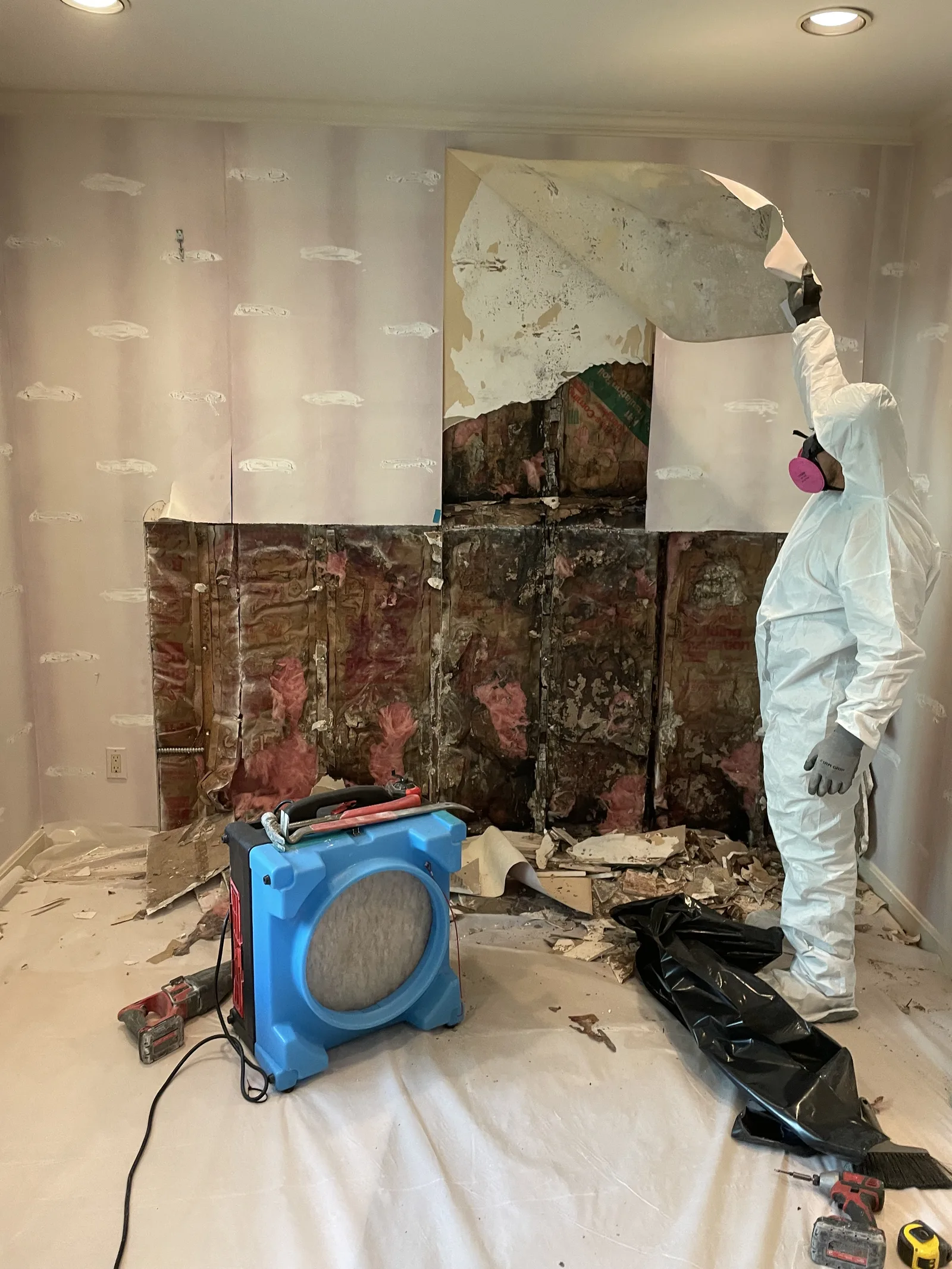
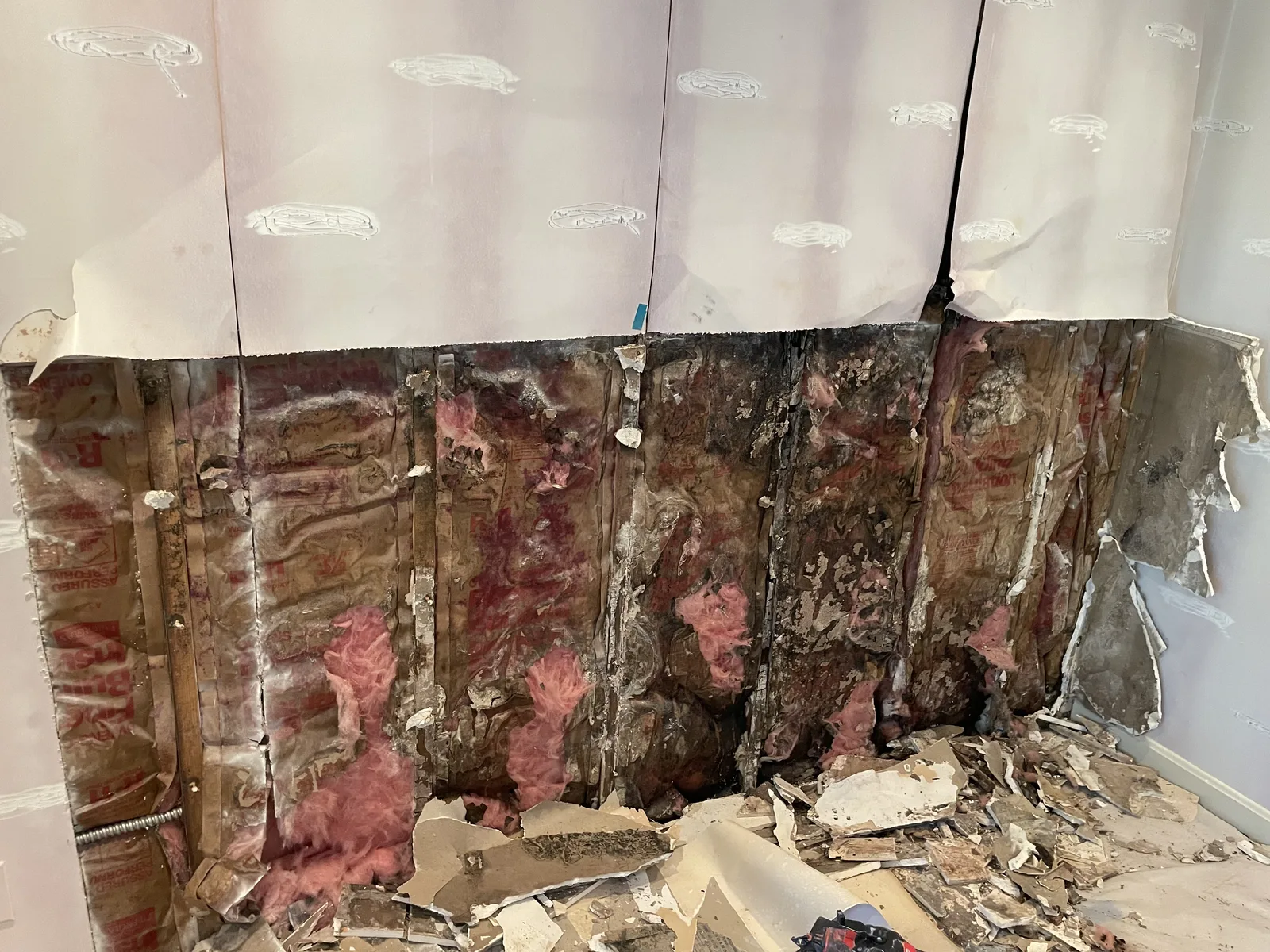
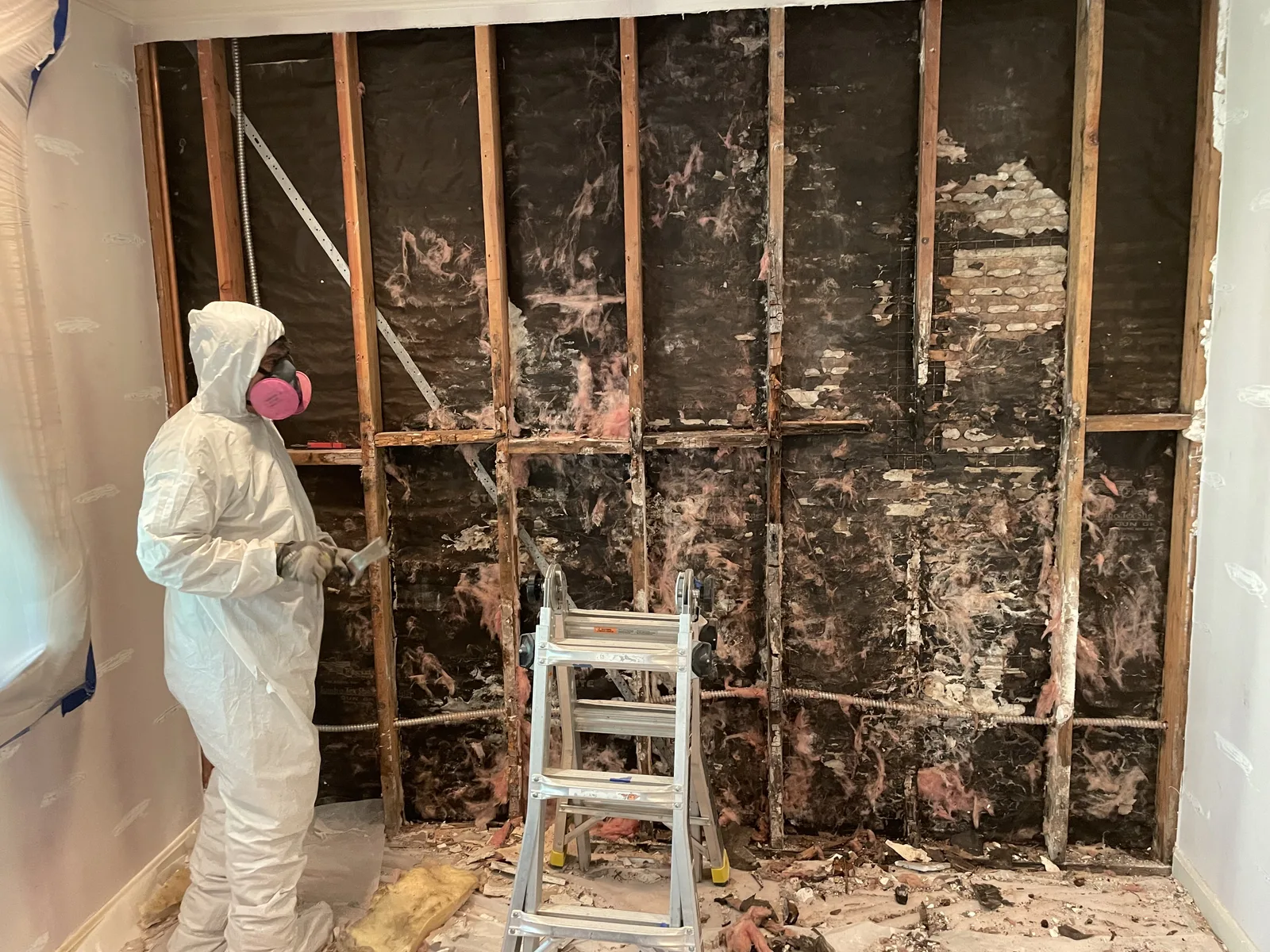
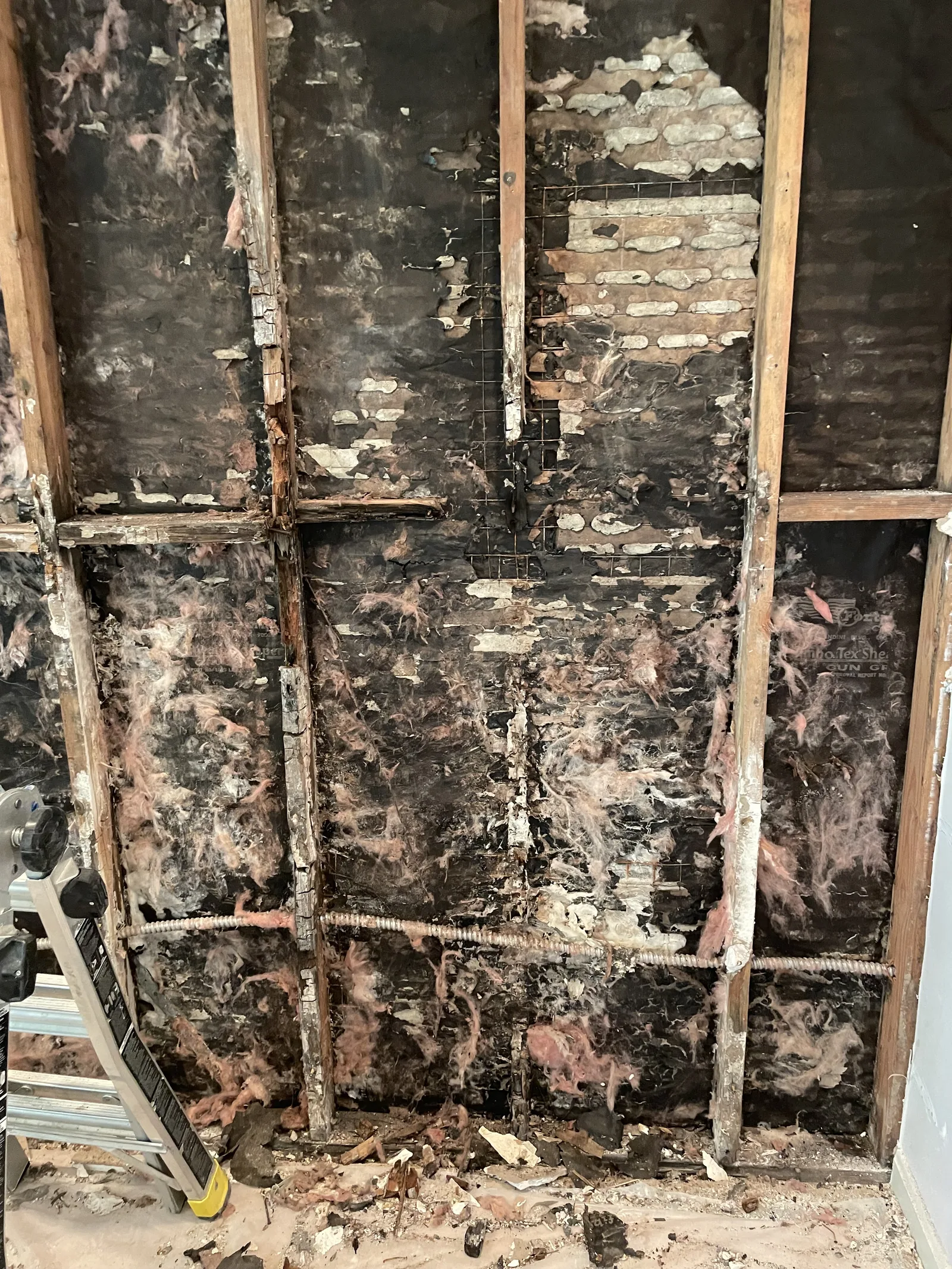
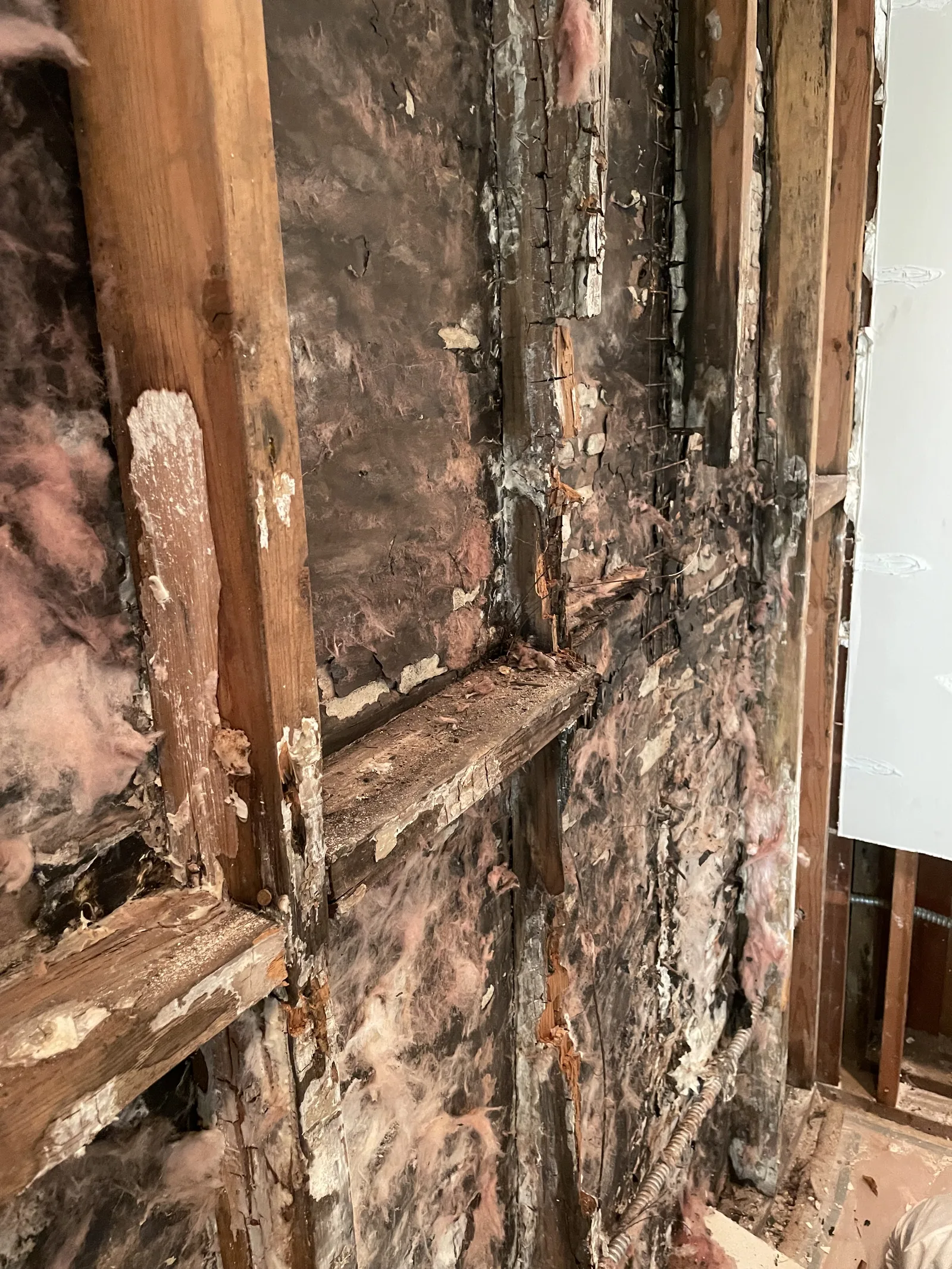
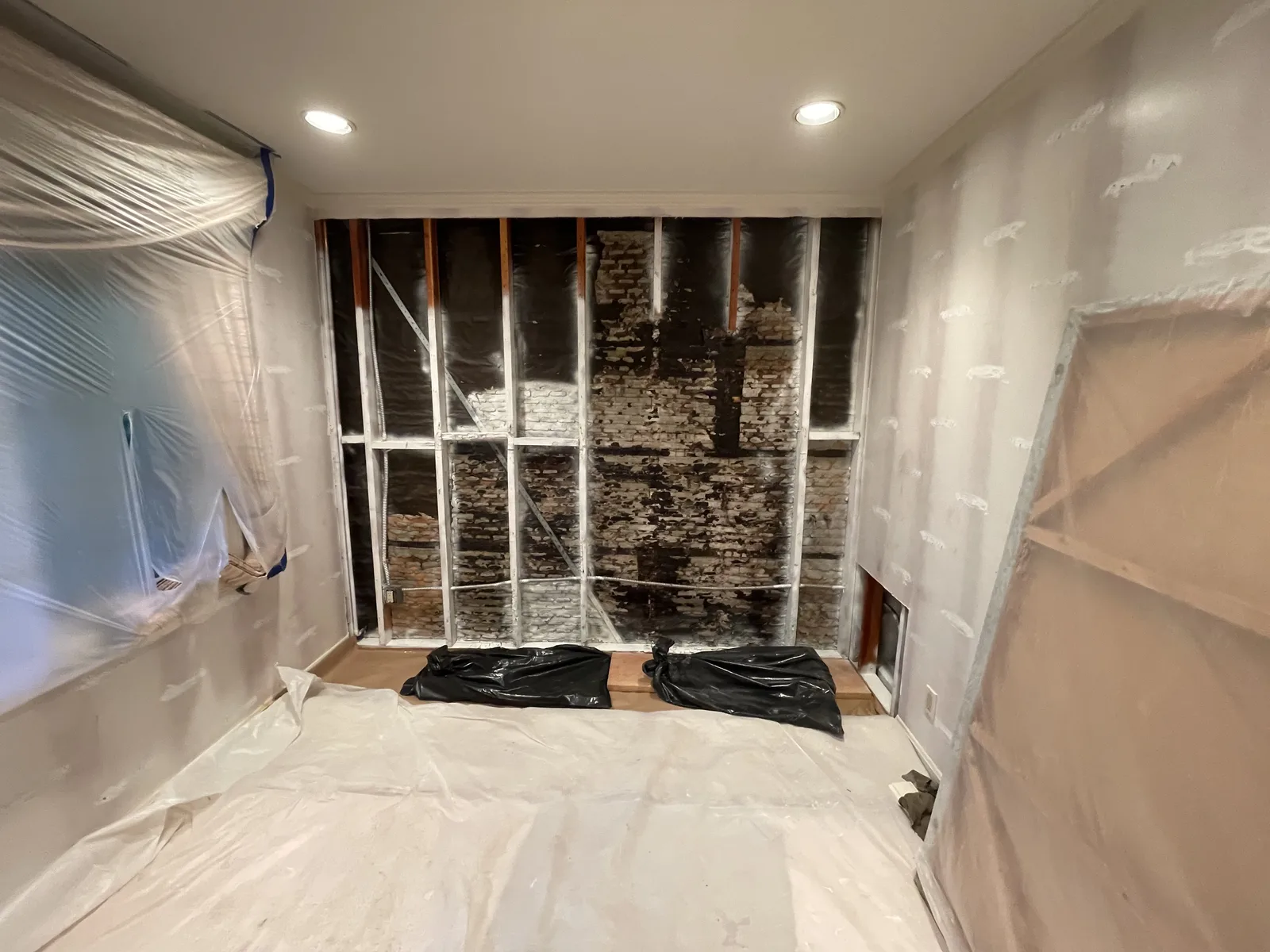
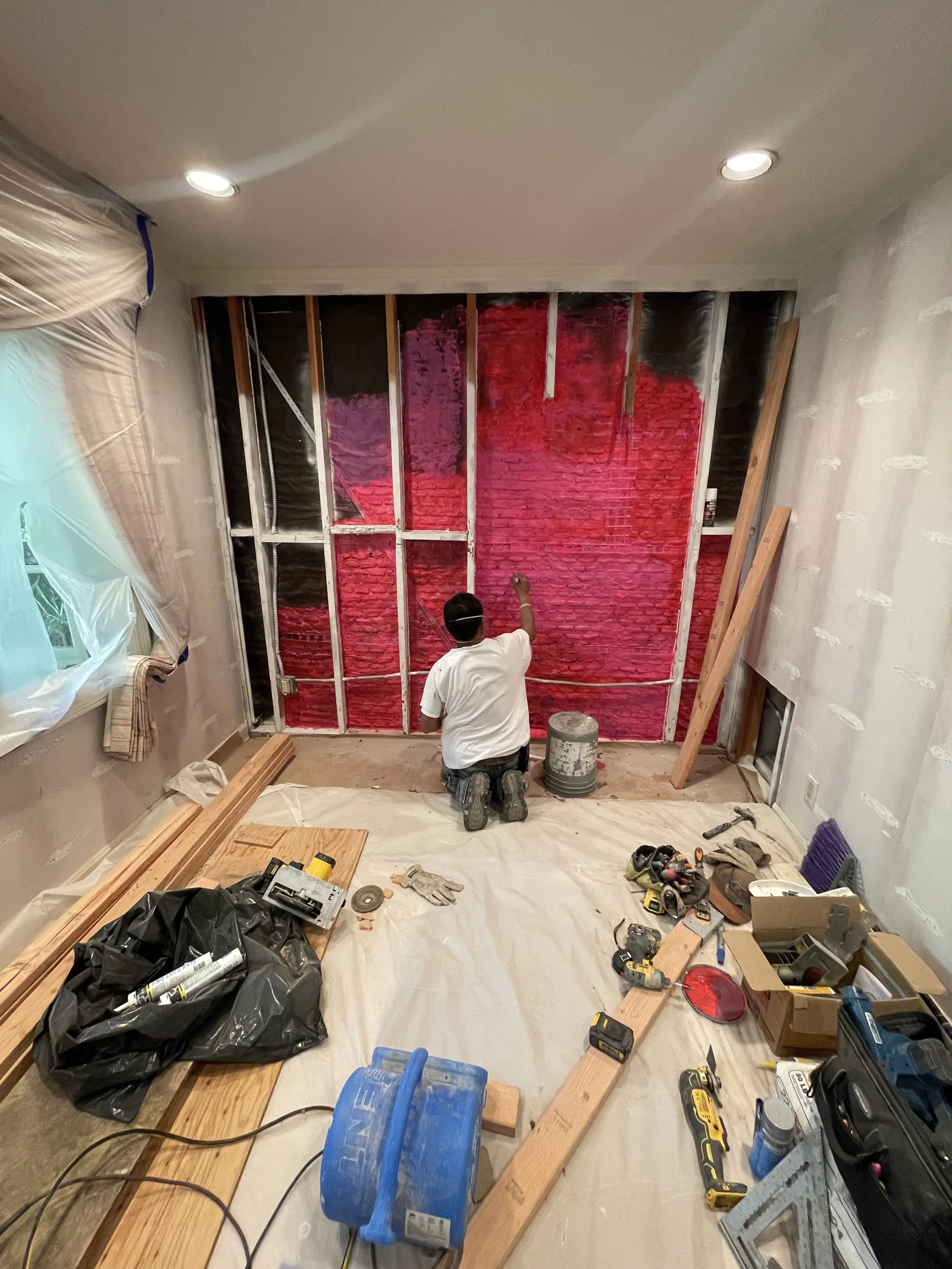
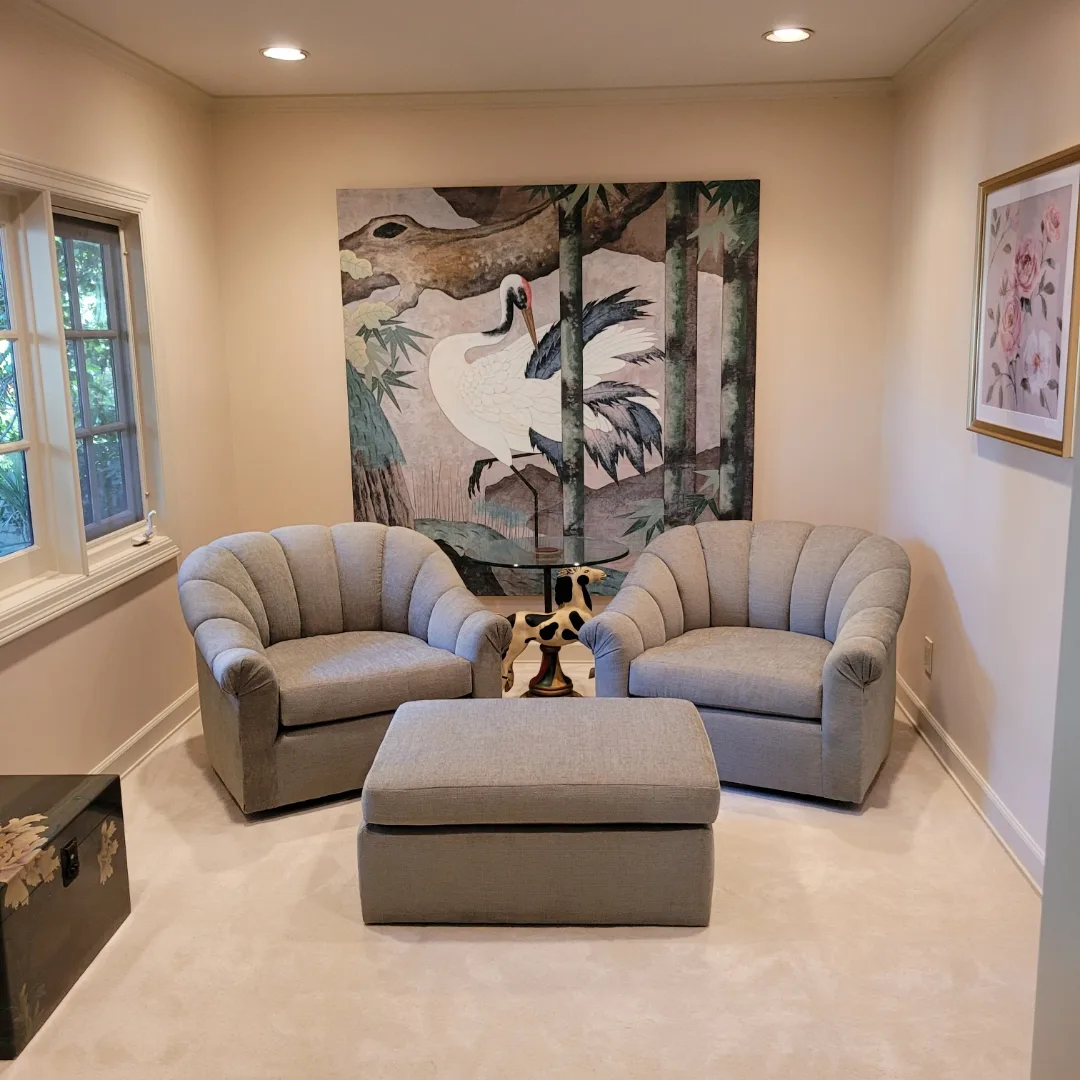
A 10,000 square foot luxury home in North Beverly Hills. The homeowner noticed a small black stain in the corner where the baseboard met the carpet, behind an armchair. The room looked fine. We opened the wall to see what was behind it and found that almost the entire wall cavity was rotted, running up to the second floor.
The challenge
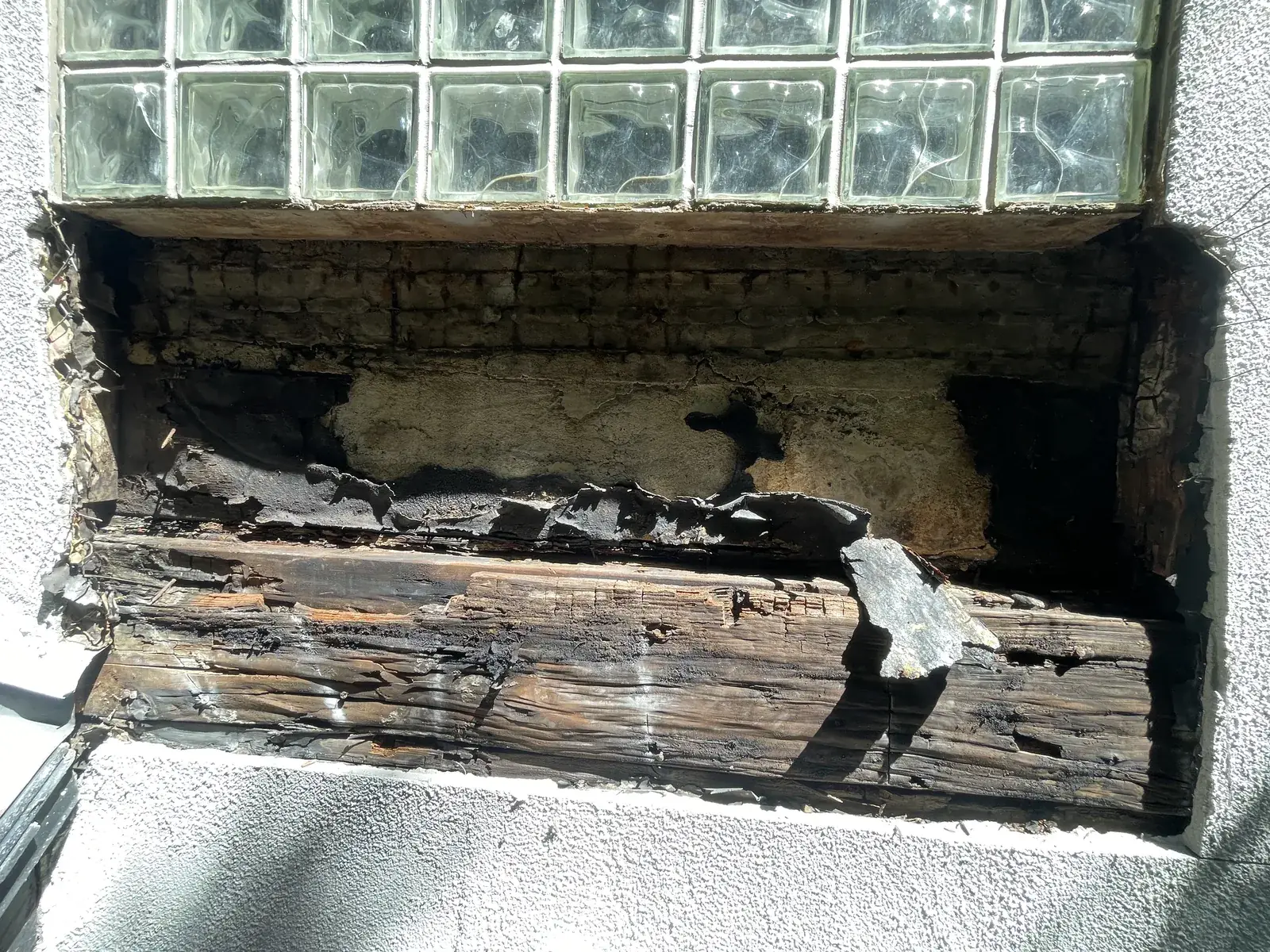
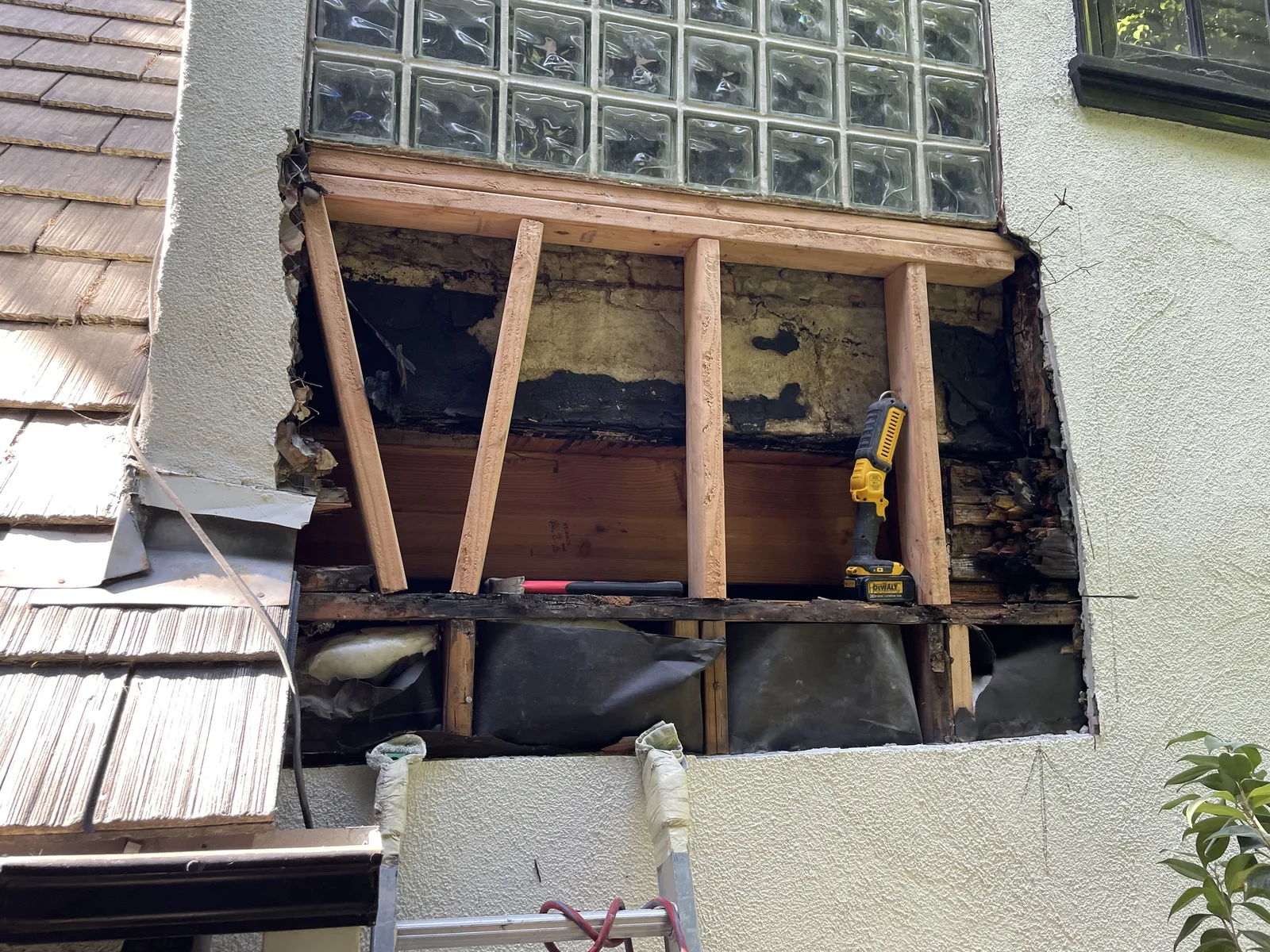
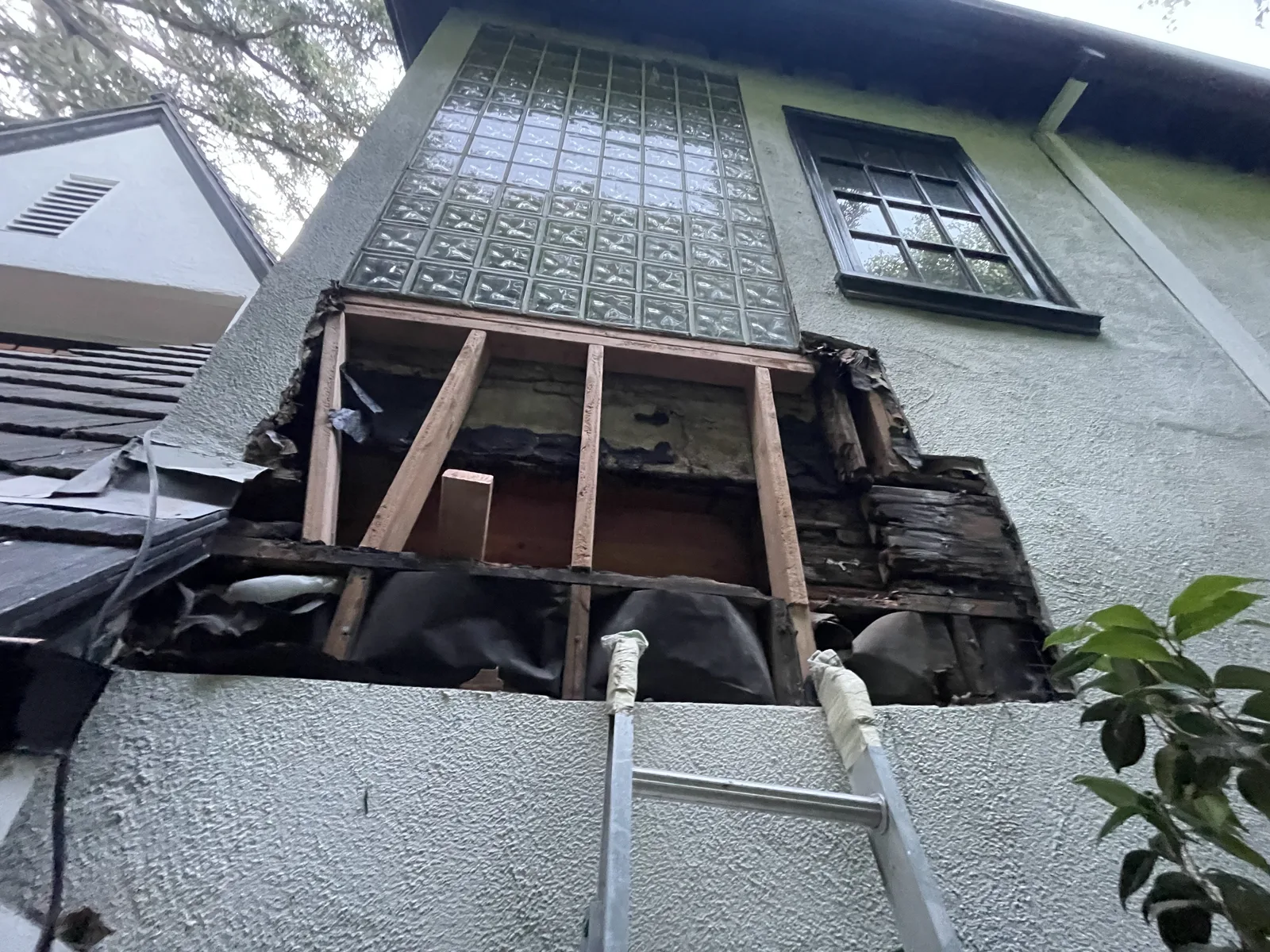
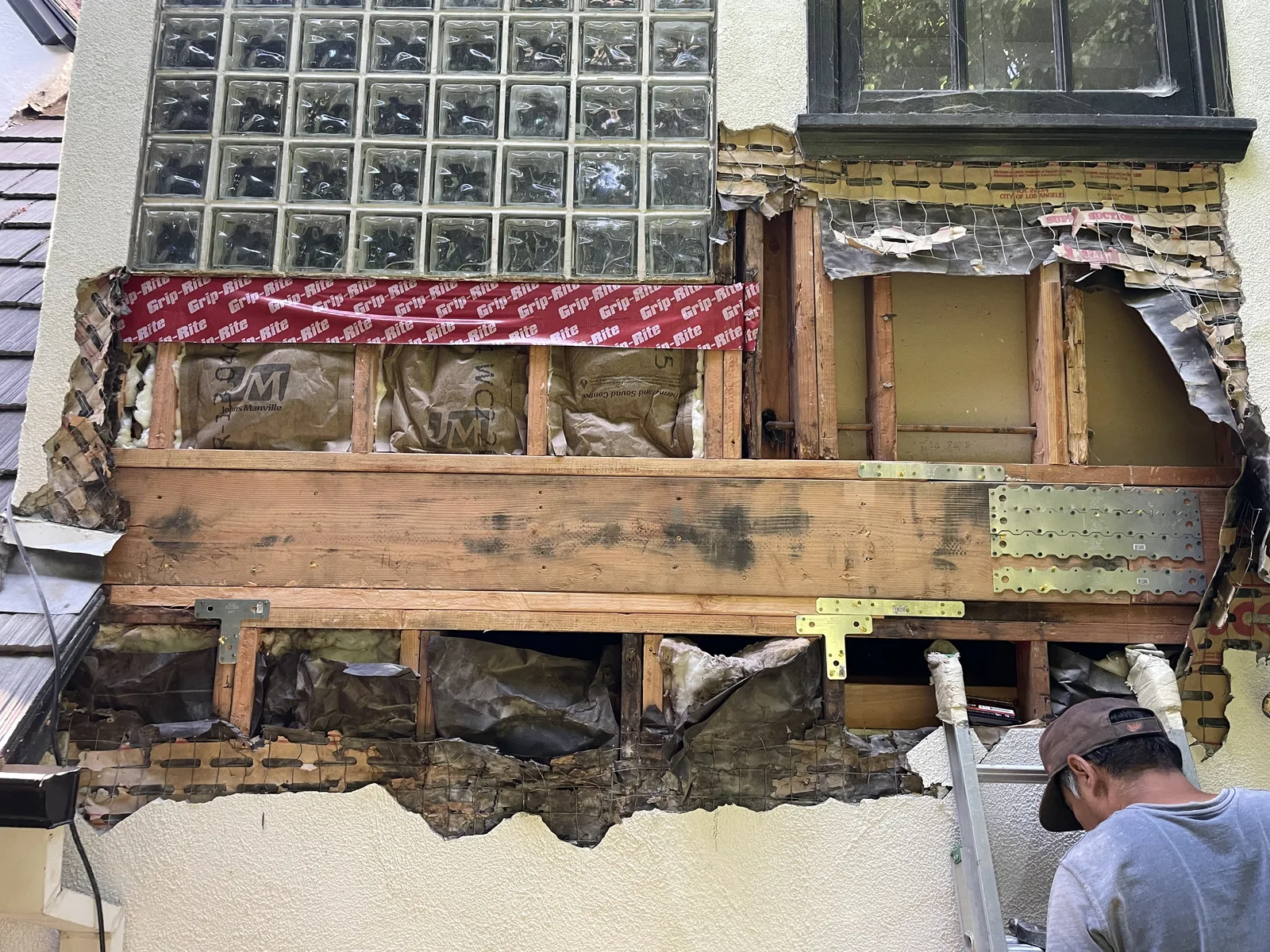
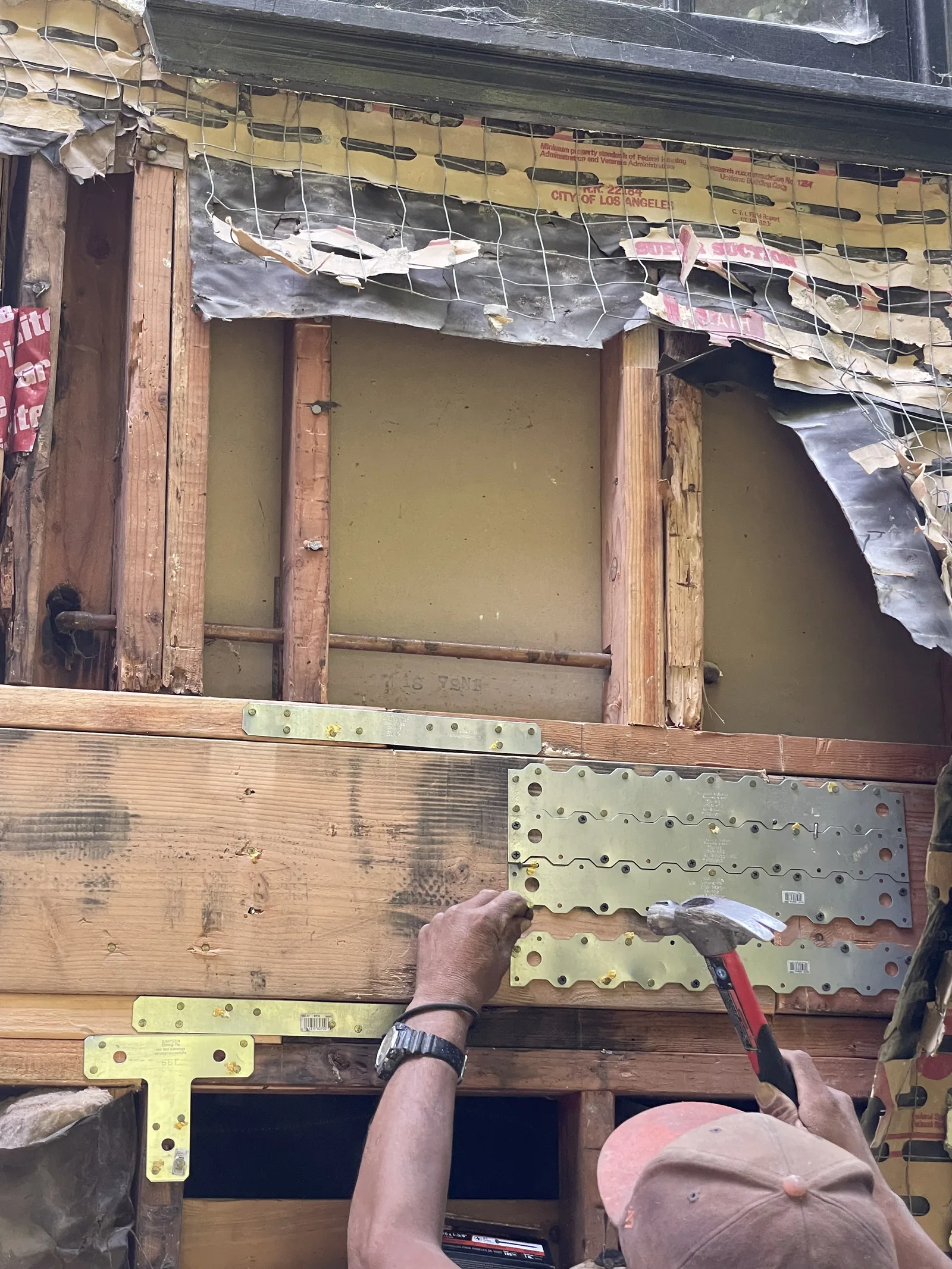
The framing had deteriorated. The black paper membrane behind the stucco had broken down. This had been accumulating for years, and nothing showed on the surface until that stain.
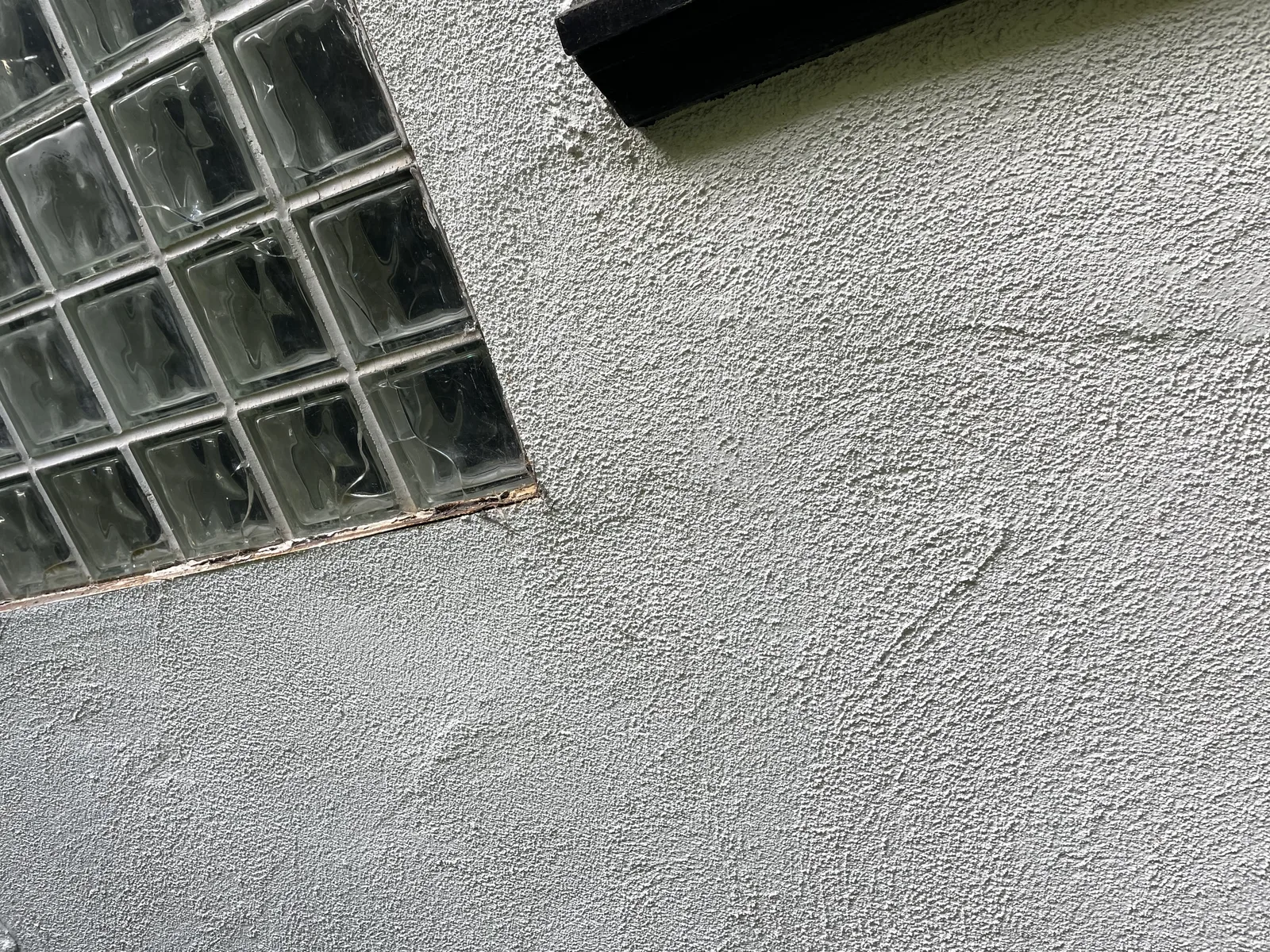
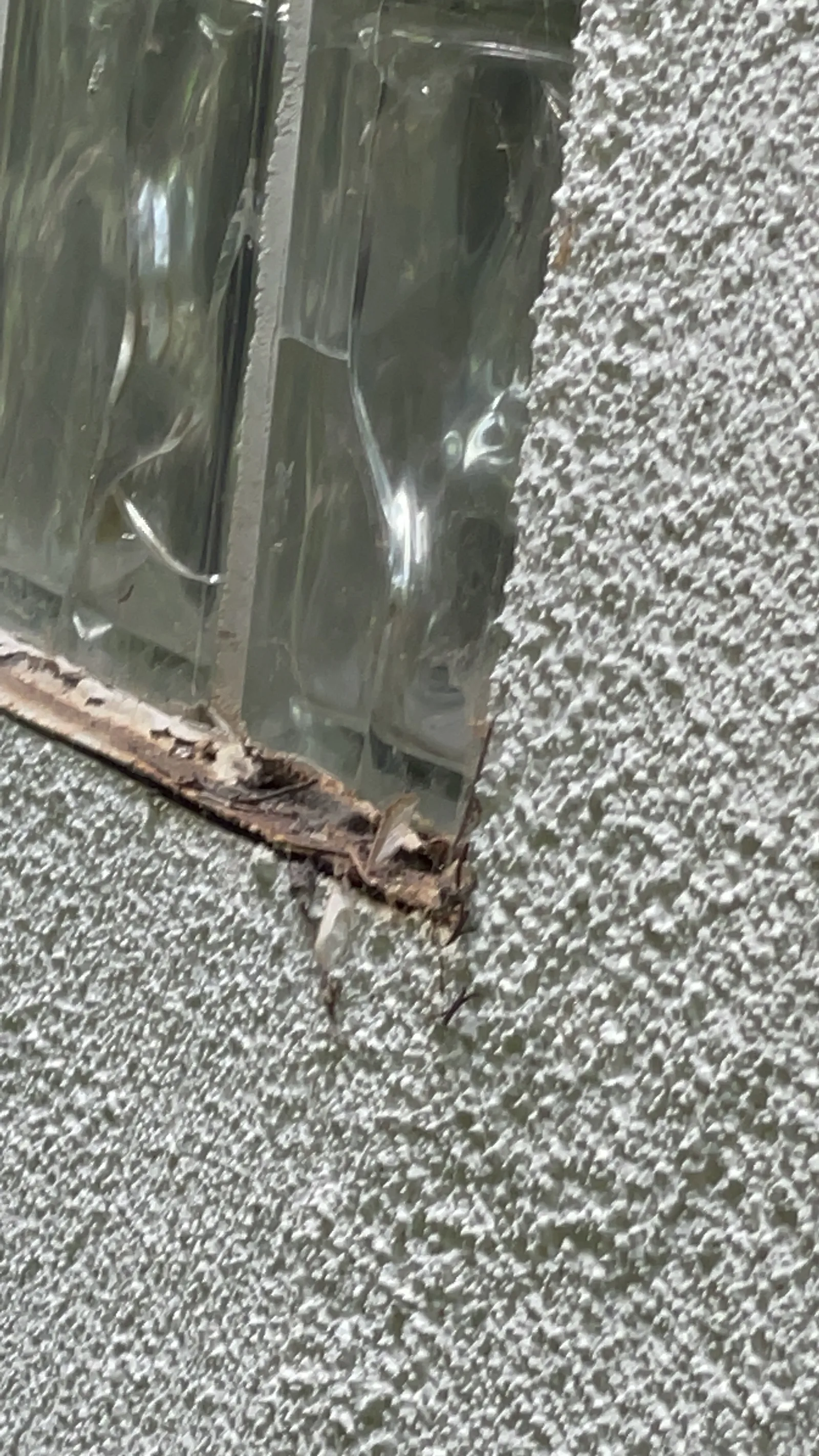
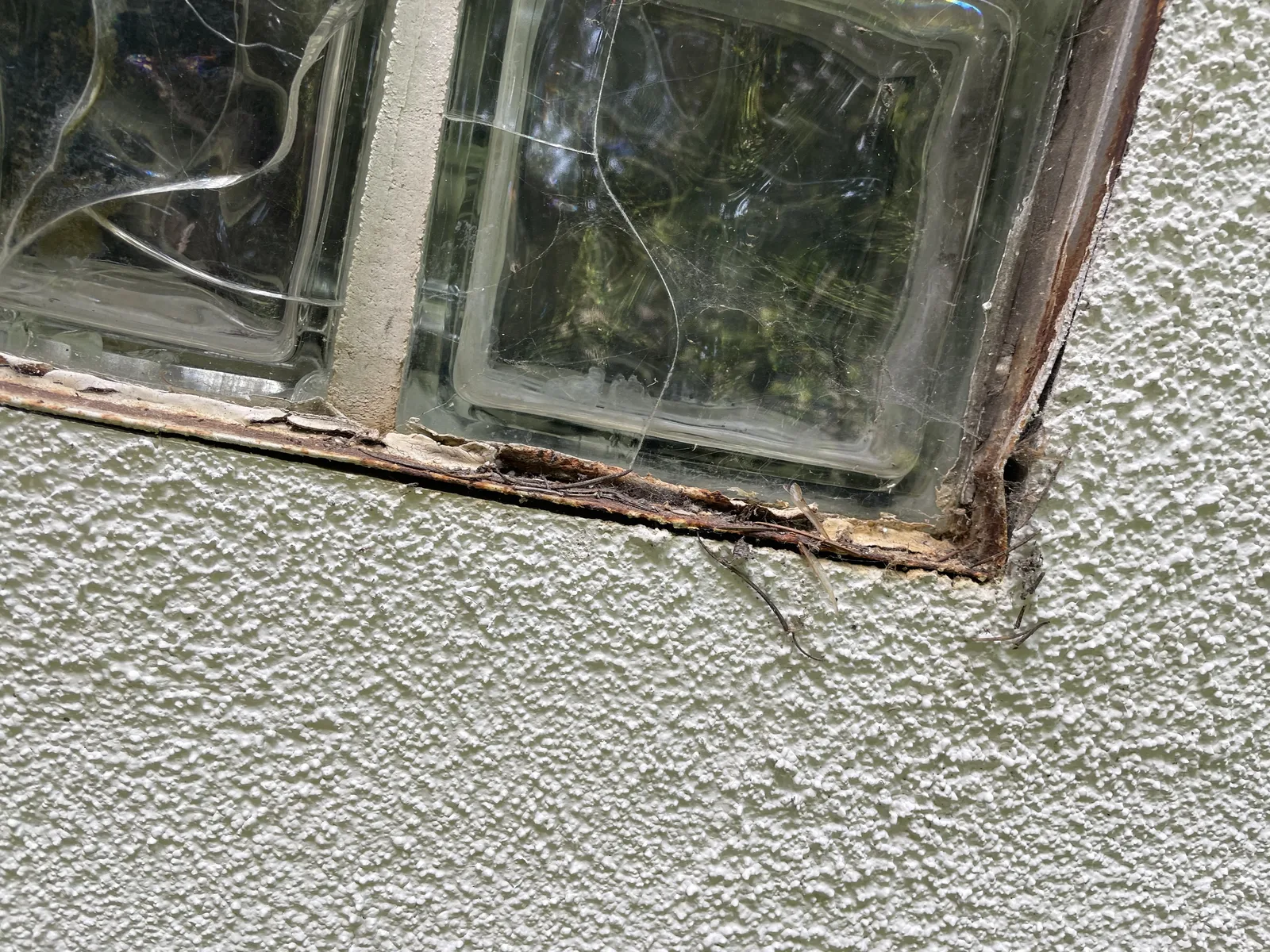
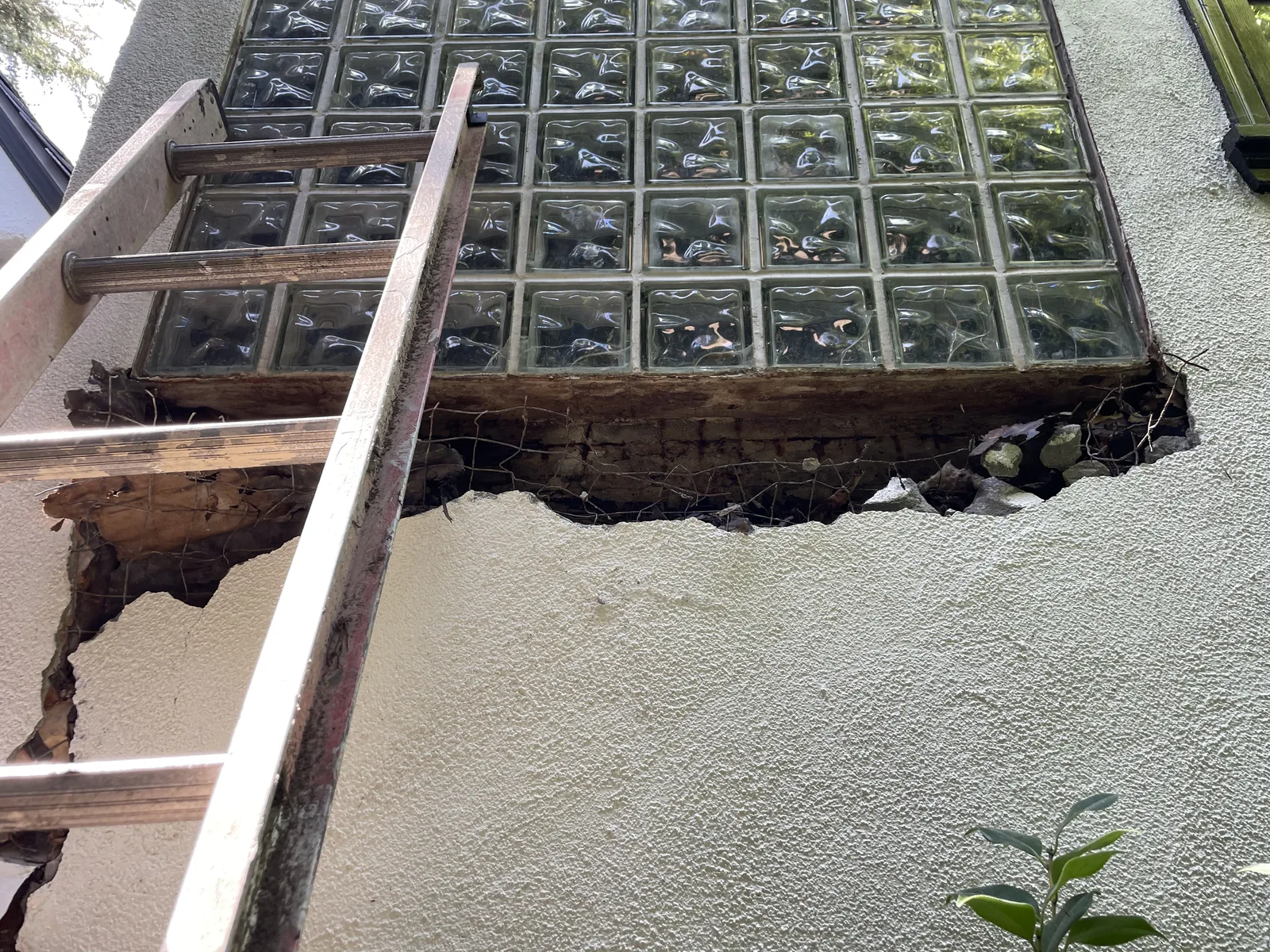
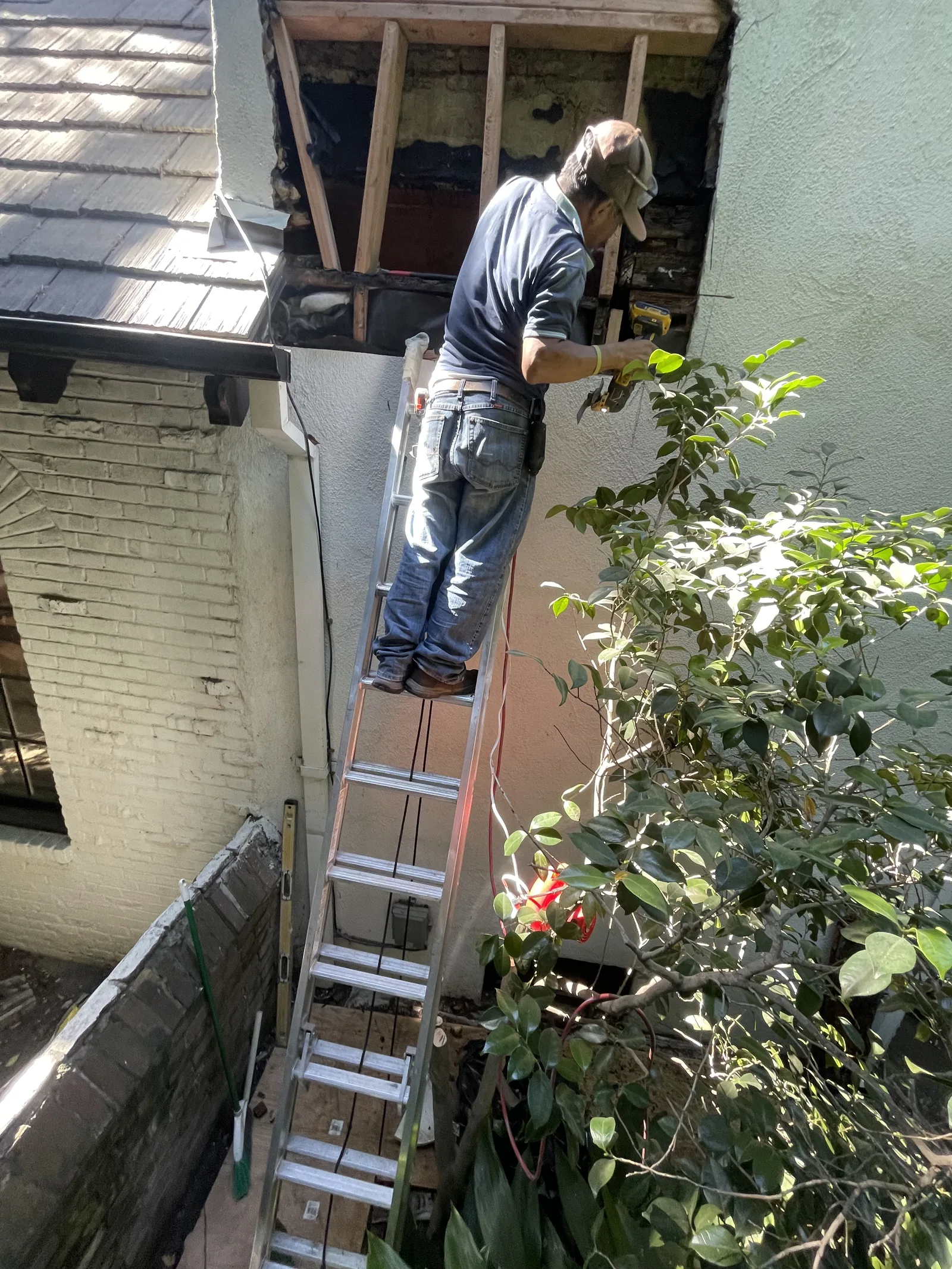
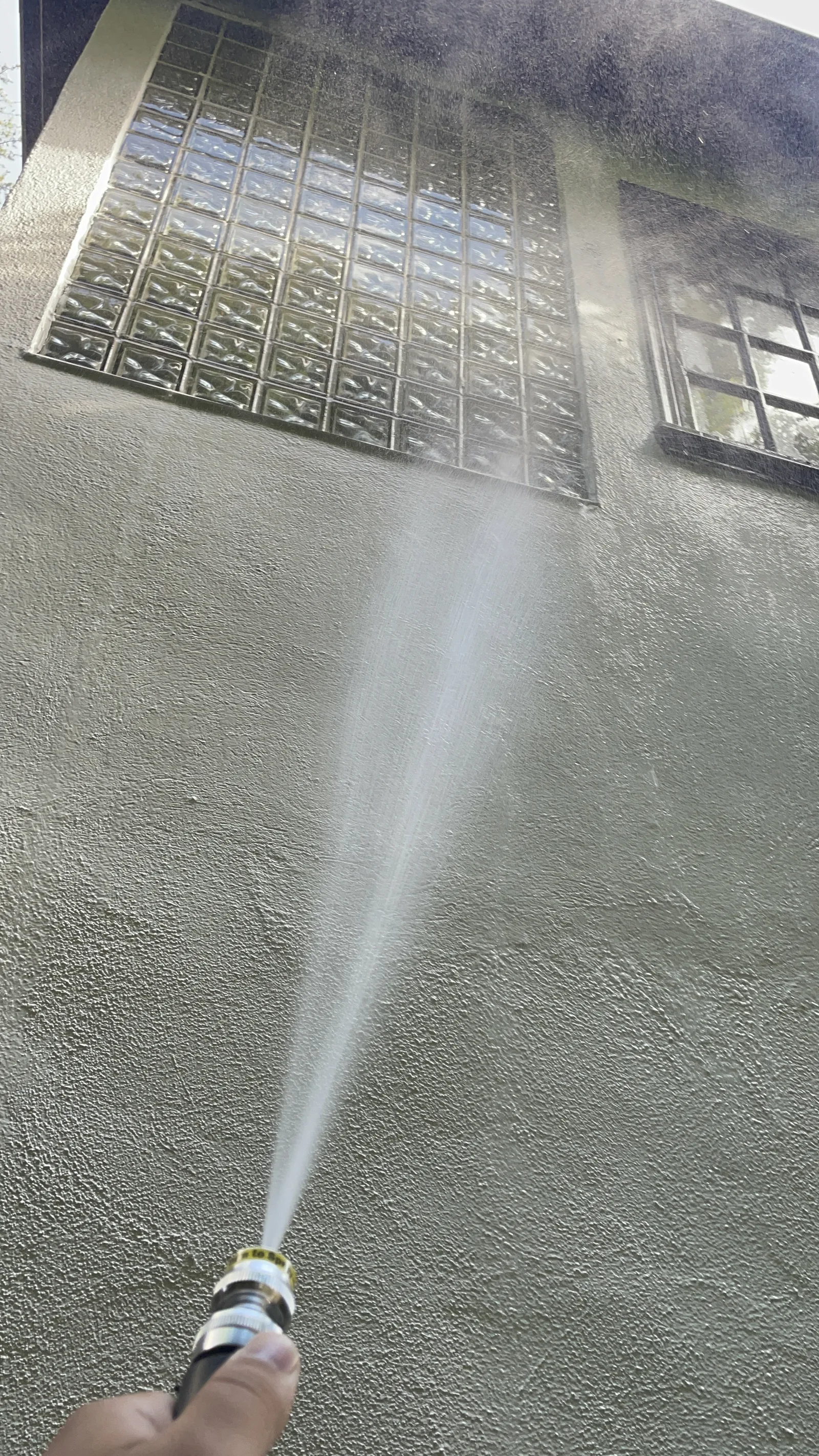
The first assumption was the shower directly above the room. We checked it and that wasn't the source. We used thermal imaging, moisture meters, and an endoscope inspection camera to trace where the water was actually coming from, and found it on the second floor. The stucco below a window had opened up and the flashing behind it wasn't sealed. Water had been entering there and running down inside the wall.
Fixing the shower would have left the real leak active and the damage would have come back.
The solution
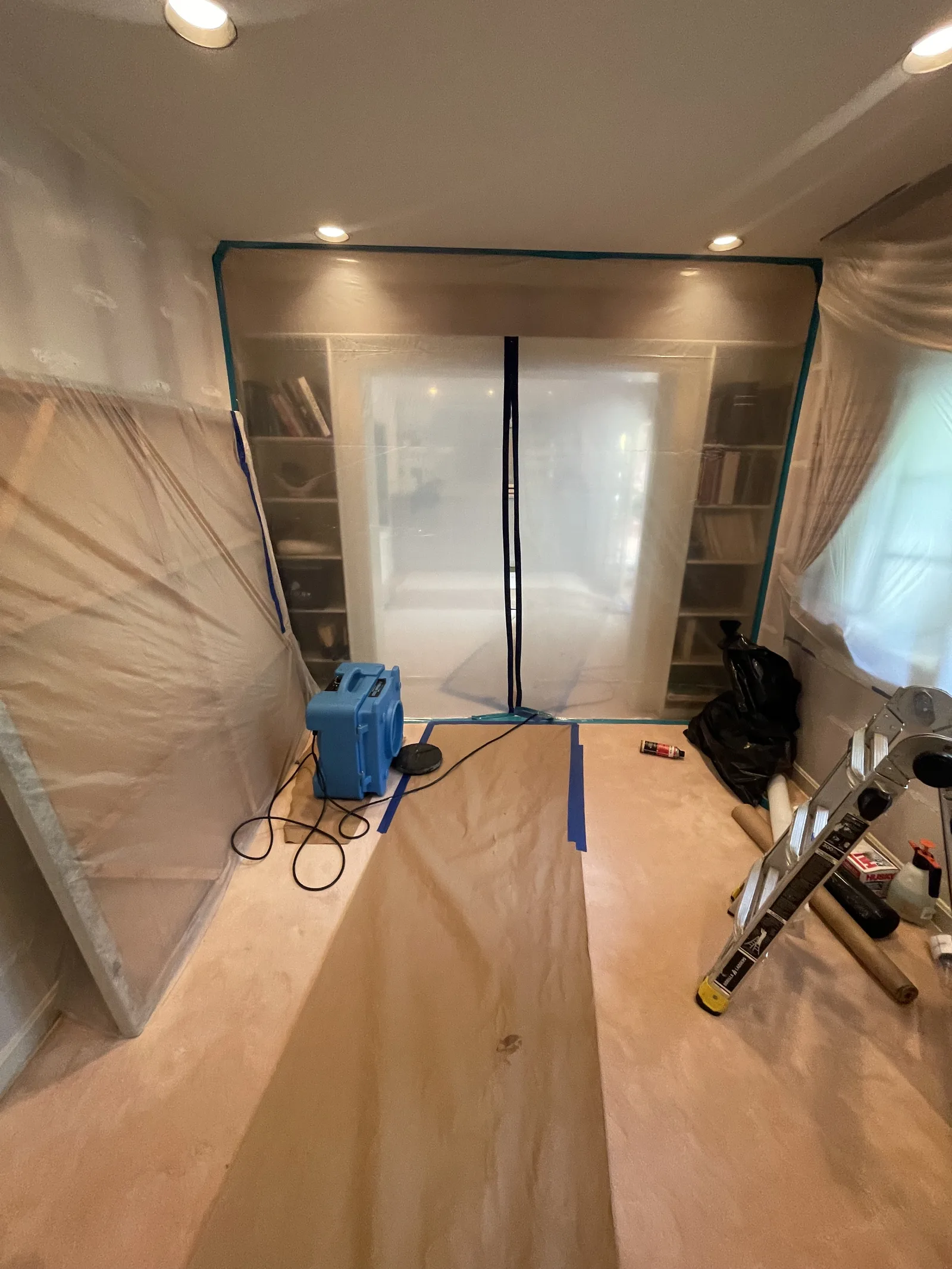
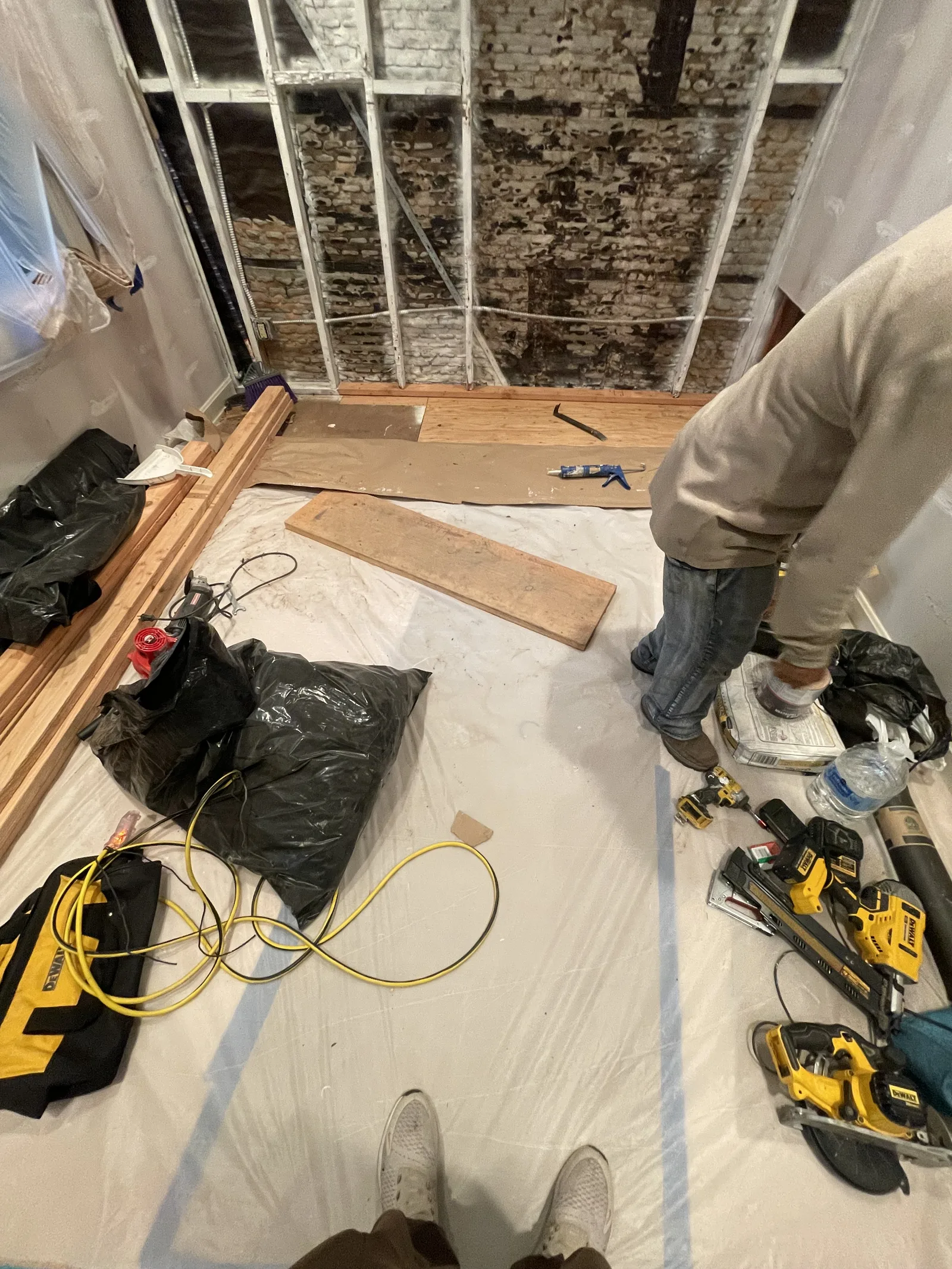
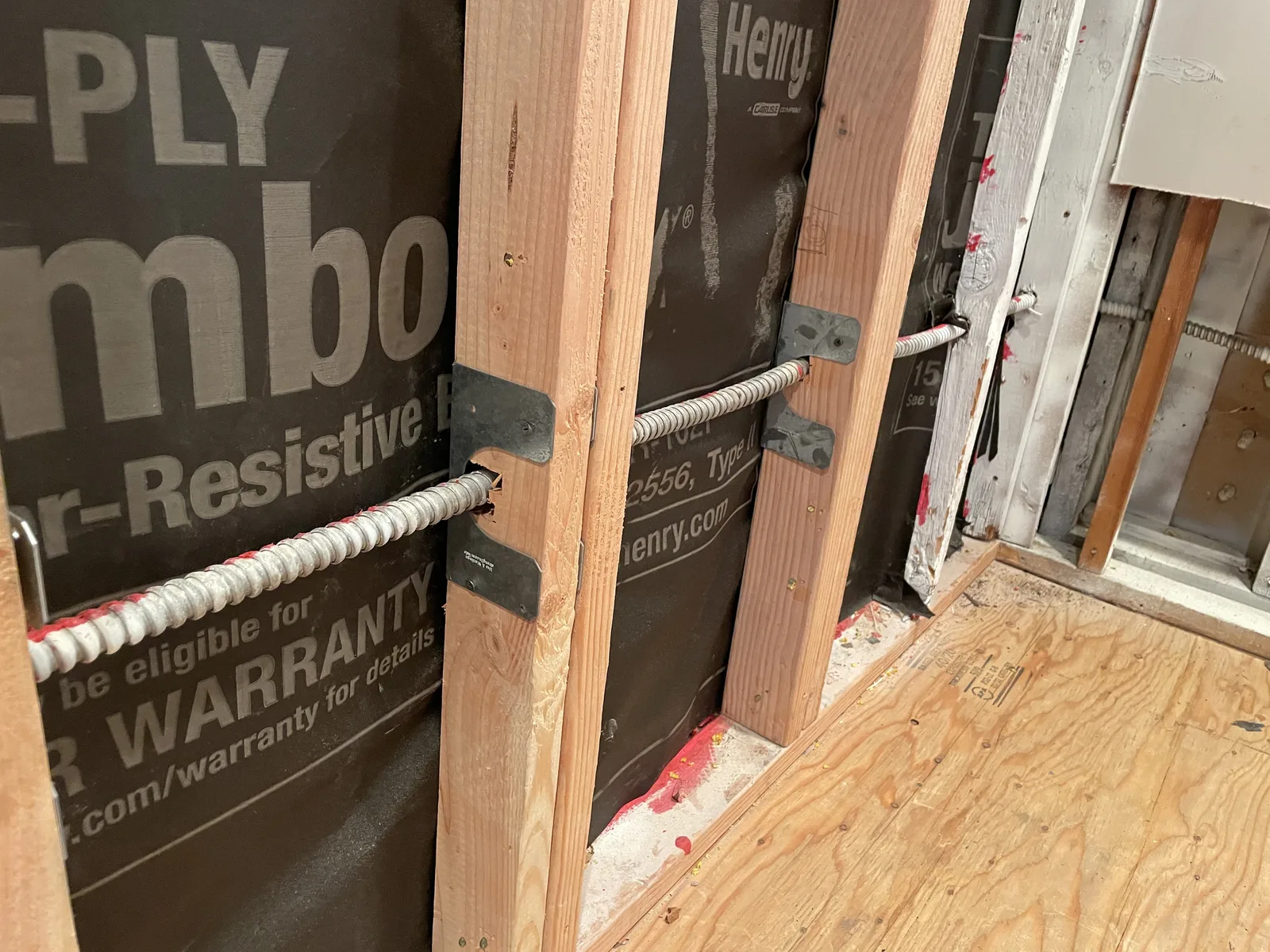
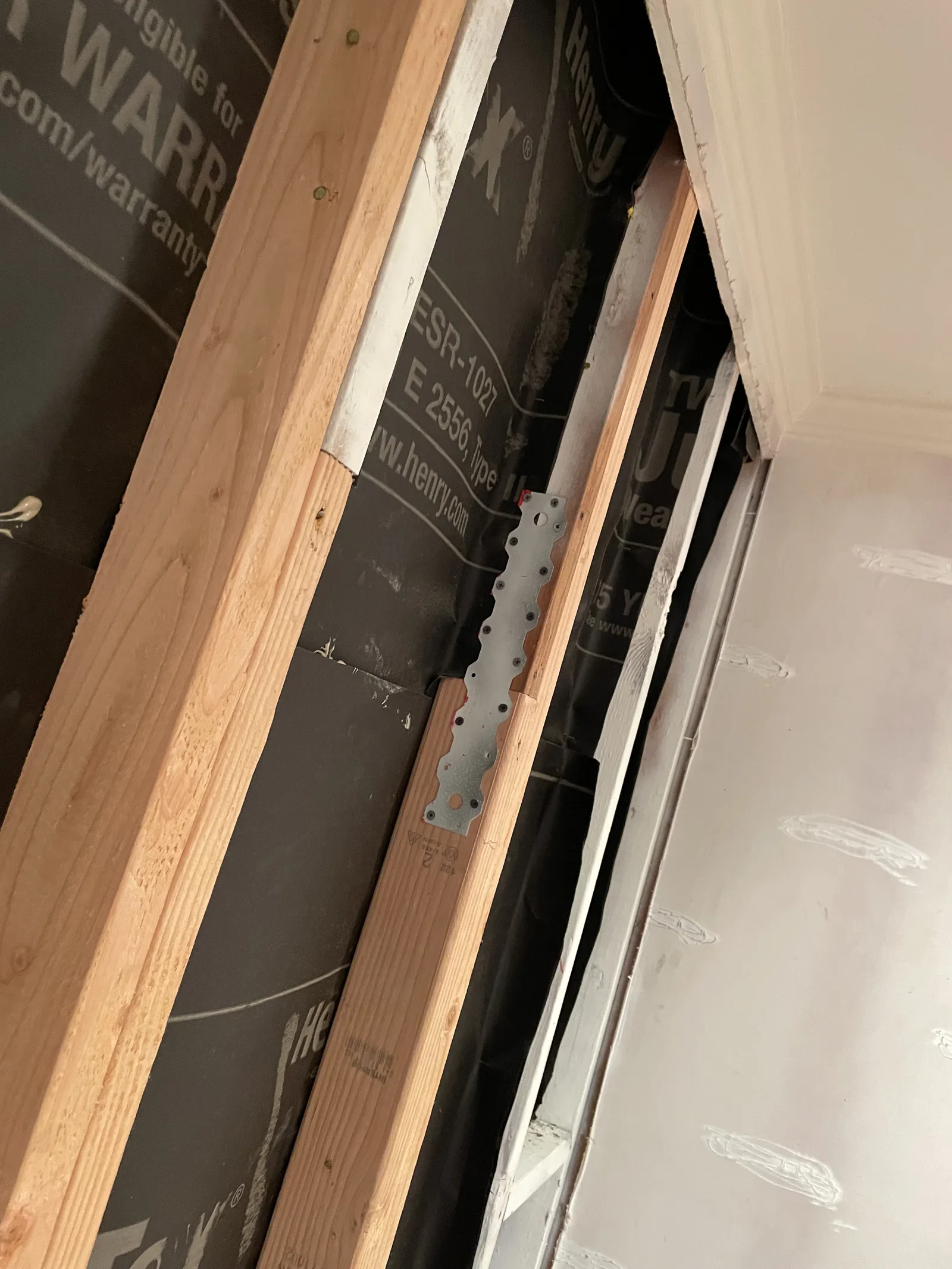
We removed the failed framing and the deteriorated membrane, treated the affected areas for mold with an antimicrobial process, and completed full water damage remediation before any rebuilding started.
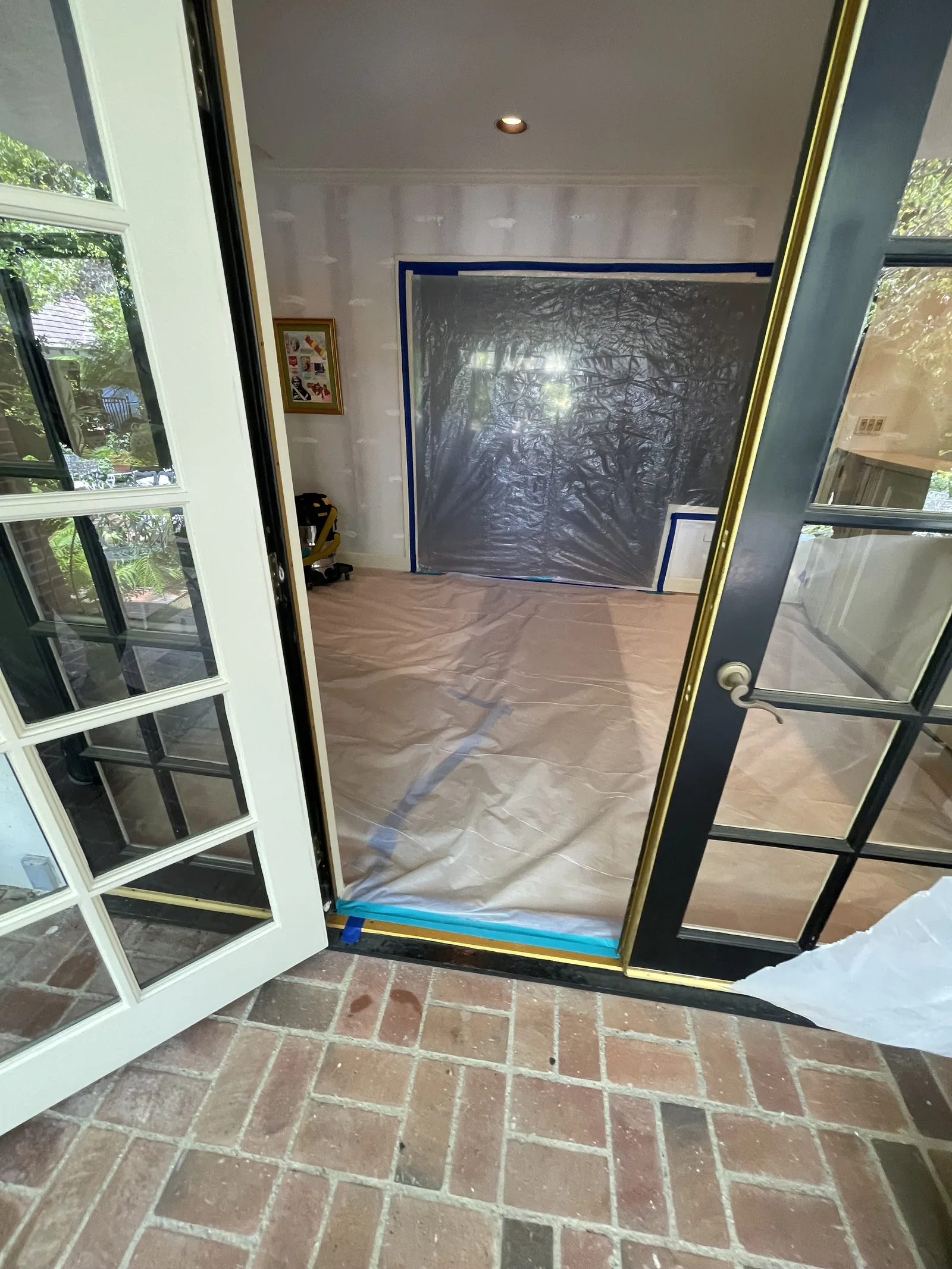
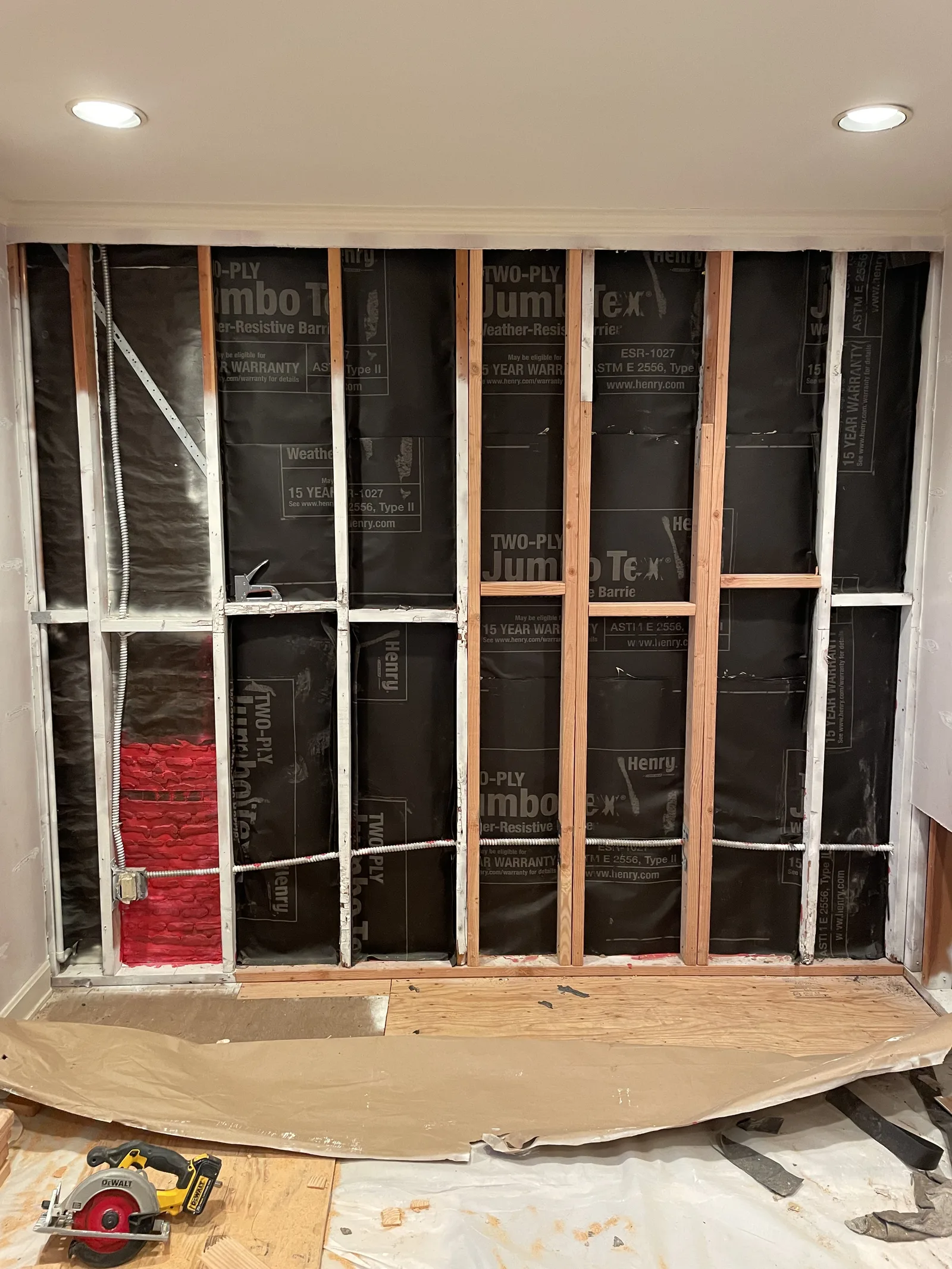
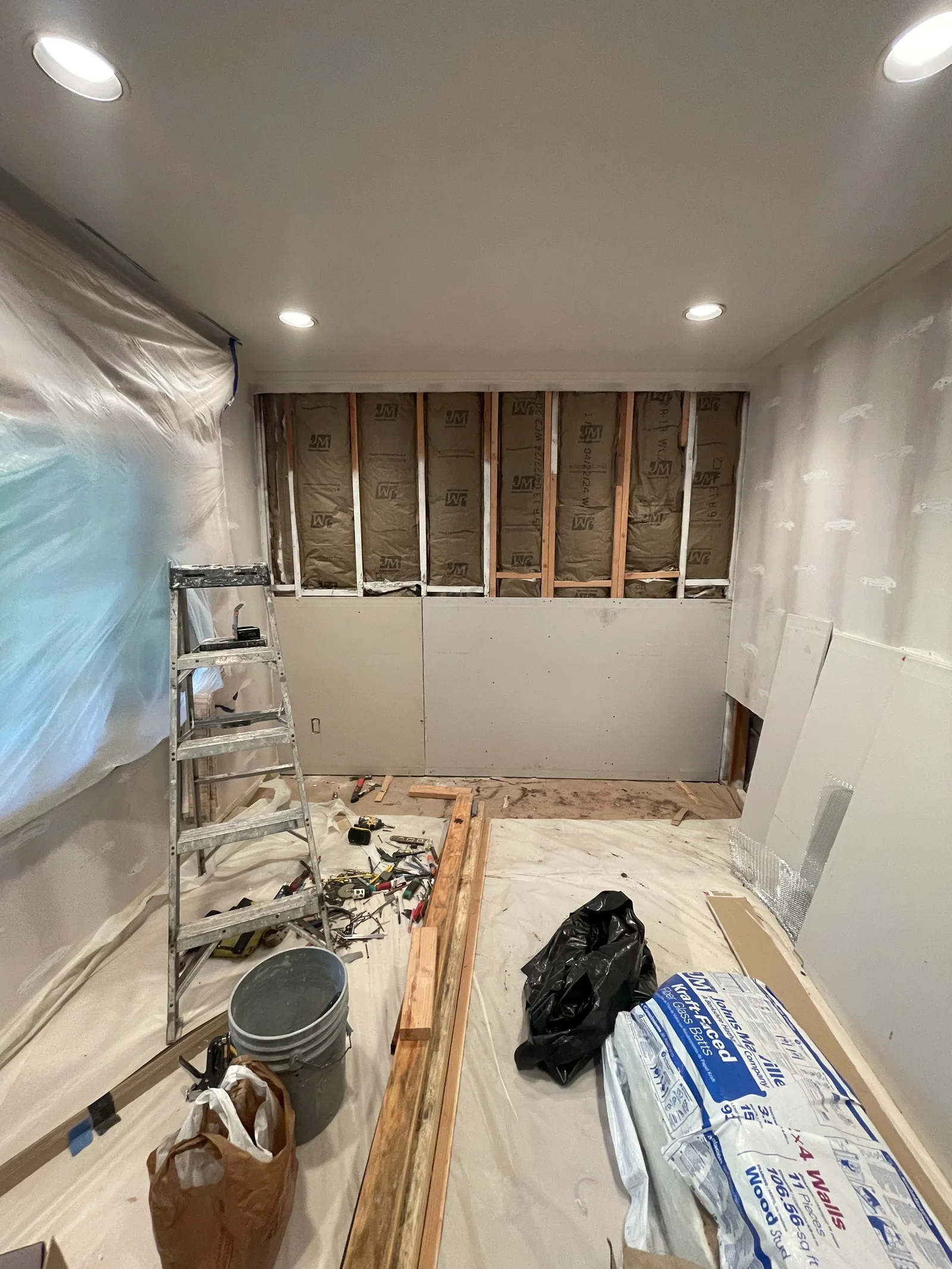
Then we rebuilt the wall from both sides. New framing, new waterproofing and flashing at the window, new stucco on the exterior, new drywall on the interior. The window detail that caused the leak was corrected so the same failure wouldn't repeat.
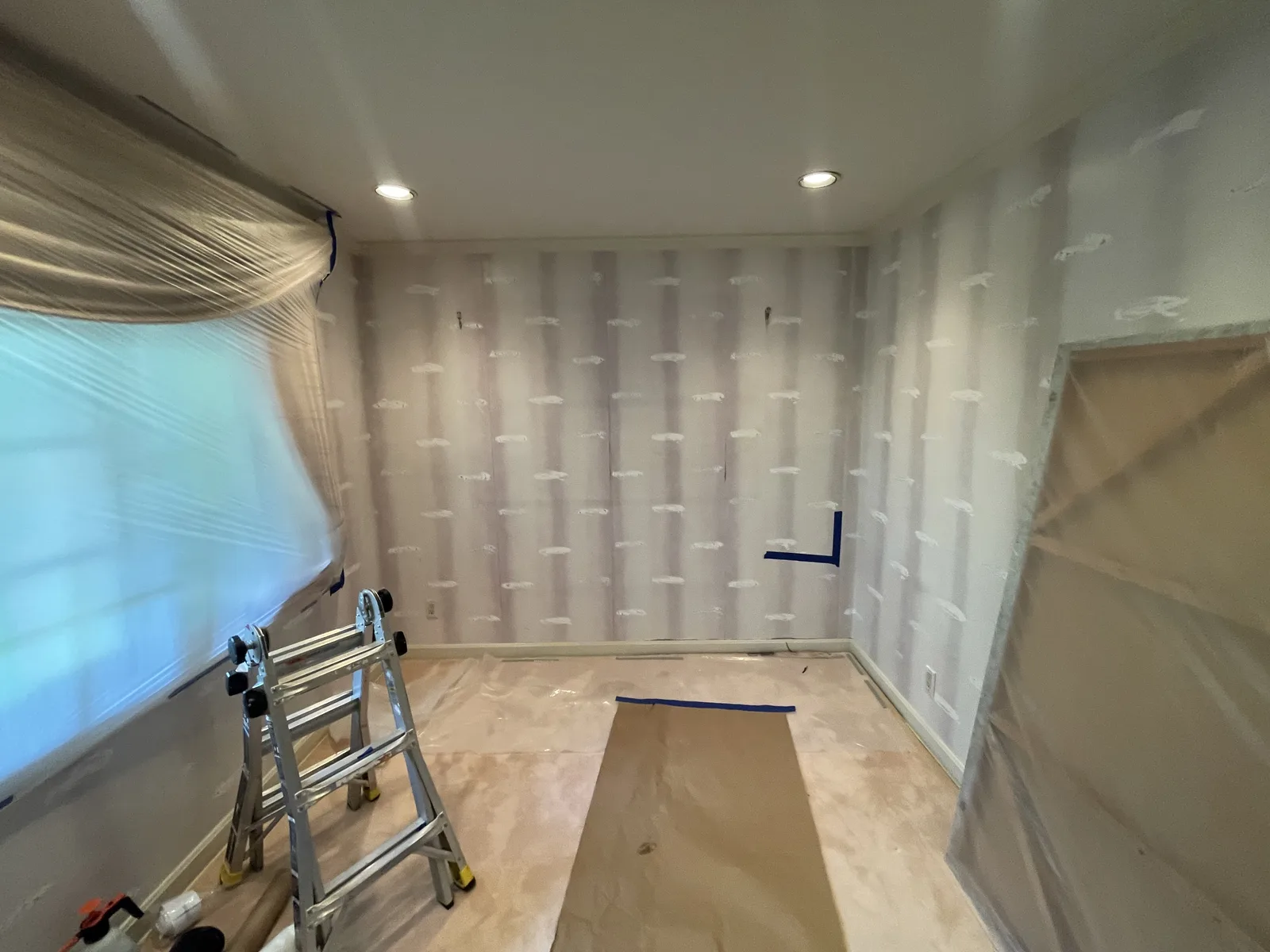
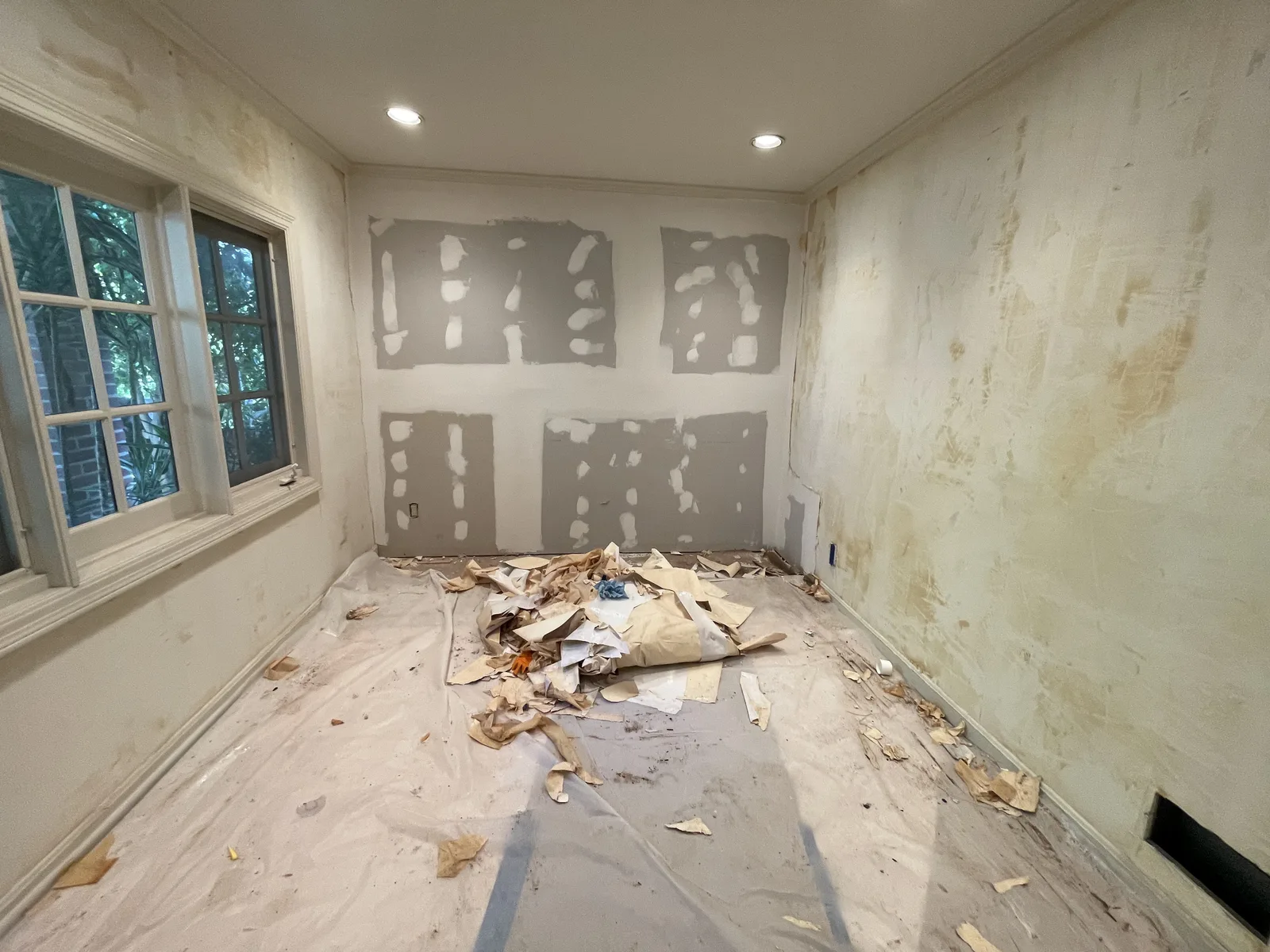
The room had wallpaper on all the walls. We couldn't match new wallpaper on the rebuilt wall to what was already there, so it all had to come off.
Wallpaper removal is slow work. You spray a chemical solvent, let it soak in, then scrape the paper off with a specialized blade. After that the old adhesive is still on the wall and has to come off too. Then every wall gets skim coated and smoothed before it can take paint.
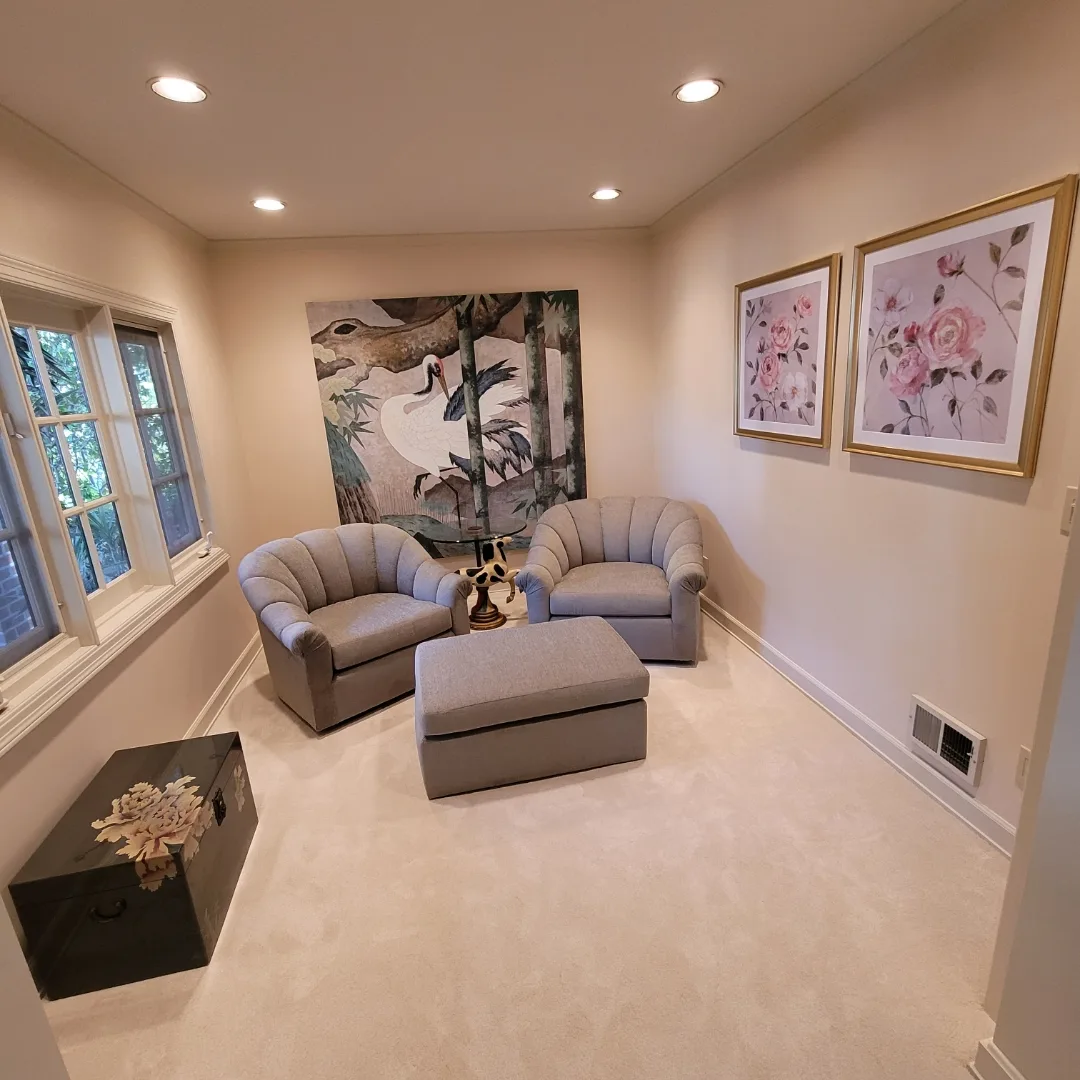
Once the walls were smooth we repainted the whole room, including the baseboards and window trim. The homeowner installed new carpet themselves.
The homeowner's insurance deductible was high enough that filing a claim wasn't worthwhile, so the work was handled directly. The project took two months.
Scope of work
- Leak detection using thermal imaging, moisture meters, and an endoscope inspection camera
- Demolition of affected interior and exterior wall assemblies
- Mold remediation and antimicrobial treatment
- Water damage remediation
- Framing replacement
- New waterproofing membrane and window flashing
- Exterior stucco reconstruction
- Interior drywall reconstruction
- Wallpaper removal, adhesive removal, and skim coating throughout the room
- Repainting of walls, baseboards, and window trim
Before & after
The work
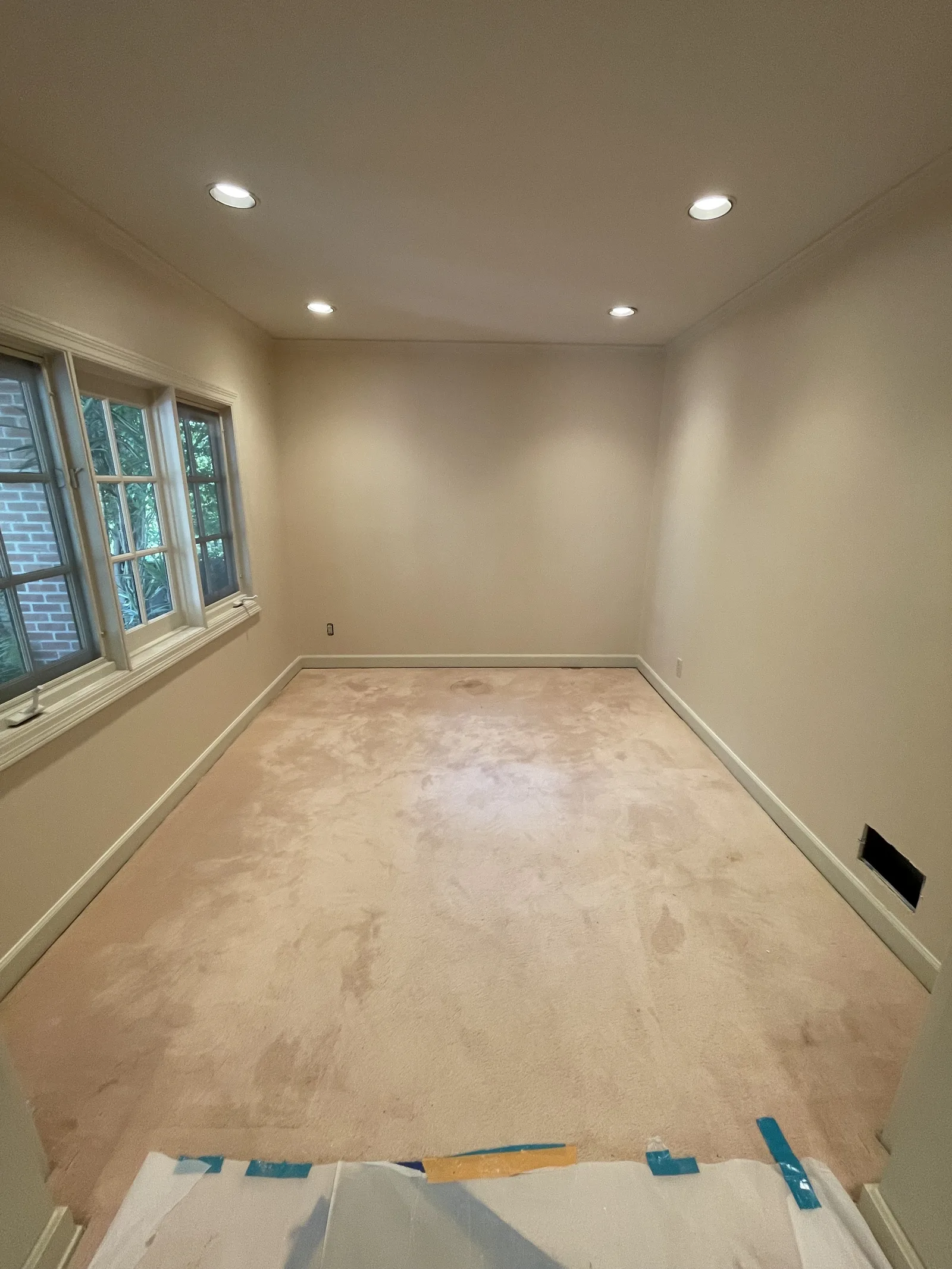
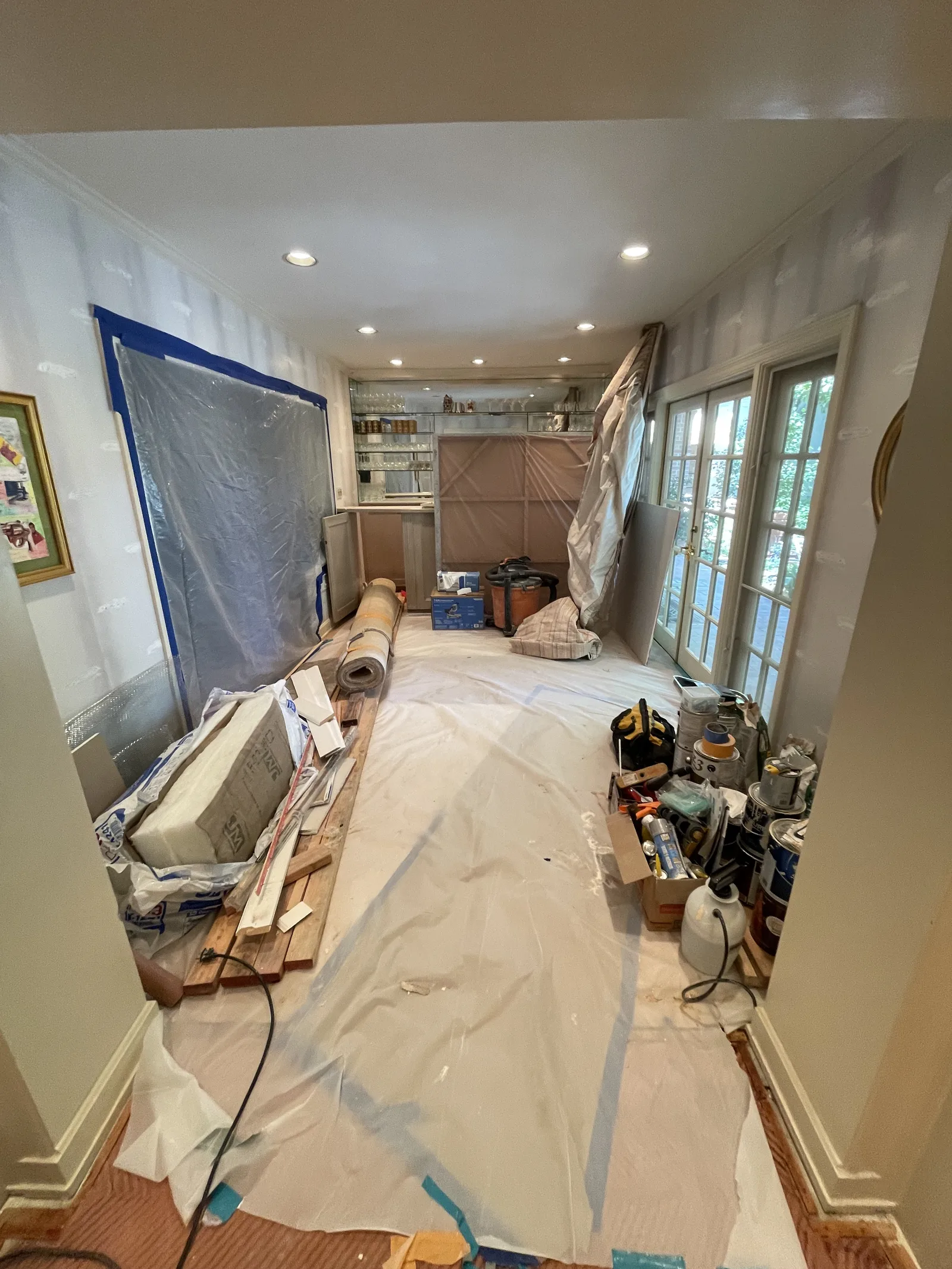
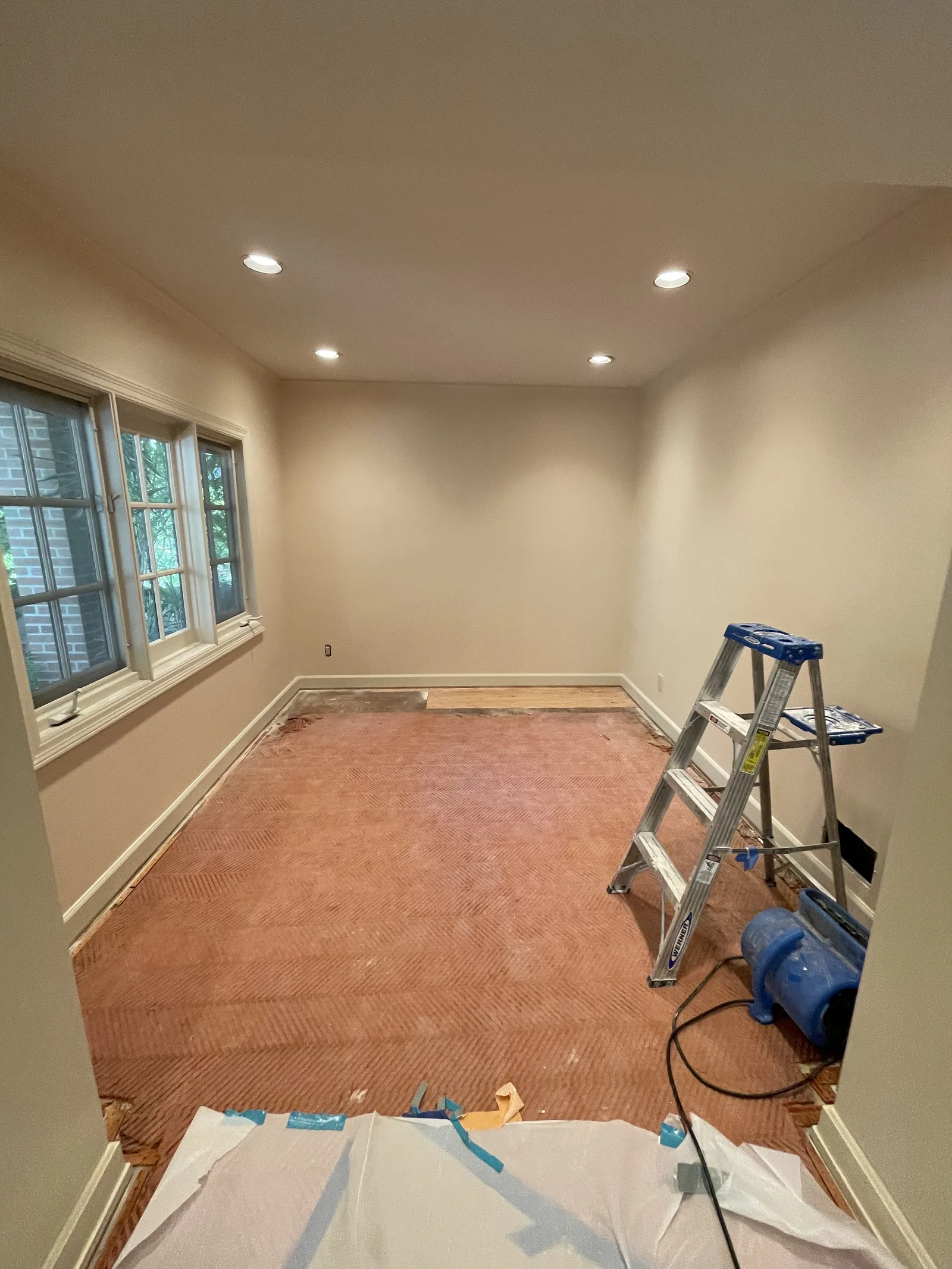
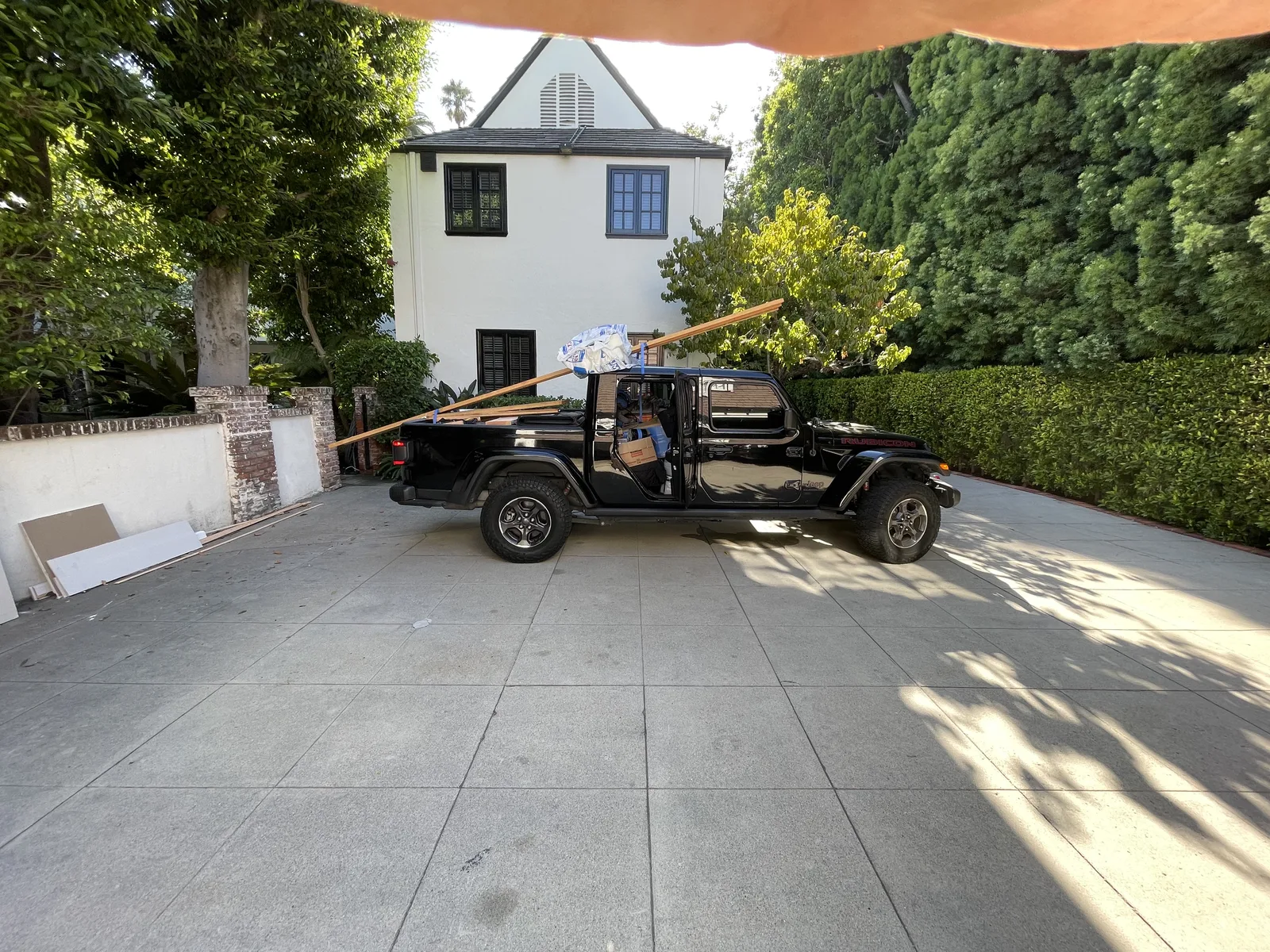
The result
Common questions
How do you find a hidden water leak like this?
We use thermal imaging, moisture meters, and an endoscope inspection camera to trace where water is actually entering, rather than guessing from the nearest fixture. That's the same water damage diagnosis process we use on every project like this one. On this project, the first assumption was the shower directly above the stain, but those tools traced the real source to unsealed flashing around a second-floor window.
Why did a small stain turn into a major repair?
Because the damage had been building for years before it ever showed on the surface. The black paper membrane behind the stucco had broken down and water had been running down inside the wall, so by the time the stain appeared, the framing behind it was already rotted.
Do you have to remove all the wallpaper if you're only repairing one wall?
In most cases, yes, if you want the room to look consistent. New wallpaper on a rebuilt wall usually can't be matched exactly to wallpaper that's already been on the other walls for years, so on this project all of it came off, along with the old adhesive, before the walls were skim coated and painted.
How long does water damage repair like this take?
This project took two months from diagnosis through the final paint. That included locating the leak, remediating the mold and water damage, rebuilding the wall from both sides, and finishing the room.
Found a small stain or signs of water damage in your home?
Call (310) 717-0432 or request a consultation. We'll trace the source before we start any repair.
Call (310) 717-0432